

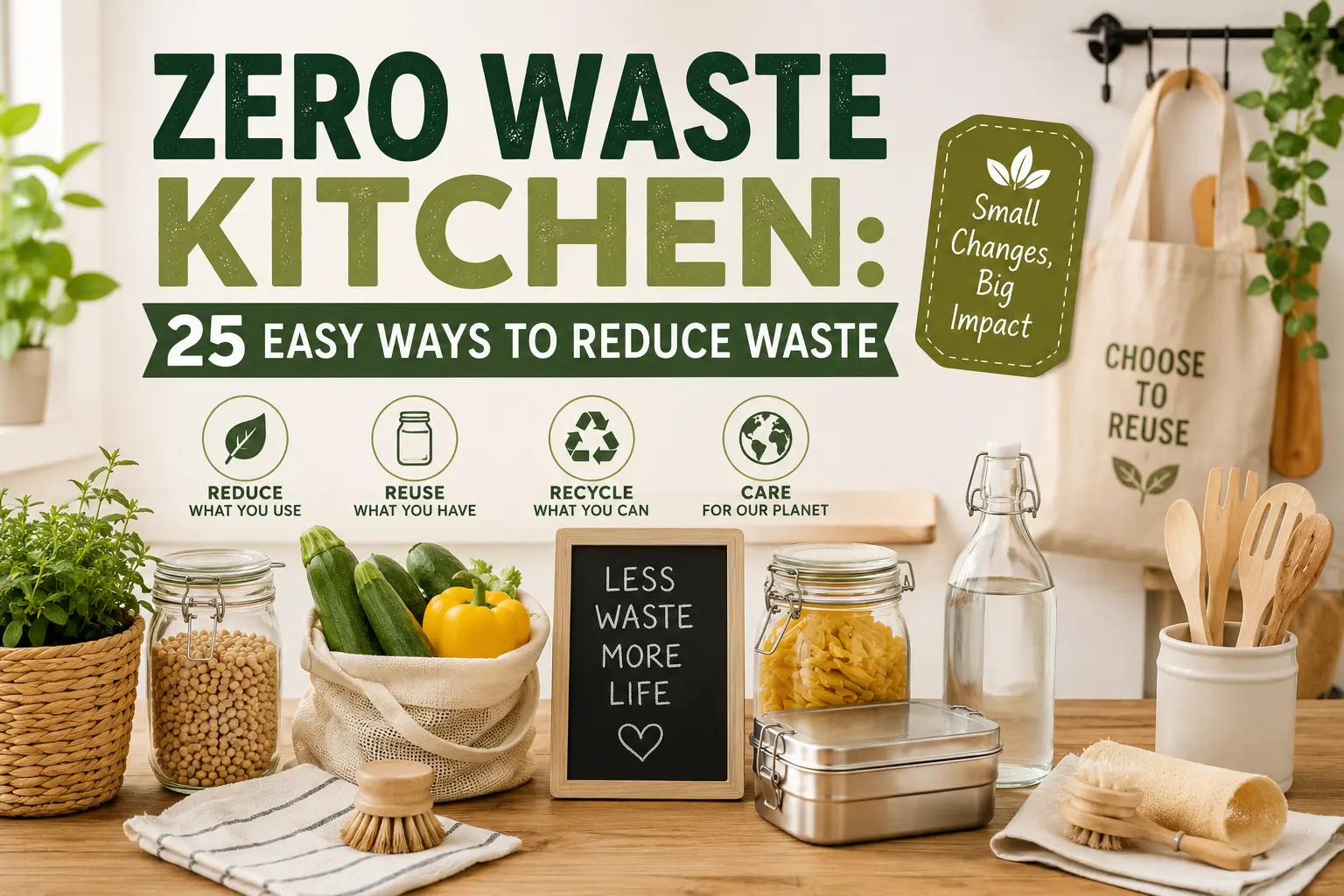
The kitchen is the heart of the home — and, unfortunately, it’s also where most household waste is generated. Between food scraps, plastic packaging, paper towels, and single-use containers, the average kitchen can produce a surprising amount of trash every single week. If you’ve been searching for ways to build a zero waste kitchen, you’re already on the right path toward a cleaner, greener, and more mindful way of living.
The good news? You don’t need to overhaul your entire home overnight. Creating a zero waste kitchen is a gradual process built on small, consistent habits. In this guide, we’ll walk through 25 easy, practical, and budget-friendly ways to reduce kitchen waste, cut down on plastic, and make your cooking space more sustainable — without sacrificing convenience or your wallet.
Whether you’re a complete beginner to sustainable living or looking to fine-tune your existing habits, these tips will help you take meaningful steps toward a plastic-free kitchen and a lower environmental footprint.
Why a Zero Waste Kitchen Matters
Before diving into the tips, it’s worth understanding why this matters. Food waste alone accounts for a significant share of landfill content worldwide, and when organic waste decomposes in landfills without oxygen, it produces methane — a greenhouse gas far more potent than carbon dioxide. On top of that, single-use plastics from packaging, wraps, and bags contribute to pollution that takes hundreds of years to break down.
Adopting sustainable kitchen tips isn’t just good for the planet — it also saves money, reduces clutter, and often leads to healthier eating habits. Let’s get into the 25 ways you can transform your kitchen.
Planning and Shopping Habits (Tips 1–6)
1. Meal Plan Before You Shop
One of the most effective ways to reduce kitchen waste starts before you even step into the kitchen. Planning your meals for the week helps you buy only what you need, reducing the chances of food spoiling before you use it. Keep a simple weekly template on your fridge or phone and build your grocery list around it.
2. Make a Detailed Shopping List — And Stick to It
Impulse buys are one of the biggest culprits behind food waste. A detailed list, organized by store section, keeps you focused and prevents over-purchasing perishable items you may not use in time.
3. Buy in Bulk Where Possible
Bulk bins allow you to buy exactly the amount you need, using your own reusable containers or bags. This is one of the simplest ways to cut down on packaging waste while also saving money on staples like rice, oats, nuts, and spices.
4. Choose Loose Produce Over Packaged
Whenever you have the option, choose loose fruits and vegetables instead of pre-packaged ones wrapped in plastic. Bring your own mesh or cloth produce bags to the store.
5. Support Local Farmers Markets
Buying from local farmers markets often means less packaging, fresher produce, and a smaller carbon footprint since the food travels shorter distances. It’s also a great way to support your local economy.
6. Store Food Properly to Extend Shelf Life
Understanding proper food storage — like keeping certain fruits and vegetables separate (some produce releases ethylene gas that speeds up ripening in others) — can significantly extend freshness and reduce spoilage.
Reducing Plastic and Packaging Waste (Tips 7–12)
7. Switch to Reusable Containers
Ditch single-use plastic wrap and bags in favor of glass containers, silicone bags, or stainless steel tins. These are durable, easy to clean, and last for years, making them a cornerstone of any eco-friendly kitchen.
8. Use Beeswax Wraps Instead of Plastic Wrap
Beeswax wraps are a reusable, compostable alternative to cling film. They’re perfect for covering bowls or wrapping sandwiches and cheese, and they can be washed and reused for up to a year.
9. Invest in a Good Set of Reusable Bags
Keep a stash of reusable grocery and produce bags near your door or in your car so you never forget them. Over time, this simple switch prevents hundreds of plastic bags from entering landfills.
10. Choose Bar Soap and Concentrated Cleaners
Dish soap, hand soap, and multi-purpose cleaners often come in plastic bottles. Look for bar versions or concentrated refill options that use significantly less packaging.
11. Avoid Single-Serve Packaging
Individually wrapped snacks, yogurt cups, and single-serve coffee pods generate an outsized amount of waste for the amount of product they contain. Buying in larger quantities and portioning them yourself cuts this waste dramatically.
12. Repurpose Glass Jars
Instead of recycling glass jars from pasta sauce, jam, or pickles right away, wash and reuse them for storing bulk goods, leftovers, homemade sauces, or even as drinking glasses.
Smart Food Storage and Preservation (Tips 13–17)
13. Learn to Read “Best By” vs. “Use By” Dates
Many people throw away perfectly good food because they misunderstand date labels. “Best by” refers to quality, not safety — the food is often still perfectly fine to eat after that date.
14. Freeze Before It Spoils
If you know you won’t use something in time, freeze it. Bread, herbs, cooked grains, and even overripe bananas can be frozen and used later in smoothies or baking.
15. Create a “Use Me First” Bin
Designate a spot in your fridge for items nearing their expiration date. This visual reminder helps ensure nothing gets forgotten and pushed to the back until it spoils.
16. Vacuum Seal for Longer Freshness
A vacuum sealer removes air from packaging, dramatically extending the shelf life of meats, vegetables, and leftovers in the freezer.
17. Store Herbs Like Flowers
Fresh herbs like cilantro and parsley last much longer when stored upright in a jar of water in the fridge, rather than left loose in a bag.
Composting and Food Scrap Solutions (Tips 18–21)
18. Start a Compost Bin
Composting is one of the most impactful habits for any zero waste cooking routine. Whether you have a backyard compost pile, a countertop bin, or use a local composting service, this keeps organic waste out of landfills and turns it into nutrient-rich soil.
19. Make Vegetable Scrap Broth
Save onion skins, carrot tops, celery ends, and other vegetable trimmings in a freezer bag. Once full, simmer them into a flavorful homemade broth instead of tossing them.
20. Regrow Vegetables from Scraps
Certain vegetables like green onions, lettuce, and celery can be regrown from their base in a small dish of water. It’s a fun, cost-effective way to stretch your produce further.
21. Repurpose Stale Bread
Stale bread doesn’t have to go to waste — turn it into croutons, breadcrumbs, or bread pudding instead of throwing it away.
Everyday Habits That Make a Difference (Tips 22–25)
22. Use Cloth Napkins and Towels
Swap paper towels and napkins for washable cloth versions. This small change can eliminate hundreds of paper towel rolls from your household waste over a year.
23. Batch Cook and Portion Leftovers
Cooking in batches and freezing individual portions reduces the temptation to order takeout (which often comes with excess packaging) and ensures nothing goes bad before you get to it.
24. Compost or Recycle Coffee Grounds and Filters
Used coffee grounds are excellent for compost and can even be used as a natural fertilizer for houseplants. Choose compostable or reusable coffee filters when possible.
25. Involve the Whole Household
Sustainability sticks best as a shared habit. Get family members or roommates involved in sorting recycling, composting, and meal planning so the zero waste kitchen becomes a team effort rather than a solo task.
Final Thoughts on Building a Zero Waste Kitchen
Transforming your kitchen into a more sustainable space doesn’t happen overnight, and that’s okay. The goal isn’t perfection — it’s progress. Start with two or three tips from this list that feel most manageable for your lifestyle, whether that’s starting a compost bin, switching to reusable produce bags, or simply meal planning more intentionally.
Over time, these small sustainable kitchen tips add up to a meaningful reduction in waste, a lighter environmental footprint, and often, real savings on your grocery bill. A zero waste kitchen isn’t about being flawless — it’s about building habits that make your home, and the planet, a little healthier with every meal you prepare.
Frequently Asked Questions
What is a zero waste kitchen?
A zero waste kitchen is a cooking and food storage space designed to minimize trash — through reducing packaging, reusing containers, composting scraps, and being intentional about food purchases.
How can beginners start reducing kitchen waste?
Start small. Meal planning, using reusable bags, and composting food scraps are three of the easiest and most impactful changes for beginners pursuing an eco-friendly kitchen.
Is a zero waste kitchen expensive to set up?
Not necessarily. Many zero waste swaps, like reusing jars or buying loose produce, actually save money over time compared to disposable, pre-packaged alternatives.
