

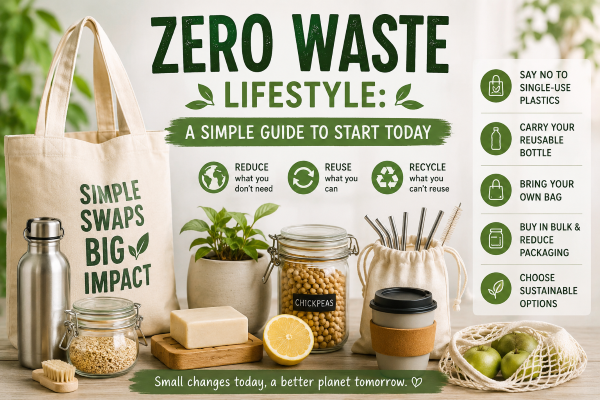
Have you ever looked at your trash can and wondered where all that garbage came from? One day you throw out a coffee cup. The next day it’s a plastic bag, an old toothbrush, or food that went bad before you could eat it. It adds up fast. Most of us don’t even notice how much waste we make in a normal week.
This is where the idea of a zero waste lifestyle comes in. It sounds like a big, scary goal at first. Some people picture a person who fits a whole year of trash into one small jar. That’s not the point, and it’s not something most of us need to copy. A zero waste lifestyle is really just about making small, smart choices so you throw away less stuff. It’s a way of living that cares about the planet, saves you money, and makes your daily life a little simpler too.
What Does “Zero Waste Lifestyle” Really Mean?
Let’s clear up one thing first. A zero waste lifestyle does not mean you will never throw anything away again. That’s almost impossible in the world we live in today. Instead, it means you try your best to send as little trash as possible to landfills, oceans, and incinerators.
Think of it like a mindset. Before you buy something or throw something out, you pause for a second and ask: Do I really need this? Can I reuse it? Can it be recycled or composted instead of tossed in the trash?
People who follow a zero waste lifestyle try to:
- Buy only what they truly need
- Choose things that last a long time instead of items made to be thrown away
- Reuse items instead of buying new ones
- Recycle and compost whatever they can
- Say no to extra packaging and single-use plastic
It’s not about being perfect. It’s about making better choices, one at a time, and building habits that stick.
Why Should You Care About a Zero Waste Lifestyle?
You might be thinking, “I’m just one person. Does my trash really matter?” The truth is, yes, it does. And there are many good reasons to give this lifestyle a try.
1. It Helps the Planet
Every year, huge amounts of trash pile up in landfills. Plastic waste ends up in rivers and oceans, where it can hurt fish, birds, and other animals. Some plastic takes hundreds of years to break down. When you reduce your waste, you help slow this problem down. Even small changes, when done by many people, add up to a big difference.
2. It Saves You Money
This might be the most surprising part. A zero waste lifestyle often costs less, not more. When you stop buying things you don’t need, you naturally spend less. Reusable items, like a water bottle or cloth bags, cost money once but save you from buying disposable versions again and again. Cooking at home instead of ordering food with piles of packaging also saves cash.
3. It Can Make Life Simpler
Owning less stuff means less clutter. Less clutter means less time spent cleaning, organizing, and looking for things. Many people who try this lifestyle say their homes feel calmer and lighter. There’s a certain peace that comes with not being surrounded by piles of things you don’t use.
4. It Sets a Good Example
When you make changes in your own life, people around you notice. Friends, family, and even coworkers might start asking questions or trying small swaps themselves. Change spreads faster than you think.
The 5 Rs: The Heart of a Zero Waste Lifestyle
If you read anything about zero waste living, you’ll come across the “5 Rs.” These five simple words are like a roadmap. They help you think through your choices in the right order.
Refuse
This is the first and most powerful step. Before anything else, learn to say no. Say no to the free pen at a store checkout. And Say no to plastic straws you don’t need. Say no to flyers, samples, and freebies that you’ll just throw away later. If you don’t bring something into your home in the first place, you never have to worry about throwing it away.
Reduce
Next, look at what you already use and ask if you can use less of it. Maybe you don’t need five different cleaning sprays. Maybe you can buy fewer clothes and wear each piece more often. Reducing means being mindful about how much you truly need, not just what you want in the moment.
Reuse
Instead of throwing something away after one use, find a way to use it again. Old glass jars can hold spices or leftovers. Worn-out t-shirts can become cleaning rags. A tote bag can replace dozens of plastic shopping bags over the years. Reusing turns “trash” into something useful again.
Recycle
Recycling should come after refuse, reduce, and reuse, not before. Many people think recycling alone will fix waste problems, but it’s actually the last resort in the zero waste lifestyle. Still, it matters. Learn what your local recycling program accepts, rinse containers before tossing them in the bin, and avoid “wishcycling” — throwing things in the recycling bin just hoping they’ll be recycled even when they’re not accepted.
Rot (Compost)
Food scraps and yard waste don’t belong in the regular trash. When they end up in a landfill, they release harmful gases as they break down without air. Composting lets these scraps turn into rich soil instead. Even people in small apartments can compost using a countertop bin or a local drop-off program.
How to Start a Zero Waste Lifestyle: Simple First Steps
Starting can feel overwhelming if you try to change everything at once. The good news is, you don’t have to. Here’s a simple path to follow.
Step 1: Do a Trash Audit
Before you make changes, take a look at what you’re actually throwing away. For one week, pay attention to your trash and recycling. What shows up the most? Food packaging? Coffee cups? Plastic bags? Once you know your biggest waste sources, you’ll know exactly where to focus first.
Step 2: Pick One Room to Start
Don’t try to fix your whole house in one day. Start with one room, like the kitchen or bathroom. These two rooms usually create the most waste because of packaging, food scraps, and personal care products.
Step 3: Make Easy Swaps
Small swaps make a big difference over time. Here are some easy ones to try:
- Swap plastic water bottles for a reusable one
- Swap paper towels for cloth towels or rags
- And Swap plastic shopping bags for cloth tote bags
- Swap disposable razors for a reusable one
- Swap liquid soap in plastic bottles for bar soap
- And Swap plastic wrap for beeswax wraps or containers with lids
- Swap single-use coffee cups for a reusable mug
You don’t need to buy all of these at once. Replace items as your old ones run out or wear out. There’s no need to throw away something that still works just to replace it with a “greener” version — that actually creates more waste, not less.
Step 4: Shop with a Plan
A big part of the zero waste lifestyle is shopping smarter. Before you go to the store, make a list. This helps you avoid buying things you don’t need on impulse. Try to choose items with little or no packaging when you can, like buying fruits and vegetables loose instead of in plastic bags.
If your area has a bulk food store, that’s a great place to shop. You can bring your own containers and buy just the amount you need, whether it’s rice, nuts, or pasta.
Step 5: Learn to Say No to Freebies
Free samples, plastic cutlery with takeout, extra napkins, and shopping bags you don’t need — these small items add up fast. A simple habit of saying, “No thank you, I don’t need that,” can cut a surprising amount of waste from your life.
Step 6: Start Composting
If you’re not already composting, this is one of the best changes you can make. Food scraps make up a large part of household trash. Even a small kitchen compost bin can handle fruit peels, coffee grounds, and vegetable scraps. Many cities now offer compost pickup, just like trash and recycling.
Zero Waste Lifestyle Tips for the Kitchen
The kitchen is often where the most waste happens. Here are some tips made just for this space.
- Plan your meals: Buying only what you’ll actually cook helps stop food from going bad before you use it.
- Store food the right way: Learn which foods last longer in the fridge versus the pantry. This simple knowledge stops a lot of waste.
- Use every part of your food: Vegetable scraps can be used to make broth. Stale bread can become croutons or breadcrumbs.
- Bring your own containers: When buying meat, cheese, or deli items, ask if you can bring your own container instead of using their packaging.
- Choose glass over plastic: Glass containers can be reused for years and don’t hold onto smells or stains the way plastic does.
- Keep a “leftovers night:” Once a week, cook a meal using only what’s already in your fridge. It’s a fun challenge and stops food waste.
Zero Waste Lifestyle Tips for the Bathroom
Bathrooms are full of plastic bottles and packaging. Here’s how to cut down.
- Switch to bar soap and shampoo bars instead of bottled versions
- Use a bamboo toothbrush instead of a plastic one
- Try reusable cotton rounds instead of disposable cotton balls
- Choose products in cardboard boxes instead of plastic bottles when you can
- Look for refill stations for products like shampoo, lotion, and cleaning sprays
Zero Waste Lifestyle Tips for Shopping and Clothes
Fashion creates a huge amount of waste around the world. Clothes get thrown away quickly, often after just a few wears. Here’s how to shop smarter.
- Buy less, choose well: Pick clothes made from good material that will last longer instead of cheap items that fall apart fast.
- Try secondhand shopping first: Thrift stores and online resale shops often have great finds for a fraction of the price.
- Repair instead of replace: A missing button or small tear doesn’t mean an item is useless. Learn basic sewing, or find a local tailor.
- Donate instead of tossing: If you no longer wear something, give it a second life by donating it to someone who will use it.
- Rent for special occasions: For a one-time event, renting an outfit can save money and cut down on clothes you’ll never wear again.
Common Struggles When Starting a Zero Waste Lifestyle
It’s normal to run into a few bumps along the way. Here are common challenges and how to handle them.
“It feels like too much work:” Start small. You don’t need to change everything overnight. Pick one habit a week and build from there.
“Zero waste products are expensive:” You don’t need to buy anything special to start. The cheapest and most effective step is simply using what you already own for longer and buying less overall.
“My family isn’t on board:” Change takes time. Lead by example instead of pushing others. Over time, family members often start copying small habits they see working.
“I don’t have time to compost or shop at bulk stores:” Pick the swaps that fit your life. This lifestyle isn’t one-size-fits-all. Even doing two or three things consistently is better than trying everything and giving up.
“I made a mistake and used plastic again:” That’s okay. Nobody does this perfectly. The goal is progress, not perfection. One plastic bottle doesn’t undo months of good habits.
Zero Waste Lifestyle and Your Community
While personal habits matter, this lifestyle grows even stronger when shared with others.
- Join local groups: Many towns and cities have zero waste or sustainability groups where people share tips, swap items, and support each other.
- Support local businesses: Farmers markets, bulk stores, and local shops often use less packaging than big chain stores.
- Get involved in clean-up events: Local park or beach clean-ups are a great way to see the impact of waste and meet others who care about the same things.
- Talk about it: Share what you’re learning with friends and family. You never know who might be inspired to try it too.
Simple Zero Waste Habits You Can Start This Week
If all of this feels like a lot, here’s a short list to keep things simple. Pick just three from this list and try them for the next seven days.
- Bring a reusable bag every time you shop
- Carry a reusable water bottle
- Say no to a straw or plastic cutlery
- Start a small compost bin for food scraps
- Buy one secondhand item instead of new
- Use a cloth napkin instead of paper
- Fix something instead of throwing it away
- Choose products with less packaging
- Finish the food in your fridge before buying more
- Donate three items you no longer use
Small steps like these build real habits. And habits, once built, don’t feel like extra work anymore. They just become the normal way you live.
Zero Waste Lifestyle Tips for Work and School
Waste doesn’t only happen at home. Offices, classrooms, and workplaces create plenty of trash too, from coffee cups to printer paper. Here are ways to bring the zero waste lifestyle with you when you leave the house.
- Pack a waste-free lunch: Use reusable containers instead of plastic bags or foil. A cloth napkin and reusable cutlery set can live in your bag so you’re always ready.
- Bring your own mug and water bottle: Skip the paper cups at the office coffee machine or water cooler.
- Print only when needed. Read documents on screen when possible, and print on both sides of the paper when you do need a hard copy.
- Keep a small “on-the-go” kit: A tote bag, reusable straw, and a spare container can fit easily in a backpack or bag, so you’re never caught needing a disposable item.
- Start a recycling or compost bin at work: If your office doesn’t have one, ask about starting a small program. Many coworkers are happy to join once someone takes the first step.
- Choose digital over paper: Sign up for e-receipts, e-tickets, and online statements instead of paper versions whenever you can.
These habits might seem small, but since most of us spend many hours a week at work or school, they can make a real dent in your overall waste.
Zero Waste Lifestyle Tips for Travel
Traveling often means more disposable items, from hotel toiletries to airport food packaging. With a little planning, you can keep your zero waste lifestyle going even on the road.
- Pack a reusable water bottle and fill it after security at the airport
- Bring your own travel-size containers instead of using single-use hotel toiletries
- Carry a foldable tote bag for souvenirs or groceries
- Choose accommodations that support sustainability, like hotels with refill stations
- Say no to individually wrapped snacks and pick fresh, whole foods when you can
- Bring a small set of reusable utensils for meals on the go
Travel doesn’t have to undo your good habits. A little preparation goes a long way.
Common Myths About the Zero Waste Lifestyle
There are a few misunderstandings that stop people from even trying this lifestyle. Let’s clear a few of them up.
Myth: You need to produce zero trash, or it doesn’t count: This isn’t true. The name can be a little misleading. The goal is to greatly reduce waste, not reach an impossible number. Even cutting your trash in half is a huge win.
Myth: It’s only for people with a lot of time and money: In reality, many zero waste habits save both time and money. Buying less, cooking at home, and reusing items are often cheaper than the alternative.
Myth: You have to throw away all your plastic stuff right away: Throwing away useful items just because they’re plastic actually creates more waste. The better approach is to use what you already have until it wears out, then choose a more sustainable option next time.
Myth: One person’s effort doesn’t matter: While it’s true that big companies and governments play a huge role in pollution, individual choices still matter. They also influence the people around you, and they push companies to offer better options when enough customers ask for them.
Myth: Zero waste living means giving up convenience completely: Many zero waste swaps are just as convenient as before, once they become a habit. A reusable bag in your car or a mug on your desk takes no extra effort after the first few weeks.
Frequently Asked Questions About the Zero Waste Lifestyle
Is it possible to live a completely zero waste lifestyle? Not entirely, at least not in most parts of the world today. Some waste is almost unavoidable because of how products are packaged and sold. The goal is to get as close as possible, not to hit a perfect zero.
What’s the easiest way to start? Begin with a trash audit. Once you know what you throw away the most, you can focus your energy on the changes that will make the biggest difference.
Does a zero waste lifestyle cost more money? Usually, it costs less. Buying fewer things, cooking more at home, and reusing items instead of replacing them all help save money over time.
Can I follow this lifestyle if I live in a small apartment? Yes. Composting can be done with a small countertop bin or through a local drop-off service. Many zero waste habits, like reusable bags and mindful shopping, don’t need extra space at all.
What if my city doesn’t recycle or compost much? Focus first on refusing and reducing waste, since those steps don’t depend on your local programs. You can also look into community composting groups or private services if your city doesn’t offer one.
How long does it take to build zero waste habits? It’s different for everyone, but most people say it takes a few weeks for a new habit to feel natural. Be patient with yourself and focus on one change at a time.
Final Thoughts on the Zero Waste Lifestyle
A zero waste lifestyle isn’t about being perfect. It’s not a strict rulebook, and it’s definitely not about guilt. It’s about becoming more aware of what you buy, what you use, and what you throw away — and making small, steady changes that add up over time.
You don’t need to change your whole life in one day. Start with one swap. Try one new habit this week. Celebrate the small wins, like remembering your reusable bag or composting for the first time. Over weeks and months, these small choices turn into a lifestyle that’s better for your wallet, your home, and the planet we all share.
The zero waste lifestyle is really just a journey, not a finish line. Every small step you take truly does matter, and every bit of trash you avoid is one less thing that ends up polluting our world. Start today, be kind to yourself along the way, and watch how these small changes grow into something meaningful.

1 Comment
Pingback: Zero Waste Lifestyle for Beginners: 25 Ways to Cut Waste