

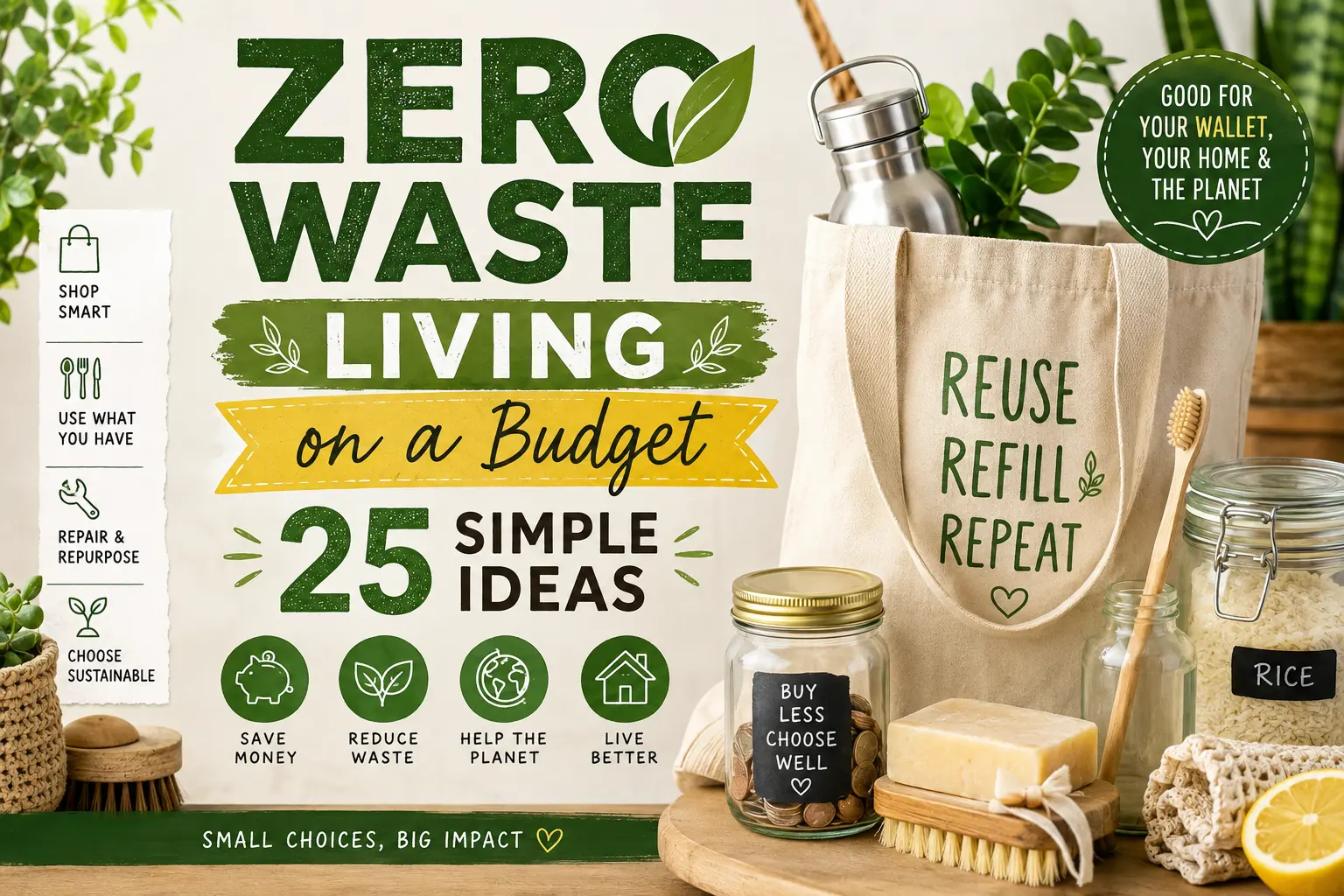
Most people assume that going green means spending more. Bamboo toothbrushes, stainless steel straws, matching glass jars for the pantry — the “zero waste aesthetic” you see online can look like an expensive hobby rather than an environmental practice. But the truth is the opposite. Zero waste living on a budget isn’t just possible, it’s often more affordable than the disposable, convenience-driven lifestyle most of us are used to.
At its core, zero waste is about using less, reusing what you already own, and only replacing things when they wear out — not throwing away perfectly good items to buy “eco-friendly” replacements. That mindset alone saves money. Add in smarter grocery shopping, DIY alternatives to store-bought products, and a few one-time investments that pay for themselves within weeks, and you have a lifestyle that’s genuinely lighter on both your wallet and the planet.
This guide walks through 25 simple, low-cost, and no-cost ideas for budget-friendly zero waste living, organized so you can start with what you already have at home and build from there.
Why Zero Waste and Budget Living Actually Go Together
Before diving into the tips, it helps to understand why reducing waste tends to reduce spending too.
Every piece of packaging, every single-use item, and every impulse purchase represents money that left your pocket for something you used once and threw away. Bottled water, paper towels, plastic wrap, individually packaged snacks, and fast fashion are all recurring costs disguised as convenience. When you replace a recurring disposable expense with a one-time reusable purchase, you’re not spending extra — you’re investing. A $20 reusable water bottle that replaces $10 a month in bottled water pays for itself in two months, then keeps saving you money for years.
This is the foundation of a sustainable living on a budget approach: spend less by consuming less, and only invest in reusable swaps when the payback is clear.
There’s also a psychological shift that happens once you start paying attention to waste: you naturally become a more intentional shopper. When you have to physically carry a reusable bag, wash out a container, or make space for bulk staples, you tend to buy less impulsively. Fewer impulse purchases means a smaller grocery bill, less clutter, and less food or product waste at the end of the month. In other words, the habits that reduce trash and the habits that build a healthier budget are, in large part, the exact same habits wearing different labels.
Section 1: Zero-Cost Swaps Using What You Already Own
You don’t need to buy anything to start. These are the easiest eco-friendly living tips because they cost nothing.
1. Use jars, containers, and bags you already have
Instead of buying matching mason jars, repurpose pasta sauce jars, jam jars, and takeout containers for pantry storage, leftovers, and bulk shopping. This is one of the simplest frugal zero waste tips because it costs zero dollars and keeps usable glass out of the recycling bin.
2. Turn old t-shirts into cleaning rags
Worn-out clothing that can’t be donated makes excellent reusable cleaning cloths. This eliminates the need to buy paper towels or disposable wipes.
3. Repurpose bread bags and produce bags
Rinse and reuse plastic bags from bread, produce, or frozen food for storing leftovers, packing lunches, or picking up after pets.
4. Make a compost bin from a bucket
A five-gallon bucket with a lid (often free from a bakery or restaurant) works just as well as a $50 store-bought composter for a small household.
5. Use both sides of paper before recycling
Print drafts, make grocery lists, or let kids draw on the blank side of used paper before it goes into the recycling bin.
Section 2: Kitchen and Grocery Swaps That Cut Costs
The kitchen is where most households generate the most waste — and where the biggest budget zero waste grocery savings live.
6. Buy in bulk when possible
Buying grains, beans, oats, spices, and pasta from bulk bins (using your own reusable bags or containers) is almost always cheaper per pound than pre-packaged versions, and it eliminates packaging waste entirely.
7. Plan meals around what you already have
Food waste is one of the biggest hidden costs in any household budget. A simple weekly meal plan built around what’s already in your fridge and pantry reduces both grocery bills and spoiled food.
8. Buy “ugly” or discounted produce
Many grocery stores and apps now sell surplus or imperfect produce at a steep discount. The nutritional value is identical, and it keeps edible food out of landfills.
9. Store food properly to make it last longer
Learning which vegetables need refrigeration versus counter storage, and using proper airtight containers, can significantly extend the life of groceries — meaning less spoilage and fewer repeat purchases.
10. Make your own snacks instead of buying packaged ones
Homemade granola, popcorn, or trail mix costs a fraction of individually wrapped snack packs and produces far less packaging waste.
11. Switch from paper towels to cloth
As mentioned above, this is a near-instant payback swap. A household using two rolls of paper towels a week spends a meaningful amount annually — a stack of cloth rags or old towels eliminates that cost completely.
12. Freeze food before it spoils
Bread, herbs, and leftovers that are about to turn can be frozen rather than tossed, stretching your grocery budget further. A simple habit of doing a five-minute “fridge check” once or twice a week — freezing anything that’s close to going bad — can meaningfully cut down on the amount of food that ends up in the trash. Since food waste is consistently one of the largest sources of household waste and wasted money, this single habit alone can have an outsized impact on both your grocery bill and your trash bin.
It also helps to get comfortable with batch cooking. Making a large pot of soup, chili, or grain bowls on a slower day and portioning it into the freezer means you always have a backup meal that doesn’t rely on takeout or another packaged, processed option. This reduces both spending and packaging waste in one move, and it takes the pressure off busy weeknights when convenience food is most tempting.
Section 3: Bathroom and Personal Care on a Budget
Personal care products are recurring expenses that are easy to make more sustainable — and cheaper — over time.
13. Try bar soap instead of body wash
Bar soap typically costs less per use than bottled body wash and comes with far less plastic packaging.
14. Make a simple DIY deodorant
A basic combination of coconut oil, baking soda, and cornstarch can replace store-bought deodorant at a fraction of the price, with no plastic tube waste.
15. Switch to a safety razor
A safety razor and replaceable blades cost far less over a year than disposable razor cartridges, which can run $10 or more per month.
16. Use reusable cotton rounds
Cotton pads for skincare can be replaced with reusable, washable rounds made from old flannel or towels — no sewing required if you just cut and use fabric squares.
17. Buy shampoo bars or refill stations if available
Where accessible, refill stations for shampoo, conditioner, and soap reduce plastic packaging and are often priced comparably to bottled versions. A single shampoo bar can often replace two or three plastic bottles of liquid shampoo, which adds up over a year — both in dollars saved and in bottles kept out of the trash.
If refill stations aren’t available nearby, look for concentrated liquid formulas that you dilute at home in your own bottle. These typically cost less per wash than pre-diluted versions and ship with far less packaging, since you’re paying mostly for the active ingredients rather than the water and plastic.
Personal care is a category where it pays to slow down and read labels rather than chase trends. Many “natural” or “zero waste” branded products are priced at a premium simply because of the label, not because the ingredients or packaging are meaningfully different from a basic drugstore version. A frugal zero waste tips mindset means comparing cost-per-use, not just the marketing on the front of the package.
Section 4: Cleaning Supplies You Can Make for Pennies
18. Make an all-purpose cleaner from vinegar and water
A simple mix of white vinegar, water, and a few drops of dish soap in a spray bottle cleans most surfaces (avoid natural stone) for a fraction of the cost of store-bought cleaners.
19. Use baking soda as a scrubbing agent
Baking soda works as an inexpensive, non-toxic alternative to abrasive cleaning powders for sinks, tubs, and pans.
20. Reuse spray bottles
Instead of buying a new bottle of cleaner every time, buy concentrate or make your own solution and refill the same spray bottle repeatedly. A single spray bottle can realistically last for years if you’re only ever refilling it, which means you stop paying for plastic packaging over and over on a product that’s mostly water anyway.
Homemade cleaning solutions also tend to use fewer, simpler ingredients, which can matter for households with kids, pets, or anyone sensitive to strong fragrances and chemical residue. Vinegar, baking soda, castile soap, and a bit of lemon or essential oil for scent cover the vast majority of everyday cleaning needs — bathrooms, kitchens, floors, glass, and laundry boosting — without needing a separate specialty product (and separate bottle) for each task.
Section 5: Smart, Low-Cost Investments Worth Making
Some swaps genuinely do require spending money upfront — but the payback period is short, which is what separates a smart zero waste budget decision from an unnecessary purchase.
21. A reusable water bottle
A durable stainless steel or aluminum bottle typically pays for itself within a couple of months for anyone who regularly buys bottled water.
22. A set of reusable produce and grocery bags
Cloth produce bags and sturdy tote bags reduce reliance on flimsy plastic bags and often last for years.
23. A cast iron or stainless steel pan
While the upfront cost is higher than a basic non-stick pan, cast iron and stainless steel cookware can last decades — compared to non-stick pans that often need replacing every few years.
24. Reusable food storage covers
Silicone lids or beeswax wraps replace years of plastic wrap purchases with a single investment that can last a year or longer.
25. Secondhand and thrifted clothing
Buying clothing secondhand costs significantly less than retail, reduces textile waste, and is one of the highest-impact budget-friendly sustainable living habits available, since fast fashion is one of the largest sources of household waste.
Common Mistakes to Avoid When Starting Zero Waste on a Budget
A frequent misstep is what’s sometimes called the “green flush” — throwing away perfectly usable plastic items just to replace them immediately with bamboo, glass, or stainless steel versions. This is counterproductive both financially and environmentally, since it creates new waste and new spending. A more effective approach is to only replace a disposable item with a reusable one once your current stock is fully used up.
Another mistake is trying to overhaul your entire home and routine at once. Sustainable, low-cost habits tend to stick better when introduced gradually — start with the swaps that require no spending, then add investment pieces only when the payback is clear and you’re confident you’ll actually use them.
How Much Can You Actually Save?
The financial upside of these habits adds up quickly. Following even 10 to 15 of these kinds of swaps can reduce household waste substantially while saving several hundred to a couple thousand dollars a year, depending on your starting habits. Small, recurring purchases — bottled water, paper towels, disposable razors, packaged snacks — are exactly the kind of “invisible” spending that quietly drains a budget over time, and they’re also the easiest to eliminate.
Utilities matter too. Simple habits like unplugging electronics that draw standby power or making small thermostat adjustments contribute to the same goal: spending less by wasting less, in every part of the household, not just the kitchen and bathroom.
Building a Zero Waste Routine That Actually Sticks
The most sustainable approach — financially and practically — is to treat this as a gradual shift rather than an overnight transformation. Here’s a simple way to sequence it:
- Start with zero-cost swaps using items you already own (jars, old clothing, paper).
- Adjust grocery and kitchen habits since food is usually the biggest waste and spending category.
- Replace bathroom and cleaning products with simple DIY or lower-packaging alternatives as your current stock runs out.
- Invest in a few durable items — a water bottle, cloth bags, quality cookware — only once you’ve confirmed you’ll use them regularly.
- Track your savings so you can see the financial impact and stay motivated.
None of this requires perfection. A household that adopts even a third of these ideas will notice both less trash at the curb and more money left over at the end of the month.
Finally, resist the urge to compare your household to curated images of “perfect” zero waste living online. Most of those setups are aspirational, not typical, and they often ignore the cost side of the equation entirely. A realistic, budget-friendly zero waste living approach looks more like a slowly shrinking trash bag and a slowly growing savings account than a perfectly matched set of glass jars on an open shelf.
Frequently Asked Questions
Is zero waste living actually cheaper, or is that a myth?
For most households, it’s genuinely cheaper over time. The upfront cost of a few reusable items is usually recovered within weeks or months, and ongoing habits like buying in bulk, cooking at home, and reducing food waste lower monthly spending on an ongoing basis.
Do I need to buy special zero waste products to get started?
No. Most of the highest-impact changes — using what you already own, cooking more at home, freezing food before it spoils, making your own cleaning spray — cost nothing or next to nothing. Special products are optional, not required.
What’s the single best place to start if I’m on a tight budget?
The kitchen. Food waste and grocery spending are usually the largest categories in a household budget, so meal planning, proper food storage, and reducing impulse purchases tend to produce the fastest, most noticeable savings.
How long does it take for reusable items to pay for themselves?
It varies by item, but many common swaps — reusable water bottles, cloth towels, safety razors — pay for themselves within one to three months of regular use, based on what they replace.
Is it wasteful to throw away plastic items I already own just to replace them with reusable ones?
Generally, yes. It’s more cost-effective and genuinely more sustainable to use up what you already have and replace it with a reusable version only once it’s worn out or finished. Replacing usable items early just to look more “zero waste” creates new spending and new waste at the same time.
Final Thoughts
Zero waste living on a budget isn’t about buying the “right” eco products — it’s about using less, choosing reusable over disposable when it makes financial sense, and being intentional with what you bring into your home. Many of the most effective changes cost nothing at all, and the ones that do require spending typically pay for themselves within weeks or months.
Start small, focus on the swaps that fit your actual routine, and let the savings — both environmental and financial — build naturally over time.
