

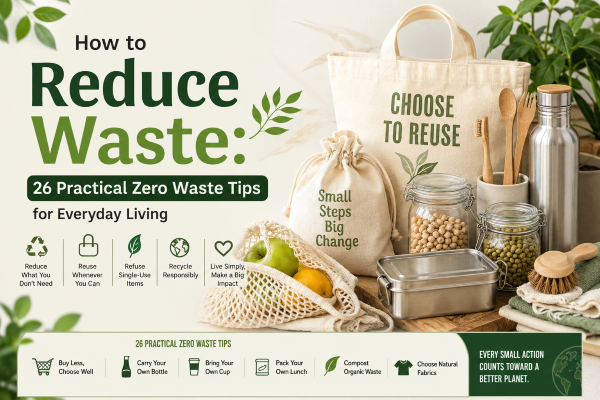
Every day, we throw away more than we think. A coffee cup here, a plastic bag there, some leftover food that never got eaten. It adds up fast. But here’s the good news: you don’t need to be perfect to make a real difference. You just need a few simple habits.
This guide will walk you through 26 practical zero waste tips that are easy to understand and even easier to start using today. No fancy words. No complicated rules. Just simple steps that help you reduce waste, save money, and take better care of the planet — one small change at a time.
What Does “Zero Waste” Really Mean?

Before we jump into the tips, let’s clear up one thing: zero waste does not mean you will never throw anything away again. That’s not realistic for most people, and that’s okay.
Zero waste simply means trying your best to keep things out of landfills. It’s about making small, smart choices so that less trash ends up buried in the ground or burned in an incinerator. Think of it as a mindset, not a strict rule.
A helpful way to remember the idea is the “5 Rs”:
- Refuse what you don’t need.
- Reduce what you do use.
- Reuse items instead of tossing them.
- Recycle what you can’t reuse.
- Rot (compost) the rest.
Keep this order in mind as you read through the tips below. The goal is not to buy a bunch of new “eco” products. The goal is to use less, waste less, and make what you already have go further.
Now, let’s dive into the 26 tips — grouped into easy categories so you can find what fits your life best.
Zero Waste Tips for Your Kitchen
The kitchen is usually where the most waste happens, especially food waste. These tips will help you fix that.
1. Plan Your Meals for the Week
One of the biggest reasons food goes bad and gets thrown out is that we buy too much without a plan. Take ten minutes each week to write down what meals you’ll cook. Then make a shopping list based on that plan, checking your fridge and pantry first so you don’t buy things you already have. You’ll buy only what you need, and less food will end up in the trash. Many people are surprised to find that meal planning also saves them a good amount of money each month, since impulse purchases at the grocery store tend to be the items that get wasted first.
2. Store Food the Right Way
Many fruits and vegetables spoil faster than they should simply because they’re stored wrong. Learn which foods go in the fridge and which stay on the counter. For example, tomatoes lose flavor in the fridge, while leafy greens last longer wrapped in a damp cloth or stored upright in a jar of water, like a bouquet of flowers. Onions and potatoes should be kept apart, since they cause each other to spoil faster when stored together. A little research here goes a long way toward stretching your groceries further.
3. Start Composting Food Scraps
Instead of throwing away vegetable peels, eggshells, and coffee grounds, start a compost pile or bin. Composting turns food scraps into rich soil for plants instead of letting them rot in a landfill, where they release methane, a gas that’s much more harmful to the climate than carbon dioxide. You don’t need a big backyard to compost — small countertop bins and worm composters work well for apartments too. Many cities now offer community composting programs if you don’t have space at home, so check with your local waste department to see what’s available near you.
4. Buy in Bulk When You Can
Bulk bins let you buy exactly the amount you need, using your own reusable containers or bags. This cuts down on the extra packaging that comes with pre-portioned items, and it often costs less too, since you’re not paying for the packaging itself. Grains, nuts, spices, dried fruit, and pasta are all great things to buy this way. If your grocery store doesn’t have a bulk section yet, look for a local co-op or refill shop nearby — these are becoming more common every year.
5. Say No to Single-Use Plastic Bags
Keep a few reusable cloth bags in your car or by the door so you never forget them at the store. Reusable produce bags work the same way for fruits and vegetables, replacing the thin plastic bags that get used once and thrown away. If you do forget your bags, it’s okay — just try again next time. Building a new habit takes a few tries, and beating yourself up over it won’t help.
6. Switch to a Reusable Water Bottle
A single reusable water bottle can replace hundreds of plastic ones every year. Choose one made of stainless steel or glass so it lasts a long time and doesn’t absorb odors or flavors. Keep it filled and with you, and you’ll rarely need to buy bottled water again. Many cafes and workplaces now offer water refill stations, and some coffee shops even give small discounts when you bring your own cup or bottle.
7. Use Cloth Napkins and Towels
Paper towels and paper napkins are handy, but they’re also single-use, meaning they get thrown away after just one use. Cloth versions can be washed and used again and again for years. Keep a small stack in your kitchen drawer, and you’ll notice how quickly your paper towel roll starts lasting longer. Old t-shirts or towels that are too worn to donate also make excellent cleaning rags, giving them one more useful life before they’re finally retired.
Also Read: zero waste lifestyle
8. Make Your Own Simple Snacks
Packaged snacks often come wrapped in layers of plastic that can’t be recycled. Try making your own granola bars, trail mix, or baked goods at home using ingredients bought in bulk. Not only does this cut down on packaging waste, it’s often healthier and cheaper too, since you control exactly what goes into it. Store your homemade snacks in reusable containers or jars to keep the low-waste habit going all the way through.
9. Freeze Leftovers Before They Spoil
If you know you won’t eat something in time, freeze it right away instead of letting it sit and go bad in the back of the fridge. Soups, sauces, bread, and even fruit like bananas can be frozen and used later, saving both food and money. Label your containers with the date so nothing gets forgotten and pushed to the back for months. A well-organized freezer can dramatically cut down on how much food you end up throwing out.
10. Use Glass Jars for Storage
Instead of buying new plastic containers, save glass jars from pasta sauce, jam, or pickles. Wash them out and use them to store leftovers, dry goods, or homemade snacks. They’re free, sturdy, see-through so you can spot what’s inside easily, and can be reused for years. Glass jars also work well for freezing soups and sauces, as long as you leave a little room at the top for the liquid to expand.
Zero Waste Tips for Shopping
What you buy — and how you buy it — makes a huge difference in how much waste you create.
11. Ask Yourself, “Do I Really Need This?”
Before buying anything, pause for a moment and ask this simple question. Many purchases are made on impulse and end up unused or thrown away later. Try waiting 24 hours before buying something that isn’t a necessity — you’ll often find the urge to buy it fades on its own. This one habit alone can cut down on a lot of unnecessary waste and clutter in your home.
12. Choose Products With Less Packaging
When you’re comparing two similar products, pick the one with simpler, smaller packaging. Look for items in cardboard, paper, or glass instead of layers of plastic wrap. Brands are starting to notice this shift and are offering more low-waste options, from concentrated cleaning products to bar soaps wrapped in paper instead of plastic bottles.
13. Support Local Farmers and Markets
Local food usually travels a shorter distance and comes with less packaging than items shipped from far away. Farmers markets also let you bring your own bags and containers, cutting out plastic wrapping almost entirely. As a bonus, you’re supporting small businesses in your own community instead of large supply chains.
14. Thrift Your Clothes Instead of Buying New
Fast fashion creates a huge amount of textile waste every year, with many clothing items being worn only a handful of times before being thrown out. Before buying something new, check thrift stores, consignment shops, or online resale sites first. You’ll often find quality items for a fraction of the price, and you’ll keep clothes out of landfills, where synthetic fabrics can take hundreds of years to break down.
15. Buy Secondhand Furniture and Household Items
Just like clothes, furniture and home goods can often be found secondhand in great condition. Estate sales, online marketplaces, and thrift stores are full of gently used items waiting for a second life. Buying secondhand also often means getting sturdier, better-made pieces than some newer budget options, since older furniture was frequently built to last.
16. Choose Quality Over Quantity
When you do need to buy something new, choose items built to last rather than cheap versions that break quickly. A well-made pair of shoes or a solid kitchen tool will outlast several cheaper replacements, meaning less waste over time and, often, less money spent overall once you factor in how many times you’d have replaced the cheaper option.
17. Bring Your Own Containers for Takeout
If you order food often, keep a set of containers on hand to request your leftovers in, or ask restaurants to skip the plastic cutlery and napkins if you already have them at home. Small requests like these reduce a surprising amount of single-use waste over a year of ordering food, and most restaurants are happy to accommodate the request.
Zero Waste Tips for Your Home
Simple swaps around the house can lower your waste without much effort at all.
18. Replace Disposable Cleaning Supplies
Instead of buying paper towels, disposable wipes, or single-use sponges, switch to washable cloths and reusable scrub brushes with replaceable heads. You can also make your own cleaning spray using vinegar, water, and a few drops of essential oil, cutting down on plastic bottles while saving money on store-bought cleaners.
19. Repair Instead of Replace
When something breaks — a zipper, a chair leg, a small appliance — try fixing it before tossing it out. Many communities now have “repair cafés,” where volunteers help you fix items for free, and there are countless free video tutorials online for almost any household repair. Learning a few basic repair skills can save a lot of stuff from the trash and build confidence for future fixes too.
20. Reuse Containers and Jars Around the House
Old containers, boxes, and jars don’t have to go straight to the recycling bin. Use them to organize small items like buttons, screws, craft supplies, or office odds and ends. Shoeboxes make surprisingly good drawer organizers, and takeout containers work well for freezer storage. Giving items a second purpose is a simple way to follow the “reuse” rule before recycling.
21. Switch to Reusable Batteries
Regular batteries are used once and thrown out, adding to hazardous landfill waste, since they contain chemicals that can leak into soil and water. Rechargeable batteries cost a bit more upfront but can be used hundreds of times, saving money and reducing waste in the long run. Keep a small charger by the door so you always remember to recharge instead of replace.
22. Unsubscribe From Junk Mail and Catalogs
Paper waste from mail adds up more than people realize, with the average household receiving dozens of unwanted catalogs and flyers each year. Many services let you opt out of catalogs and promotional mail online for free. This small step cuts down on paper waste without you lifting a finger after the initial sign-up, and it also cuts down on clutter piling up by your front door.
23. Donate Instead of Trashing
Before throwing away clothes, toys, books, or furniture that still work, consider donating them. Local shelters, schools, libraries, and charities often need these items, and donating keeps them out of the landfill entirely while helping someone else at the same time. A quick search online will usually turn up a donation center near you that accepts exactly what you’re looking to give away.
Zero Waste Tips for Everyday Life
These habits go beyond the kitchen and home, helping you build a lower-waste lifestyle overall.
24. Start Small and Build Habits Slowly
Trying to change everything overnight often leads to burnout, and burnout is usually why people give up on new habits altogether. Instead, pick one habit from this list, like carrying a reusable bag, and stick with it for a few weeks before adding another. Small, steady changes last much longer than big ones, and each new habit becomes the foundation for the next.
25. Get Your Community Involved
Zero waste living becomes easier — and more fun — when you’re not doing it alone. Join a local swap event, a community garden, a repair café, or an online group focused on sustainable living. Sharing tips and resources with others keeps you motivated and helps spread good habits further than you could on your own. Some neighborhoods even organize clothing and toy swaps, which are a great way to refresh your wardrobe or your kids’ toy bin without spending money or creating new waste.
26. Track Your Trash for a Week
Try this simple exercise: for one week, pay attention to everything you throw away. Keep a small notepad by your trash can, or simply take a look before you take the bag out. You’ll likely notice patterns, like too much food packaging, paper waste, or takeout containers. Once you know where your waste is coming from, it’s much easier to target the right habits to change instead of guessing where to start.
Why These Small Changes Actually Matter
It’s easy to think that one reusable bag or one skipped plastic bottle won’t make a difference. But when small habits are repeated every day, and shared by many people, the impact adds up quickly. According to global waste reports, the world produces billions of tonnes of municipal waste every year, and that number is expected to keep climbing unless everyday habits shift. Communities that recycle properly, reduce food waste, and support local businesses put far less pressure on landfills and natural resources over time.
You also don’t need to spend a lot of money to start. In fact, many of these tips — like planning meals, repairing items, or asking “do I really need this?” — actually save you money. Living with less waste often means living with less clutter, fewer expenses, and more thoughtful choices overall. Many people who start this journey say the biggest surprise isn’t how much waste they cut, but how much calmer and more organized their daily life feels once they slow down and buy with intention.
Common Mistakes to Avoid
As you start this journey, watch out for these common slip-ups:
- Trying to change everything at once. This usually leads to giving up. Go slow and steady instead.
- Buying too many “zero waste” products. Use what you already have before buying new reusable items. Owning ten tote bags isn’t more sustainable than using the ones you already own.
- Ignoring the “why.” When motivation dips, remind yourself why you started. Even one habit, done consistently, makes a difference over a year.
Frequently Asked Questions
Is it expensive to start living a zero waste lifestyle? No. In fact, most people end up saving money. Buying less, reusing what you already own, and choosing quality items over cheap replacements all lower your spending over time. You don’t need to buy a whole new set of “eco” products to get started — using what’s already in your home is the best first step.
Can I really make a difference on my own? Yes. While big companies and governments also need to make changes, your daily habits still matter. Every reusable bag, every planned meal, and every item you repair or donate keeps something out of a landfill. And when you talk about these habits with friends and family, the impact spreads even further.
What’s the easiest tip to start with? Most people find it easiest to start with a reusable water bottle or shopping bags, since these fit naturally into routines you already have. Once that habit feels automatic, add another tip from the list.
Do I need to go 100% zero waste to make a difference? Not at all. Zero waste is more of a direction than a strict destination. Even reducing your household waste by a small percentage, if done consistently, adds up to a meaningful amount over a year.
What should I do with items I can’t reuse, recycle, or donate? For items that are truly at the end of their life, check if your city has special disposal programs for things like electronics, batteries, or textiles. These programs handle materials more responsibly than a regular trash bin.
Final Thoughts
Reducing waste doesn’t have to be complicated or expensive. It’s really about paying a little more attention to what you buy, use, and throw away — and making small swaps where you can. Pick two or three tips from this list that feel easy for you, and start there. Once they become habits, come back and add a few more.
Every reusable bag, every planned meal, and every repaired item is a small step toward a cleaner, healthier planet. And those small steps, taken together by many people, truly do add up.
