

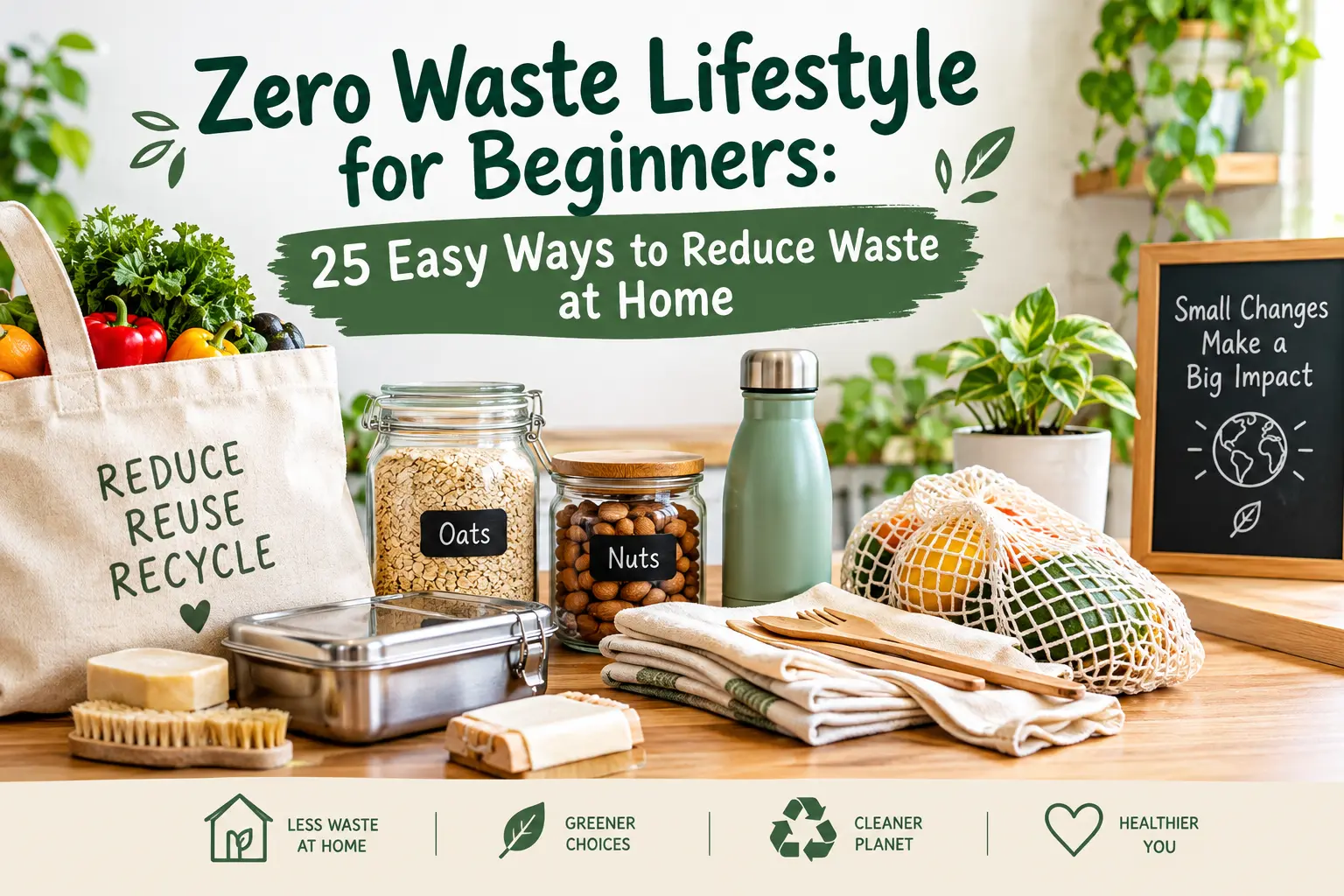
Introduction
If you have ever taken out the kitchen bin for the third time in a week and wondered where all of that rubbish comes from, you are not alone. A zero waste lifestyle is built on a simple idea: stop waste at the source instead of managing it after it has piled up. You do not need a mason jar of trash, a perfectly minimalist home or an unlimited budget to begin. You only need a willingness to look at what you bring into your house and a few practical habits to change how it leaves.
This guide is written for people who are just starting out. It explains what zero waste really means, why it matters, how to find out where your own waste comes from, and then walks you through 25 easy ways to reduce waste at home. The tips are grouped by room and activity, so you can pick the area that feels most manageable and start there. Most of them cost nothing, and many will actually save you money.
Here is the most important thing to know before you read on: this is about progress, not perfection. Nobody lives with literally zero waste. The goal of zero waste for beginners is to throw away a little less each week than you did the week before. Every plastic bag you refuse, every meal you finish instead of binning and every item you repair instead of replacing is a real win. Let’s get started.
What Is a Zero Waste Lifestyle?
A zero waste lifestyle is a way of living that aims to send as little as possible to landfill, incinerators and the ocean. Instead of the usual “buy, use, throw away” cycle, it treats everything you own as a resource that should be used for as long as possible and then returned to the earth or recycled properly. It covers what you eat, what you wear, how you clean and how you shop.
The movement is usually explained through the five Rs, a simple order of priorities that you can apply to almost any decision:
- Refuse what you do not need. Say no to free pens, flyers, plastic bags, straws and promotional freebies before they ever enter your home.
- Reduce what you do need. Buy fewer things, choose quality over quantity and keep only what you actually use.
- Reuse what you already have. Choose reusable products over disposable ones, and give old items a second purpose.
- Recycle what you cannot refuse, reduce or reuse. Recycling is important, but it comes fourth for a reason: it takes energy and does not work for every material.
- Rot your organic waste. Composting at home turns food scraps and garden waste into nutrient-rich soil instead of methane-producing landfill.
Notice that recycling is not at the top. Many beginners assume that a zero waste lifestyle simply means recycling more. In reality, the biggest impact comes from the first two steps, because the cleanest waste is the waste that never existed. If you want more everyday ideas on this theme, our Lifestyle category is full of simple guides for a calmer, cleaner and greener home.
Why Reduce Waste at Home? The Numbers Behind the Habit
It is easy to think that your own bin is too small to matter. The data says otherwise, especially when it comes to food. According to the UN Environment Programme’s Food Waste Index Report 2024, the world wasted about 1.05 billion tonnes of food in 2022, which is nearly one-fifth of all the food available to consumers. Households were responsible for roughly 60 percent of that total, around 631 million tonnes. That works out to at least a billion meals’ worth of edible food thrown away in homes every single day, at a time when hundreds of millions of people go hungry.
The climate cost is just as striking. The same UN reporting notes that food loss and waste generate up to 10 percent of global greenhouse gas emissions, which is several times the emissions of the aviation sector. Food rotting in a landfill releases methane, a potent greenhouse gas, so the way you handle your leftovers and peelings really does affect the climate.
There are personal benefits too. When you reduce household waste, you usually reduce spending as well. You buy only what you will eat, you stop paying for packaging, and you replace a stream of disposable products with a few durable ones. Many people also report that their homes feel calmer once clutter and constant shopping fade away. Add to that cleaner local streets, less plastic pollution and a healthier planet for the next generation, and the case for sustainable living is easy to make.
Step Zero: Do a Simple Home Waste Audit
Before you change anything, spend one week learning what you actually throw away. This single step makes every other tip in this guide more effective, because it shows you where to focus.
Here is a quick way to do it:
- Keep your bins as they are for seven days. Do not try to fix anything yet. You want an honest picture.
- Look through the contents before emptying them. Wear gloves, spread out a sheet of newspaper and sort what you find into food scraps, packaging, paper, plastics, textiles and “other”.
- Note the repeat offenders. Is it takeaway containers, snack wrappers, spoiled vegetables, shampoo bottles or online-delivery boxes?
- Pick your top three. Choose the three biggest categories and tackle those first.
Most people discover that food waste and single-use packaging make up the largest share. If that sounds like your home, the kitchen tips below will deliver the quickest results. You can also repeat the audit every few months to see how much you have improved, which is a great motivator.
Build a Beginner’s Zero Waste Starter Kit (Without Spending Much)
One of the biggest traps for new zero wasters is rushing out to buy a pile of “eco” products. Ironically, that creates more waste. A better approach is to use what you already own and add only a handful of essentials as you go.
A sensible starter kit might include:
- A reusable water bottle and a travel mug or flask
- Two or three cloth shopping bags, plus a few small produce bags (old cotton pillowcases or net bags work well)
- A set of reusable containers or jars for leftovers and bulk shopping
- A cloth napkin or handkerchief you can carry in your bag
- Reusable cutlery for lunches and travel
That is it. Everything else can wait until you actually need it, and many items can be sourced secondhand or made from things lying around your home. The best reusable products are the ones you already own and will keep using.
25 Easy Ways to Reduce Waste at Home
The tips below are organised by area of the home. You do not have to do all of them. Choose a handful that suit your routine, make them automatic, and then move on to the next few.
In the Kitchen: Cut Food and Packaging Waste
The kitchen is where most households produce the most waste, so it is the best place to begin. For plant-forward recipes and smart ways to use up every scrap, browse our Food category.
1. Plan your meals and shop with a list
Food waste starts in the shop, not the bin. Spend ten minutes each week sketching a loose meal plan, check what is already in your fridge and cupboards, and write a shopping list. Planning stops the impulse buys that wilt in the back of the fridge and makes it far easier to reduce waste at home without feeling like you are trying. Leave a couple of “flexible” slots for leftovers so nothing is left stranded.
2. Store food the smart way
Much of what we throw away was perfectly good a few days earlier. Keep herbs upright in a glass of water, wrap leafy greens in a clean damp cloth, store carrots and celery in water in the fridge, and keep onions and potatoes in a cool, dark place, but separate from each other. Learning where each food lasts longest is one of the cheapest and most powerful ways to cut household waste.
3. Use your freezer as a pause button
Your freezer can rescue almost anything on the edge. Slice and freeze ripe bananas for smoothies, freeze leftover rice and curry in single portions, and keep a bag for vegetable offcuts. Bread can be sliced and frozen then toasted straight from frozen. Label what you freeze so it does not get forgotten, and aim to empty the freezer a little every few weeks.
4. Eat leftovers on purpose
Make one night a week a “fridge clear-out” night. Roast vegetables become soup, yesterday’s rice becomes fried rice, and stale bread becomes breadcrumbs, croutons or French toast. Treating leftovers as an ingredient, not a failure, changes the way you cook. It also makes weeknight dinners quicker.
5. Understand date labels
“Best before” usually describes quality, not safety, while “use by” is about safety. Many foods remain perfectly fine after a best-before date if they look, smell and taste normal. Trust your senses, and you will throw away much less. This simple shift in mindset can save a surprising amount of food each month.
6. Start composting at home
Composting at home is the “rot” step of the zero waste lifestyle, and it is easier than most people expect. If you have a garden, a simple heap or bin works. If you live in a flat, try a small countertop bin that feeds a community compost point, a worm bin, or a sealed bokashi system. Compost fruit and vegetable peelings, tea leaves, coffee grounds and eggshells, and keep meat and dairy out unless your system is designed for them. Many households find that their rubbish bin shrinks dramatically once food scraps are diverted.
7. Swap disposable kitchen items for reusables
Replace cling film with beeswax wraps, a plate over a bowl or a lidded container. Swap paper towels for washable cloths cut from old T-shirts. Use a washable dish brush or a cloth instead of plastic sponges that shed microplastics. These zero waste swaps pay for themselves quickly, and they make your kitchen feel less cluttered.
While Shopping: Stop Waste Before It Starts
Every item you buy will eventually become waste, so shopping is your most powerful decision point. Here is how to shop with fewer wrappers and fewer regrets.
8. Always carry reusable bags
Keep a foldable bag in your handbag, backpack, car and by the front door so you never get caught out. If you forget, carry items by hand rather than buying another bag. Making this automatic is one of the simplest ways to cut single-use plastic from your week.
9. Buy in bulk and bring your own containers
Bulk bins and refill stores let you buy exactly the amount you need of rice, lentils, pasta, nuts, spices and cleaning products without the plastic packaging. Weigh your empty jar first so the shop can deduct it at the till. If there is no bulk store nearby, buy the largest practical size of staples to reduce packaging per portion, but only if you will actually use it before it spoils.
10. Choose loose produce and local markets
Pick loose fruit and vegetables instead of pre-wrapped trays, and put them straight into your own bags. Farmers’ markets and local grocers tend to use less packaging, offer seasonal produce and often let you buy only what you need. As a bonus, fresh seasonal food usually tastes better and lasts longer.
11. Buy secondhand first
Before you buy something new, check whether you can borrow it, rent it, swap it or find it secondhand. Furniture, books, tools, kitchenware, toys and clothing are widely available in charity shops, online marketplaces and neighbourhood groups. Secondhand shopping keeps perfectly good items in use and often saves you a lot of money. If you enjoy style inspiration built around timeless staples, our Fashion category shares thrift finds, upcycling ideas and slow-fashion guides.
12. Pause before you purchase
Try a “wait 48 hours” rule for non-essential buys. Add the item to your wish list, and if you still need it after two days, go ahead. Most impulse urges fade, and the money and storage space you save add up quickly. This mindful pause is the heart of the “reduce” principle.
In the Bathroom: Simple Personal Care Swaps
The bathroom is full of small plastic containers that are used for a few weeks and thrown away. A few thoughtful swaps can make a visible difference, and you can make them gradually as products run out.
13. Switch to bar soap and shampoo bars
Solid soap, shampoo bars and conditioner bars last a long time, travel easily and usually come with minimal paper packaging. They replace several plastic bottles at once. Store them on a draining dish so they dry between uses and last longer. If bars do not suit your hair, look for refill options or buy the largest bottle available and refill smaller ones.
14. Use a bamboo or long-lasting toothbrush and plastic-free floss
The average toothbrush is swapped every few months, which adds up to a lot of plastic over a lifetime. A bamboo toothbrush with a compostable handle, or a brush with replaceable heads, is a straightforward upgrade. Pair it with toothpaste tablets or a refillable tube, and silk or plant-based floss in a refillable glass container. Finish what you have first, then swap.
15. Choose reusable period and hygiene products
Menstrual cups, period underwear and washable cloth pads can replace hundreds of disposable products over time. Cotton rounds can be swapped for washable cloth pads for removing makeup, and cotton buds for reusable silicone ones or a washable cloth. Choose what feels comfortable and hygienic for you, and keep disposables on hand as a backup while you adjust.
16. Try a safety razor and refillable products
A stainless-steel safety razor uses replaceable metal blades, so you throw away a tiny strip of steel instead of a whole plastic razor. Many deodorants, lotions and creams now come in refillable or recyclable metal containers. You can also make simple products at home, such as a sugar and coconut oil scrub, using a few pantry ingredients.
Cleaning and Laundry: Greener Habits for a Fresher Home
17. Make your own all-purpose cleaner
Most household cleaning can be done with a handful of simple ingredients. A spray of white vinegar and water, with a few citrus peels steeped in it for a pleasant scent, handles many surfaces. Bicarbonate of soda works well as a gentle scrub for sinks and pots. Avoid using vinegar on natural stone, and always test a small area first. Reusing glass spray bottles keeps the whole system plastic-free.
18. Use refillable or concentrated cleaning products
If you prefer ready-made cleaners, choose concentrates, tablets or refill stations. Concentrates reduce the packaging and shipping weight, and you simply add water at home to the bottle you already own. Skipping the single-use spray bottle each time is a small change that adds up over a year.
19. Wash smarter and air-dry when you can
Wash full loads in cool water, use only as much detergent as you need, and consider laundry powder in a cardboard box or soap nuts instead of liquid detergent in a plastic jug. Line-drying your clothes saves energy and helps clothes last longer, which is good for your wardrobe and your electricity bill. A microplastic-catching laundry bag or filter helps if you wear a lot of synthetic fabrics.
Clothes, Gifts and Household Items: Make Things Last
20. Repair before you replace
A missing button, a loose hem, a wobbly chair leg or a broken zip rarely means an item is finished. Learn a few basic repairs, such as sewing on a button and darning a sock, or find a local repair café or tailor. Repairing extends the life of what you own and keeps it out of the bin. It is also a wonderfully satisfying skill to learn.
21. Build a small, versatile wardrobe
A capsule wardrobe of well-made pieces that mix and match means fewer impulse purchases and less to wash and store. Choose natural or durable fabrics, wear what you own more often and buy secondhand when you need something new. For ideas on styling versatile staples, see our brown jeans fashion trend outfit ideas, and browse our Fashion section for more slow-fashion inspiration.
22. Give gifts that do not become waste
Choose experiences, consumables, plants or homemade gifts instead of items that will end up in a drawer. When you do wrap presents, use fabric, newspaper or reusable gift bags and avoid glitter and plastic ribbon. Let friends and family know you prefer low-waste presents, and be gracious when you receive something less than ideal, because the goal is kindness, not perfection.
Outdoors and Community: Widen Your Impact
23. Grow something, even in a small space
A windowsill herb pot, a balcony tomato plant or a patch of garden reduces packaging, makes meals fresher and gives you a place to use your compost. You can even regrow spring onions, lettuce hearts and celery bases from kitchen scraps. If you have room for something bigger, planting a tree is one of the most rewarding long-term actions you can take. Our beginner-friendly guide on how to plant a tree covers each step.
24. Go paperless and reduce junk mail
Switch bills and statements to digital, unsubscribe from catalogues and flyers, and put a polite “no junk mail” sign on your letterbox if that is allowed where you live. Keep a small notebook or reuse the blank side of printed pages for notes. This reduces paper waste and stops clutter before it arrives at your door.
25. Share what you learn and join your community
The final tip is perhaps the most powerful: bring others along. Join a local clean-up, a repair café, a buy-nothing group or a community garden. Organise a clothes swap with friends. Talk about what works and what does not. Sustainable living is easier and more fun when it is shared, and your example can quietly inspire people around you. If you want to share your own experience, you are welcome to write for us.
Common Beginner Mistakes to Avoid
Even with the best intentions, it is easy to stumble early on. Here are the most common mistakes and how to sidestep them.
- Buying everything at once: A shelf of matching jars and fancy bamboo gadgets is not a zero waste lifestyle. Use what you have, and replace things only when they wear out.
- Throwing away perfectly good plastic: The most sustainable item is the one you already own. Keep and use your existing containers until they truly give out.
- Aiming for perfection: If you slip up and buy a plastic-wrapped snack, do not give up. Consistent small actions beat occasional perfect ones.
- Ignoring food waste: Beginners often focus on packaging, yet food is usually the bigger piece of the household bin. Tackle your fridge habits early.
- Wishcycling: Putting uncertain items in the recycling bin can contaminate whole batches. Check your local rules and, when in doubt, find out before you toss.
- Doing it alone: Involve your household from the start, and share the reasons behind the changes so that everyone feels part of the plan.
Your 30-Day Zero Waste Starter Plan
If you would like a clear path, follow this gentle plan. Each week adds just a few habits, so nothing feels overwhelming.
- Week 1: Observe and refuse: Run your home waste audit, start carrying a reusable bottle and bag, and say no to freebies and unnecessary bags.
- Week 2: Tackle the kitchen: Plan your meals, fix your food storage, freeze leftovers and begin composting your scraps.
- Week 3: Swap and simplify: Replace disposable items with reusables as they run out, switch to a bar soap or shampoo bar, and try one homemade cleaner.
- Week 4: Repair, borrow and share: Mend something that is broken, buy one item secondhand, go paperless on a bill and tell a friend about what you have learned.
At the end of the month, repeat your waste audit and compare. Celebrate the difference, however small, and pick your next three goals.
Frequently Asked Questions About a Zero Waste Lifestyle
Is a zero waste lifestyle expensive?
Not at all. The cheapest changes, such as refusing what you do not need, eating leftovers, repairing things and buying secondhand, actually save money. Some reusable products cost more up front, but they replace years of disposables, so they usually pay for themselves.
Can I really have zero waste?
Practically speaking, almost no one produces absolutely no waste. Think of zero waste as a direction rather than a finish line. Your aim is to send less to landfill each month and to make better choices as they become available to you.
What is the easiest first step for beginners?
Carry a reusable bottle and bag, then start planning your meals to cut food waste. Both are simple, free or low-cost, and they give quick, visible results that keep you motivated.
How do I reduce waste at home if I live in a small flat?
Small homes are ideal for zero waste because there is less room for clutter. Use a countertop compost bin or a community drop-off point, shop in small quantities, choose multi-purpose items and grow herbs on a windowsill.
Is recycling enough?
Recycling helps, but it is not a complete solution. It sits fourth on the list of five Rs because it uses energy and is not possible for every material. Refusing, reducing and reusing come first because they prevent waste altogether.
How do I get my family on board?
Start with changes that make everyone’s life easier or save money, like meal planning or refillable bottles. Explain the why, let each person choose one habit to own, and celebrate progress together instead of criticising mistakes.
Conclusion: Start Small, Keep Going
A zero waste lifestyle is not about living in a spotless, plastic-free bubble. It is about paying attention to what flows through your home and making a series of small, kind choices that add up. Whether you start by carrying a reusable bottle, composting your peelings or mending a favourite jumper, you are already part of the solution.
Pick three of the 25 ways above and try them this week. When they feel natural, add a few more. Over time, you will notice smaller bins, lighter shopping bags, a tidier home and a fatter wallet. For more guidance, explore our Blog and Lifestyle sections, and keep returning as your journey grows. Every small step towards sustainable living truly counts.
