

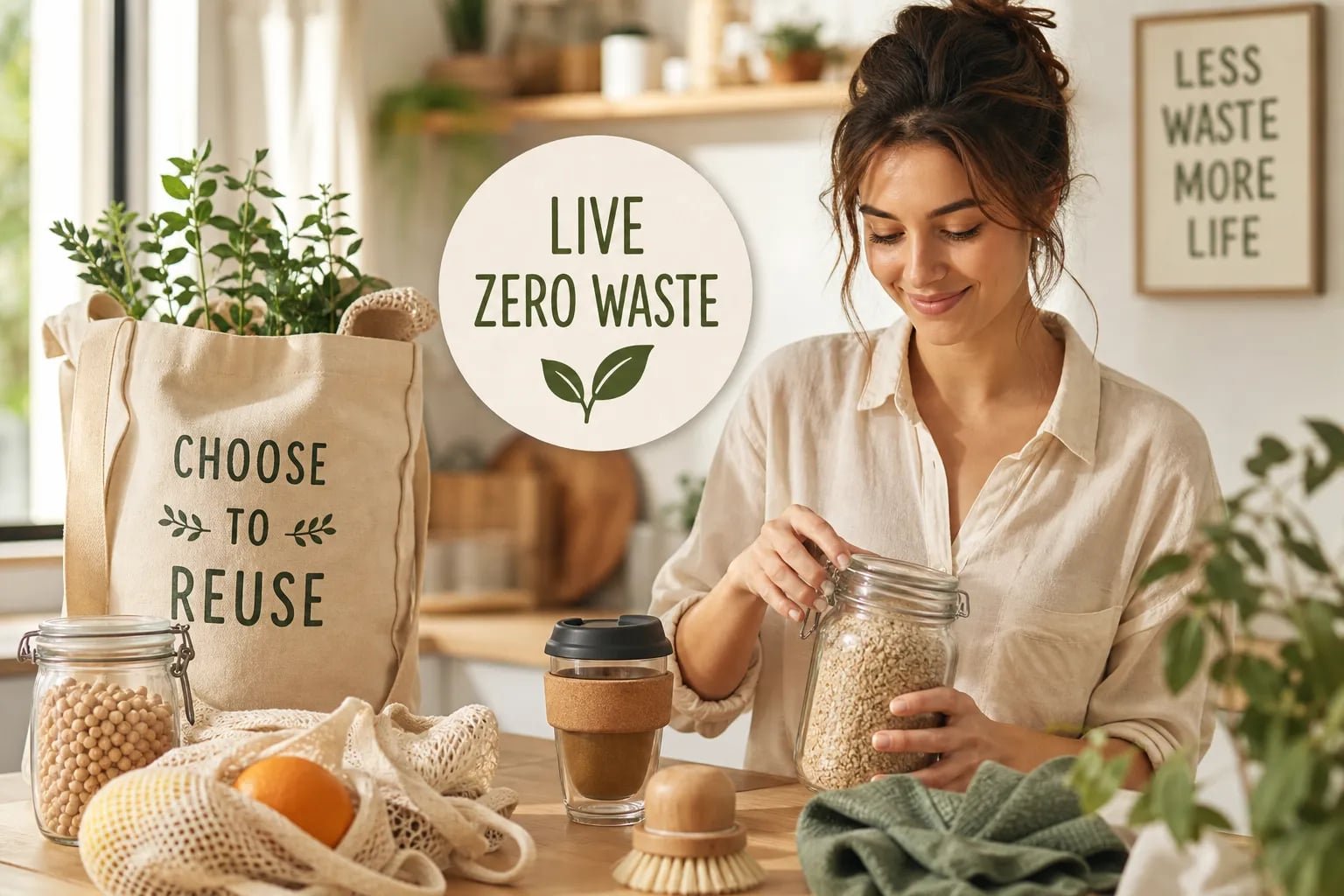
Roughly 30, 40% of U.S. household waste is avoidable through simple behaviour changes alone, and that’s genuinely good news. These zero waste lifestyle tips prove that the majority of your environmental impact doesn’t require a dramatic lifestyle overhaul, a bigger budget, or a perfectly curated home full of eco products. Small, consistent shifts actually move the needle.
This guide organizes practical, low-cost zero-waste swaps and habits by life area so you can pick what fits your situation right now. You don’t need to do everything at once. You don’t need to be perfect. Here at Zero Waste Lifestyle, we publish deep-dive guides on every category touched in this article, from kitchen systems to sustainable fashion on a budget, so you can always go further when you’re ready. For now, start here.
Zero Waste Lifestyle Tips: Kitchen Swaps That Cut the Most Waste
Food and food-related packaging together represent a substantial share of household waste, making the kitchen one of the highest-impact places to start your plastic-free living journey. The logic is simple: the items you throw away every day are the ones worth replacing first. Swapping a product you use once a week saves far less than swapping something you go through daily.
The Reusable Trio With the Fastest Financial Payback
Three swaps stand above the rest for beginners because they combine high frequency with fast financial returns. A reusable water bottle pays back in 1, 3 months if you currently buy bottled water; the average household spends roughly $200 a year on single-use bottles. A reusable coffee mug pays back in 1, 2 months when café discounts and avoided cup charges stack up. A safety razor takes about 3, 4 months and saves an estimated $80, $175 every year after that.
The critical thing to remember: consistent use of one item beats owning several alternatives that sit in a drawer. Manufacturing four unused reusable bottles creates more environmental impact without displacing any disposables. Frequency of use is the real driver of both waste reduction and financial payback.
Food Storage Upgrades Worth Prioritizing
Silicone bags and glass containers are solid replacements for disposable zip-lock bags and takeout containers. Silicone bags typically pay back in 6, 8 months at regular use; glass containers take closer to 18, 24 months but can last a decade or more. Set honest expectations so you don’t get discouraged early.
One often-overlooked zero-cost option: cover a bowl with a plate. A plate over a bowl outperforms beeswax wrap on both environmental and financial grounds. Beeswax wraps cost $15, $20, last only 6, 12 months, and some comparative life-cycle assessments suggest they may not reach environmental break-even depending on washing frequency and usage habits. Your money is better spent elsewhere, and you already have what you need.
The Simplest Paper Towel Swap You Already Own
Cut-up old T-shirts or worn kitchen towels replace paper towels at exactly zero cost. That doesn’t mean eliminating paper towels entirely. Reserve them for truly messy jobs you would rather not wash out of a rag, this keeps the habit realistic and removes the all-or-nothing pressure that causes most beginners to quit. Households spend $100, $200 a year on paper towels; cutting that in half adds up fast.
Zero Waste Lifestyle Tips for Grocery Shopping With Less Packaging
Grocery shopping is one of the highest-leverage areas for cutting plastic waste because it’s a repeated, frequent behaviour. Small changes here compound across hundreds of shopping trips. The most effective strategy is to reduce packaging before it enters your home, which is far easier than trying to recycle it after the fact.
Refusing Packaging Before It Reaches Your Cart
Paracycling means choosing products that create less waste before you buy them. In practice, it looks like this:
- Buy loose produce instead of pre-bagged
- Choose one large container over several small ones
- Carry a reusable bag consistently
- Say no to plastic bags, receipts, and condiment packets when you don’t need them
A polypropylene woven bag breaks even environmentally after roughly 10, 20 uses, and closer to 30 uses when you account for the full production footprint. Start with bags you already own rather than buying new ones.
How to Find Refill and Bulk Options in Your City
Approximately 1,300 zero-waste and refill stores operate across the United States, and the options are more accessible than most beginners expect. Cities like Boston have Good Filling, Denver has Joy Fill, and Los Angeles has Sustain L.A. National directories like Literals and the Refill Directory let you search by zip code. If a dedicated riflery isn’t nearby, chains like Lush and The Body Shop offer in-store refill programs at many locations, making this a realistic option in most metro areas.
Food Waste: The Biggest Missed Opportunity for Beginners
Roughly one-third of the U.S. food supply goes uneaten. At the household level, reducing food waste is completely free to address and immediately lowers your grocery bill. This is a behaviour shift, not a product purchase, which puts it in a category of its own.
Simple Meal Habits That Stop Food From Going in the Trash
Four habits work together to keep food out of the bin: check the fridge before you shop, make a short grocery list based on what you actually need, store leftovers in clear containers at eye level, and eat what’s already in the house before adding more. Visibility is the core principle. Food forgotten at the back of the fridge is food wasted. These habits cost nothing and often noticeably reduce grocery bills within the first month.
Composting Options for Every Living Situation
Composting is accessible even without a yard. The lowest-maintenance approach is freezing scraps in a sealed container until a municipal drop-off day, this prevents odors and fruit flies with zero equipment required. Many U.S. cities, including Boston, Denver, Washington D.C., and San Diego, now offer free curb side food-scrap collection, so check your city’s program before assuming you need special equipment.
For apartment dwellers, a small vermicomposting bin with red wigglers handles fruit and vegetable scraps quietly and without smell when managed correctly. Bokashi systems also work well in tight spaces and can process meat and dairy, though the fermented output still needs to go into soil or a composting facility afterward.
Low-Waste Fashion Without Buying a New Wardrobe
Fast fashion is a significant driver of waste, but sustainable fashion doesn’t have to mean expensive ethical brands. For beginners, the most effective first step is simply buying less and choosing second-hand when you do need something. These waste reduction ideas are about freeing yourself from the churn of constant new purchases, not restricting your style.
Why Second hand Shopping Is the Easiest Starting Point
Thrift stores, consignment shops, and resale apps are the most budget-friendly entry point into low-waste fashion. Buying second hand keeps clothing in circulation, avoids the impact of new manufacturing, and almost always costs less than buying new. Platforms like ThredUp carry everyday basics starting around $5, $30, Postmark covers mid-market brands in the $15, $150 range, and Depop skews toward vintage and trend-led pieces at similar price points. Start with just one second hand purchase before committing to a full wardrobe shift; the point is to build a new default habit, not to overhaul everything at once.
The Capsule Wardrobe Mindset and Why It Reduces Waste Over Time
A capsule wardrobe is a waste reduction strategy as much as a fashion concept. Fewer, more versatile pieces mean less impulse buying and less clothing headed to landfill. You don’t need to replace everything at once. One practical approach is a 48-hour pause rule: before any non-essential clothing purchase, wait two days and ask whether the item works with at least three things you already own. Most impulse buys don’t survive that question.
How to Build Low-Waste Habits That Actually Stick
Most beginners try to change everything at once and burn out within a few weeks. The problem isn’t motivation; it’s pace. The fix is the same as with any lasting habit: start smaller than feels necessary, and layer in complexity only after the basics feel automatic.
The One-at-a-Time Approach That Prevents Overwhelm
Replace one frequent disposable item at a time, aim for roughly one swap per week, rather than overhauling the whole household simultaneously. Add a new habit only after the previous one feels routine, not effortful. This matters beyond the psychological benefit: frequency of use determines both environmental payback and lasting habit formation. Owning ten eco-friendly products you use inconsistently helps less than using two products every single day.
A Simple 30-Day Starter Plan to Go From Curious to Consistent
This four-week framework is loose by design. Adapt it to your pace, your living situation, and your budget.
- Week 1: Carry a reusable bag and bottle everywhere. Refuse straws, plastic cutlery, and receipts when offered.
- Week 2: Replace paper towels with cloth rags for everyday spills. Store leftovers visibly. Check the fridge before you shop.
- Week 3: Research one local refill or bulk store in your city. Set up a simple food-scrap collection container in your kitchen, even if it’s just a bowl in the freezer.
- Week 4: Audit one clothing or personal-care habit. Before your next purchase in either category, check second-hand options first.
Slipping on any given day doesn’t reset your progress. The goal is a gradual directional shift, not a perfect score every week. Progress made over 30 imperfect days beats a flawless week followed by total abandonment every time.
Start Where You Are and Build From There
Zero-waste living is a direction, not a destination. The five areas covered here, kitchen swaps, grocery habits, food waste reduction, second hand fashion, and habit-building, give you a practical map of where your household waste actually comes from. Research suggests that cutting 30, 40% of that waste doesn’t require a dramatic life change; it requires a handful of consistent beginner zero-waste habits applied over time.
Pick two or three swaps that fit your life right now and get those feeling automatic before adding anything else. A reusable bottle, visible leftovers, and one second hand purchase can collectively reduce spending and waste noticeably across a full year. Use these zero waste lifestyle tips to start small and build lasting habits, because small and consistent always outlasts ambitious and short-lived.
When you’re ready to go deeper on any topic covered here, Zero Waste Lifestyle has detailed guides on kitchen systems, composting basics, sustainable fashion on a budget, and much more. Browse those resources, bookmark the ones most relevant to your situation, and come back whenever you want to take the next step. There’s no rush, and there’s no wrong starting point.
