

Trash piles up fast. You buy a coffee. You toss the cup. And Your order online. You throw away the box. Multiply that by every person on the planet, and you get a crisis. Landfills overflow. Oceans fill with plastic. Resources run out.
A zero waste lifestyle offers a way out. It does not ask for perfection. It asks for intention. You make small changes. Those changes add up. Over time, you send less trash to the landfill and use fewer resources.
What Does “Zero Waste” Actually Mean?
Zero waste does not mean zero trash. That goal is nearly impossible for most people. Instead, zero waste means you aim to send as little as possible to landfills, incinerators, and oceans.
Most zero waste experts use a simple benchmark. They aim to divert about 90% of their waste away from the trash can. They do this through smarter choices, reuse, recycling, and composting.
Think of zero waste as a direction, not a destination. You will not get everything right. Nobody does. You just keep moving toward less waste, one decision at a time.
Why Zero Waste Matters Right Now
The stakes keep rising. Landfills release methane, a greenhouse gas far more potent than carbon dioxide. Plastic breaks down into microplastics that show up in our water, our food, and even our blood.
Manufacturing new products also burns through natural resources. Every plastic bottle you skip saves oil. Every reused jar saves glass production. And Every composted banana peel skips a trip to a landfill where it would rot and release methane instead of turning into healthy soil.
Governments have started to notice too. Plastic bans continue to spread across states and cities. Companies now market reusable and refillable products more than ever. The shift is not just personal anymore. It has become a broader movement.
That said, this guide focuses on what you can control: your own home, your own habits, and your own choices.
The 5 Rs of Zero Waste
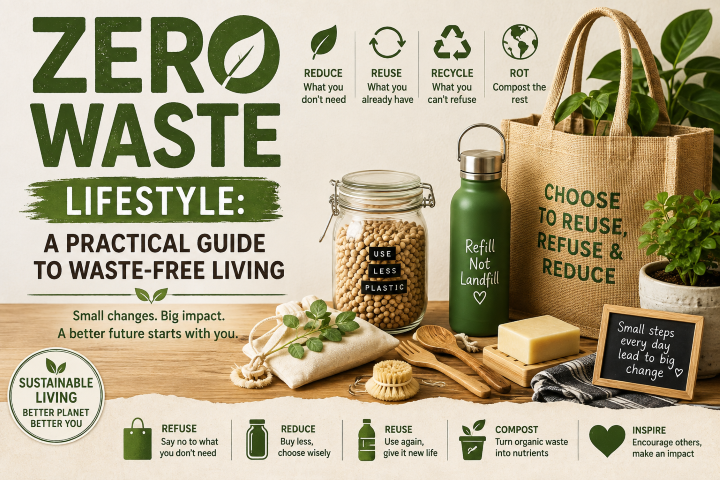
Most zero waste advocates follow a simple framework known as the 5 Rs. Use them in this order. Each step matters more than the one after it.
1. Refuse
Say no first. Refuse what you do not need. Turn down freebies at conferences. Skip the plastic straw. Decline the shopping bag when you only have one item. Every item you refuse never becomes waste in the first place.
This step feels awkward at first. You might worry about seeming rude. Most people barely notice. A simple “no thank you, I’m good” works just fine.
2. Reduce
Cut back on what you already buy. Look at your closet. Look at your kitchen cabinets. Ask yourself what you actually use. Many households own far more than they need.
Reducing does not mean deprivation. It means buying with intention. Choose quality over quantity. Buy one good coat instead of five cheap ones. A well-made item lasts longer and saves money over time.
3. Reuse
Give items a second life. Reuse glass jars for pantry storage. Turn old t-shirts into cleaning rags. Repair a broken chair instead of replacing it. Buy secondhand when you can.
Reuse also includes borrowing and sharing. Tool libraries let you borrow a drill instead of buying one you will use twice. Clothing swaps let you refresh your wardrobe without spending money or creating waste.
4. Recycle
Recycle only what you cannot refuse, reduce, or reuse. Many people treat recycling as their first move. It should be closer to your last resort. Recycling still uses energy and resources. Some materials, like certain plastics, rarely get recycled at all, despite what the label says.
Learn your local recycling rules. Rules vary by city. Some places accept glass but not certain plastics. Contamination ruins entire batches of recycling, so rinse containers before you toss them in the bin.
5. Rot (Compost)
Compost your food scraps and yard waste. Food waste makes up a huge share of household trash. When it rots in a landfill without oxygen, it produces methane. When it composts properly, it turns into rich soil instead.
You do not need a backyard to compost. Countertop bins, worm composting systems, and municipal compost pickup programs all work well for apartments and small spaces.
How to Start Your Zero Waste Journey
Do not try to overhaul your entire life in one weekend. That approach burns people out fast. Instead, follow these steps.
Step 1: Audit Your Trash
Spend one week tracking what you throw away. Keep a small notebook by your trash can. Write down every item before you toss it. At the end of the week, look for patterns.
Maybe you throw away a lot of food packaging. Maybe you toss disposable coffee cups daily. This audit shows you exactly where to focus your energy first.
Step 2: Pick One Swap Per Room
Do not try to fix your whole house at once. Choose one swap per room instead. In the kitchen, swap paper towels for cloth rags. In the bathroom, swap plastic razors for a metal safety razor. And In the bedroom, start donating clothes you no longer wear instead of throwing them away.
Small wins build momentum. Once one swap feels normal, add another.
Step 3: Build a Simple Zero Waste Kit
A few reusable items cover most daily situations. Keep these on hand:
- A reusable water bottle
- A set of cloth shopping bags
- A reusable coffee cup
- A set of metal or bamboo utensils
- A few cloth produce bags for grocery shopping
Keep these items near your door or in your bag. You cannot use them if you forget them at home.
Step 4: Rethink Your Shopping Habits
Before you buy anything, pause and ask three questions. Do you need it? Will you use it often? Can you get it secondhand or borrow it instead?
This pause interrupts impulse buying. It also cuts down on packaging waste, since new products almost always come wrapped in plastic or cardboard.
Room-by-Room Zero Waste Tips
Kitchen
The kitchen usually produces the most household waste. Start here for the biggest impact.
- Buy food in bulk when you can, using your own containers or bags.
- Store leftovers in glass jars instead of plastic wrap or bags.
- Compost fruit and vegetable scraps instead of throwing them away.
- Plan meals ahead of time to avoid buying food you will not use.
- Keep a “eat me first” bin in your fridge for items close to spoiling.
Food waste costs you money too. Planning meals and using what you already own saves cash along with the planet.
Bathroom
Bathrooms hide a surprising amount of plastic waste. Shampoo bottles, plastic razors, and cotton swabs all add up over a year.
- Switch to bar soap and shampoo bars instead of bottled versions.
- Use a bamboo toothbrush instead of a plastic one.
- Try a metal safety razor instead of disposable plastic razors.
- Replace cotton pads with washable cloth rounds.
- Choose toilet paper wrapped in paper instead of plastic.
Living Room and Bedroom
- Repair furniture and clothing before replacing them.
- Donate unused items instead of throwing them in the trash.
- Buy secondhand furniture and clothing when you can.
- Choose natural fiber clothing that lasts longer and biodegrades more easily.
- Avoid fast fashion, since cheap clothing wears out fast and often ends up in landfills.
Home Office
- Print only when necessary, and print on both sides of the paper.
- Reuse old paper as scrap notes before recycling it.
- Buy refillable pens instead of disposable ones.
- Choose digital documents and receipts instead of paper ones.
Zero Waste Grocery Shopping
Grocery shopping generates a lot of packaging waste. A few habits cut that waste down significantly.
Bring your own bags. Keep reusable produce bags in your car or by your front door, so you never forget them. Shop the bulk bins when your store has them, and bring your own containers for grains, nuts, and spices.
Choose products with less packaging. Buy a large block of cheese instead of individually wrapped slices. Choose loose fruits and vegetables instead of pre-packaged ones.
Support local farmers markets when you can. Farmers markets usually involve far less packaging than grocery stores, and the produce often travels a shorter distance too.
Common Zero Waste Mistakes to Avoid
Chasing Perfection
Many people quit early because they expect perfection. They see influencers with a single mason jar of yearly trash and feel like failures by comparison. That standard is unrealistic for most people. Progress matters more than perfection.
Buying Too Many “Zero Waste” Products
Ironically, some people create waste while trying to go zero waste. They buy a new bamboo version of every plastic item they already own. Use what you already have first. Replace items only after they wear out.
Ignoring the Bigger Picture
Personal habits matter, but they are not the whole story. Industrial waste and corporate packaging choices create far more trash than individual households. Support policies and companies that reduce waste at the source, not just your own trash can.
Giving Up After One Setback
You will forget your reusable bag sometimes. You will end up with a plastic container you did not want. That is normal. One setback does not undo your progress. Keep going.
The Benefits of a Zero Waste Lifestyle
It Saves Money
Buying less, reusing more, and choosing quality over quantity all save money over time. A refillable water bottle costs far less over a year than daily bottled water. A durable coat costs less over its lifetime than five cheap ones that wear out fast.
It Simplifies Your Life
Fewer possessions mean less clutter. Less clutter means less stress and less time spent cleaning and organizing. Many people report feeling calmer once they cut down on unnecessary belongings.
It Reduces Your Environmental Footprint
Less trash means less methane from landfills. Less new production means fewer resources pulled from the earth. Every small choice adds up across a lifetime.
It Builds Healthier Habits
Many zero waste swaps also improve your health. Bar soap often contains fewer synthetic chemicals than bottled versions. Cooking at home instead of ordering takeout usually means healthier meals with less packaging.
Building Community Around Zero Waste
Zero waste habits stick better when you connect with other people doing the same thing. Look for local zero waste groups in your area. Many cities host repair cafés, where volunteers help you fix broken items instead of throwing them away.
Clothing swaps let you refresh your wardrobe for free while keeping clothes out of landfills. Online communities on social media platforms also share practical tips, local resources, and encouragement when you hit a rough patch.
Talk to your friends and family about what you are doing. You do not need to lecture anyone. Just share what works for you. Curiosity spreads faster than criticism.
A Simple 30-Day Zero Waste Challenge
If you want a structured way to start, try this simple plan. Each week, add a new habit instead of trying everything at once.
Week 1: Track your trash. Notice patterns. Refuse one disposable item each day, like a straw or a plastic bag.
Week 2: Build your zero waste kit. Bring a reusable bag, water bottle, and coffee cup everywhere you go.
Week 3: Start composting your food scraps. Look up a local composting program if you do not have space for your own bin.
Week 4: Audit your closet and kitchen. Donate what you no longer use. Plan your meals for the week to cut down on food waste.
By the end of the month, several new habits will feel automatic. Keep building from there.
Final Thoughts
A zero waste lifestyle does not demand a perfect trash-free existence. It asks for steady, intentional choices. Refuse what you do not need. Reduce what you buy. Reuse what you already own. Recycle what you cannot avoid. Compost what nature can break down.
Start small. Pick one swap. Build from there. Every reusable bag, every composted scrap, and every repaired item makes a real difference. You do not need to do it perfectly. You just need to start.
The planet does not need one person practicing zero waste perfectly. It needs millions of people practicing it imperfectly, together.

1 Comment
Pingback: Zero Waste for Beginners: Your Simple Starter Guide - zerowastelifestyle.net