

Have you ever looked at your trash can and wondered, “Where does all of this actually go?” Most of us throw things away every single day without thinking twice. A plastic bag here. A coffee cup there. A wrapper we barely notice. But all of that trash has to go somewhere, and most of it ends up sitting in a landfill for years, sometimes hundreds of years.
This is where the idea of a zero waste lifestyle comes in. It sounds like a big, scary goal at first. Some people imagine living in a tiny house with one jar of trash for the whole year. But that’s not what it really means for most people. A zero waste lifestyle is simply about making small, smart choices that reduce the amount of garbage you create. It’s not about being perfect. It’s about doing better, one step at a time.
What Does “Zero Waste Lifestyle” Really Mean?
Let’s keep this simple. A zero waste lifestyle means trying to send as little trash as possible to the landfill, the incinerator, or the ocean. It’s a way of living where you think before you buy, use things more than once, and find ways to reuse or recycle instead of throwing things away.
It doesn’t mean you’ll never throw anything away again. That’s not realistic for most people. Instead, think of it as a direction you’re moving in, not a finish line you have to cross. Every small change counts. Every reusable bag, every glass jar you reuse, every meal you don’t waste, all of it adds up.
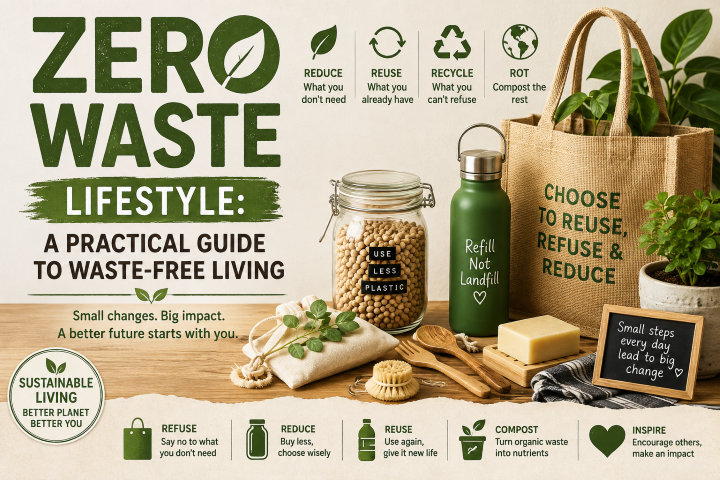
People who follow a zero waste lifestyle often use a simple idea called the “5 Rs.” These five words help guide the choices you make every day:
- Refuse – Say no to things you don’t need, like plastic straws or free flyers.
- Reduce – Buy less and use less in the first place.
- Reuse – Use things more than once instead of throwing them away.
- Recycle – When you can’t avoid waste, recycle it the right way.
- Rot – Compost food scraps so they turn into soil instead of landfill gas.
These five steps are listed in order for a reason. The best way to reduce waste is to refuse it before it even enters your home. Recycling should be your last option, not your first, because even recycling uses energy and resources.
Why Should You Care About a Zero Waste Lifestyle?
You might be thinking, “I’m just one person. Does my trash really matter?” It’s a fair question. But here’s the truth: small actions, when repeated by millions of people, create a huge impact.
Here are a few simple reasons why a zero waste lifestyle matters:
- It helps the planet: Trash that goes to landfills doesn’t just disappear. It sits there, sometimes for hundreds of years, releasing harmful gases into the air. Plastic waste often ends up in rivers and oceans, hurting fish, birds, and other animals.
- It saves you money: This might surprise you, but living with less waste often means spending less money. When you buy only what you need, cook at home instead of ordering food in disposable containers, and reuse items instead of buying new ones, your wallet feels the difference too.
- It’s good for your health: Many single-use plastics contain chemicals that can affect your health over time. Choosing natural, reusable materials like glass, metal, or cloth is often a healthier option for you and your family.
- It builds better habits: A zero waste lifestyle teaches you to slow down and think before you buy. This kind of mindful living often spills over into other areas of your life, helping you feel calmer and more in control.
- It inspires others: When your friends, family, or neighbors see you carrying a reusable bag or growing your own herbs, it plants a seed. People are more likely to change their habits when they see someone else doing it first.
Common Myths About the Zero Waste Lifestyle
Before we jump into the practical tips, let’s clear up a few common misunderstandings. These myths often stop people from even trying.
Myth 1: You need to produce zero trash: This isn’t true. Nobody produces truly zero waste. The name is a bit misleading. It’s really about reducing waste as much as you reasonably can, not eliminating it completely.
Myth 2: It’s expensive: Many people think going zero waste means buying fancy bamboo products or expensive eco gadgets. In reality, the cheapest and most effective step is simply using less and reusing what you already own.
Myth 3: It takes too much time: Yes, some habits take a bit of extra effort at first, like washing a reusable container instead of throwing away a plastic one. But once these habits become routine, they barely take any extra time at all.
Myth 4: You have to change everything overnight: This is probably the biggest myth of all. A zero waste lifestyle is not an all-or-nothing switch. It’s a slow journey. Start with one small change, get comfortable with it, and then add another.
How to Start a Zero Waste Lifestyle: Step by Step
Now let’s get into the practical part. Here’s a simple, easy-to-follow path for anyone who wants to start living with less waste.
Step 1: Do a Trash Audit
Before you can reduce your waste, you need to know what you’re actually throwing away. This is called a trash audit, and it’s easier than it sounds.
For one week, pay attention to everything you throw in the trash or recycling bin. You can even write it down in a notebook or on your phone. At the end of the week, look at the list. What shows up the most? Is it food packaging? Plastic bags? Coffee cups? Once you know your biggest waste sources, you’ll know exactly where to focus your energy first.
Step 2: Start with One Simple Swap
Don’t try to change everything at once. That’s the fastest way to feel overwhelmed and give up. Instead, pick just one thing to change first.
Maybe it’s switching from plastic water bottles to a reusable one. Maybe it’s bringing your own bags to the grocery store. And Maybe it’s using a refillable coffee cup instead of a disposable one. Whatever it is, make it something simple that fits easily into your daily routine.
Once that habit feels natural, which usually takes a few weeks, add another swap. This slow and steady approach is much easier to stick with than trying to overhaul your whole life in one day.
Step 3: Rethink Your Shopping Habits
A big part of a zero waste lifestyle happens before you even get home, right at the store. Here are some easy habits to build:
- Bring your own bags: Keep a few reusable bags in your car or by your front door so you never forget them.
- Buy in bulk when you can: Many stores now let you bring your own containers to fill with grains, pasta, nuts, or spices. This cuts down on packaging waste.
- Choose products with less packaging: When you have a choice between two similar products, pick the one with less plastic wrapping.
- Make a list and stick to it: Buying only what you need helps reduce both waste and food that goes bad before you use it.
- Support local farmers markets: Local produce often comes with little to no packaging, and it supports your community too.
Step 4: Tackle Food Waste
Believe it or not, food waste is one of the biggest parts of household trash. A huge amount of food gets thrown away every year, even though it’s still good to eat. Here’s how to cut down on it:
- Plan your meals: Knowing what you’re going to cook each week helps you buy only what you need.
- Store food properly: Learn how to store fruits, vegetables, and leftovers so they last longer.
- Use “ugly” produce: A bruised apple or a crooked carrot tastes just as good as a perfect one.
- Get creative with leftovers: Turn last night’s dinner into today’s lunch instead of tossing it out.
- Start composting: Food scraps like vegetable peels, eggshells, and coffee grounds can be turned into rich soil through composting instead of rotting in a landfill.
Composting might sound complicated, but it can be as simple as a small bin on your kitchen counter or a pile in your backyard. Many cities also offer curbside composting pickup now, making it even easier.
Step 5: Rethink the Bathroom and Kitchen
Two rooms in your home create a lot of waste without you even realizing it: the bathroom and the kitchen. Here are some simple swaps that make a big difference:
In the bathroom:
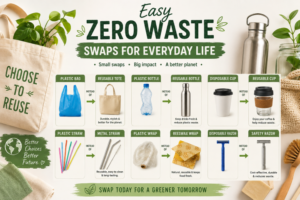
- Switch from plastic razors to a metal safety razor.
- Try shampoo and conditioner bars instead of plastic bottles.
- Use a bamboo toothbrush instead of a plastic one.
- Choose reusable cotton rounds instead of disposable cotton balls.
In the kitchen:
- Swap paper towels for cloth towels or rags.
- Use beeswax wraps or reusable containers instead of plastic wrap.
- Choose a reusable water filter instead of buying bottled water.
- Keep a set of reusable produce bags for fruits and vegetables.
You don’t need to buy all of these things at once. Just replace items as they wear out with a more sustainable option.
Step 6: Reuse Before You Recycle
Recycling feels like the “green” thing to do, and it is better than throwing something straight into the trash. But recycling isn’t perfect. It uses energy, water, and resources to turn old materials into new ones. Not everything that goes into a recycling bin actually gets recycled either.
That’s why reusing should always come before recycling. Before you toss something out, ask yourself: “Can I use this again?” A glass jar can become a storage container. An old t-shirt can become a cleaning rag. A cardboard box can be used for storage or shipping something else.
When you do need to recycle, take a minute to learn your local recycling rules. Every city is a little different, and putting the wrong item in the recycling bin can actually cause more harm than good.
Step 7: Repair Instead of Replace
We live in a world where it’s often easier to throw something away and buy a new one than to fix it. But repairing items is a powerful part of a zero waste lifestyle.
Learn basic sewing skills to fix a small hole in your clothes. Look up online tutorials to repair a broken appliance. Many communities now have “repair cafés,” which are free events where volunteers help you fix broken items instead of throwing them away. Choosing to repair something not only reduces waste, it also saves you money and often feels pretty rewarding too.
Step 8: Build a Zero Waste Community
You don’t have to do this alone, and honestly, it’s easier when you don’t. Look for local zero waste groups in your area or online. Many communities have Facebook groups, Reddit forums, or local meetups where people share tips, swap items, and support each other.
Joining a community can help in a few ways:
- You’ll learn practical tips from people who’ve already tried different methods.
- You can join clothing swaps instead of buying new clothes.
- You can find local shops that support bulk buying and refill stations.
- You’ll feel more motivated when you’re not the only one trying to make a change.
Zero waste living becomes much easier and more fun when it’s a shared journey rather than a solo mission.
Zero Waste Lifestyle Tips for Busy People
Not everyone has hours of free time to plan perfect zero waste meals or make homemade cleaning products from scratch. If you’re busy, here are some quick and easy tips that don’t take much extra time:
- Keep a reusable bag in your bag or car so you always have it with you.
- Carry a reusable water bottle and coffee cup wherever you go.
- Say “no straw, please” when ordering drinks.
- Buy secondhand clothes and furniture when possible.
- Choose digital receipts instead of paper ones.
- Unsubscribe from paper mail and catalogs you don’t read.
- Donate items you no longer need instead of throwing them away.
None of these steps take much extra time, but they add up quickly over weeks and months.
What to Avoid When Starting Your Zero Waste Journey
As you start this journey, it helps to know a few common mistakes so you can avoid them.
- Don’t throw away things that still work just to replace them with “eco-friendly” versions: This actually creates more waste, not less. Use up what you already have first.
- Don’t try to be perfect: Perfection isn’t the goal, and chasing it will likely burn you out. Progress matters more than perfection.
- Don’t compare yourself to others: Everyone’s situation is different. Someone with a big backyard can compost easily, while someone in a small apartment might not be able to. Do what works for your life.
- Don’t ignore the bigger picture: While personal habits matter, remember that companies and governments also play a huge role in waste and pollution. Supporting policies and businesses that reduce packaging and waste can create change on a larger scale too.
The Bigger Picture: Zero Waste Beyond Your Home
A zero waste lifestyle isn’t just about what happens inside your house. It also includes the choices you make as a citizen and a consumer.
You can support businesses that use less packaging or offer refill options. You can vote for local policies that support recycling and composting programs. And You can speak up when you see unnecessary waste in your workplace or school. Every voice adds up, and companies often change their habits when enough customers ask for better options.
Around the world, more cities and countries are also starting to take waste seriously. Plastic bans, better recycling programs, and composting initiatives are becoming more common every year. This means that living a zero waste lifestyle is only going to get easier as more support systems are put into place.
How to Stay Motivated on Your Zero Waste Journey
Like any new habit, staying motivated can be the hardest part. Here are a few simple ways to keep going, even when it feels hard:
- Celebrate small wins: Did you remember your reusable bags this week? That’s worth celebrating. Small wins build momentum over time.
- Track your progress: Keep a simple journal or notes on your phone about the changes you’ve made. Looking back after a few months can show you just how far you’ve come.
- Give yourself grace: Some weeks will be easier than others. If you forget your reusable cup one day or end up with extra packaging, that’s okay. Tomorrow is a new chance to try again.
- Remember your “why:” Whether it’s protecting the planet for future generations, saving money, or simply living a more mindful life, keep your reason in mind when motivation feels low.
- Find your community: As mentioned earlier, having people around you who share the same goal makes a huge difference. Share your journey with friends or online communities for extra support.
Frequently Asked Questions About the Zero Waste Lifestyle
Is it expensive to live a zero waste lifestyle? Not necessarily. In fact, many zero waste habits, like buying less, reusing items, and cooking at home, actually save money over time. The key is to use what you already own before buying anything new.
Can I live a zero waste lifestyle in an apartment? Yes! You don’t need a big house or backyard. Many apartment dwellers compost using small countertop bins or drop-off programs, shop in bulk, and reduce waste in simple, space-friendly ways.
How long does it take to build zero waste habits? It’s different for everyone, but most people find that new habits start to feel natural after a few weeks of consistent practice. Start small and build from there.
Do I need special products to start? No. The best first step is simply using less and reusing what you already have. Special products like beeswax wraps or bamboo toothbrushes can come later, once you’re ready.
What if I can’t recycle everything in my area? That’s okay. Focus on the steps you can control, like refusing, reducing, and reusing. Recycling rules vary by location, so do the best you can with what’s available to you.
Final Thoughts: Small Steps, Big Impact
A zero waste lifestyle isn’t about being perfect. It’s not about guilt, and it’s definitely not about doing everything right away. It’s about making small, thoughtful choices every day that add up to something bigger over time.
Start with one swap. Maybe it’s a reusable bag. Maybe it’s remembering your water bottle. And Maybe it’s simply paying closer attention to what you throw away. Whatever you choose, know that every small step matters.
The planet doesn’t need one person living a perfectly zero waste life. It needs millions of people doing their best, even if that best isn’t perfect. So take a deep breath, pick your first step, and start today. Your future self, and the planet, will thank you.
