

Every year, the world produces billions of tons of waste, and a large portion of it ends up in landfills, oceans, and incinerators instead of being reused or recycled. As awareness of this crisis grows, more people are turning to a zero waste lifestyle as a practical, everyday solution. This is not about perfection or living in a way that produces absolutely no garbage. Instead, it is about making mindful choices that reduce the amount of waste you send to landfills, while also saving money, simplifying your life, and reducing your overall environmental footprint.
In this guide, we will explore what a zero waste lifestyle really means, why it matters, and how you can start adopting it step by step, even if you are a complete beginner. Whether you are motivated by environmental concerns, a desire to save money, or simply a wish to live more intentionally, this article will give you the tools and knowledge you need to begin your journey.
What Does a Zero Waste Lifestyle Actually Mean?
A zero waste lifestyle is a philosophy and a practical approach to living that aims to minimize the amount of waste an individual or household sends to landfills and incinerators. The goal is not necessarily to produce literally zero trash, but to rethink how we consume, use, and dispose of products so that as little as possible ends up wasted.
This concept is often explained using the “5 R’s” framework, which was popularized by zero waste advocate Bea Johnson. These five principles are:
- Refuse what you do not need, such as free promotional items, plastic straws, or unnecessary packaging.
- Reduce what you do need by buying less and choosing quality over quantity.
- Reuse items as many times as possible instead of using disposable products.
- Recycle what cannot be refused, reduced, or reused.
- Rot, meaning compost organic waste instead of throwing it in the trash.
By following this hierarchy, individuals can dramatically cut down on the amount of waste they generate, often shrinking a full trash bin down to just a small jar of non-recyclable items per year, as many zero waste advocates have famously demonstrated.
Living a zero waste lifestyle is less about achieving a specific number and more about shifting your mindset. It encourages you to ask questions before making a purchase: Do I really need this? Can I find a version of this without excess packaging? Is there a reusable alternative? Over time, these small questions add up to a significant reduction in waste.
Why a Zero Waste Lifestyle Matters
Understanding the motivations behind the zero waste movement can help you stay committed to the changes you make. Here are some of the most compelling reasons why adopting a zero waste lifestyle is worth the effort.
Environmental Impact
The most obvious reason to embrace a zero waste lifestyle is the environmental benefit. Landfills release methane, a greenhouse gas far more potent than carbon dioxide, as organic waste decomposes without oxygen. Plastic waste, in particular, can take hundreds of years to break down, and much of it ends up polluting oceans, harming marine life, and entering the food chain in the form of microplastics. By reducing waste at the source, you directly reduce the demand for raw materials, the energy used in manufacturing, and the pollution created by disposal.
Financial Savings
Many people are surprised to learn that a zero waste lifestyle often leads to significant financial savings. When you buy less, choose reusable products over disposable ones, and focus on quality items that last longer, you naturally spend less money over time. Buying food in bulk, making your own cleaning products, and repairing items instead of replacing them are all zero waste practices that also happen to be budget-friendly.
Healthier Living
A zero waste lifestyle often encourages a shift away from heavily processed foods and products packed with synthetic chemicals. Choosing whole foods, natural cleaning products, and simple personal care items can lead to a healthier home environment, free from many of the toxins found in disposable plastics and mass-produced goods.
Simplicity and Mindfulness
Beyond the environmental and financial reasons, many people find that a zero waste lifestyle brings a sense of clarity and simplicity to their lives. When you are intentional about what you bring into your home, you naturally accumulate less clutter. This can lead to reduced stress, more organized living spaces, and a greater appreciation for the things you do own.
Getting Started: A Realistic Approach
One of the biggest misconceptions about a zero waste lifestyle is that you need to overhaul your entire life overnight. In reality, sustainable change happens gradually. Trying to eliminate all waste immediately can feel overwhelming and often leads to burnout. Instead, focus on making one change at a time, mastering it, and then moving on to the next.
Start by Auditing Your Trash
Before making any changes, spend a week paying close attention to what you throw away. Keep a simple list or take photos of the items that end up in your trash can. This audit will help you identify the biggest sources of waste in your household, whether it is food packaging, single-use plastics, or paper products. Once you know where your waste is coming from, you can prioritize which areas to tackle first.
Set Realistic Goals
Rather than aiming for a jar of trash per year right away, set small, achievable goals. For example, you might commit to bringing reusable bags to the grocery store for a month, or switching from paper towels to cloth napkins. Once these habits become second nature, you can move on to the next change.
Focus on Progress, Not Perfection
It is important to remember that a zero waste lifestyle is a journey, not a destination. You will make mistakes, forget your reusable bags occasionally, or end up with packaging you did not intend to buy. This is completely normal. The goal is overall progress and a shift in mindset, not flawless execution.
Room-by-Room Guide to Reducing Waste
One of the most effective ways to adopt a zero waste lifestyle is to go through your home room by room, identifying opportunities to reduce waste in each space.
Kitchen
The kitchen is often the biggest source of household waste, from food packaging to disposable items. Here are some practical swaps:
- Replace paper towels with reusable cloth towels or rags that can be washed and reused.
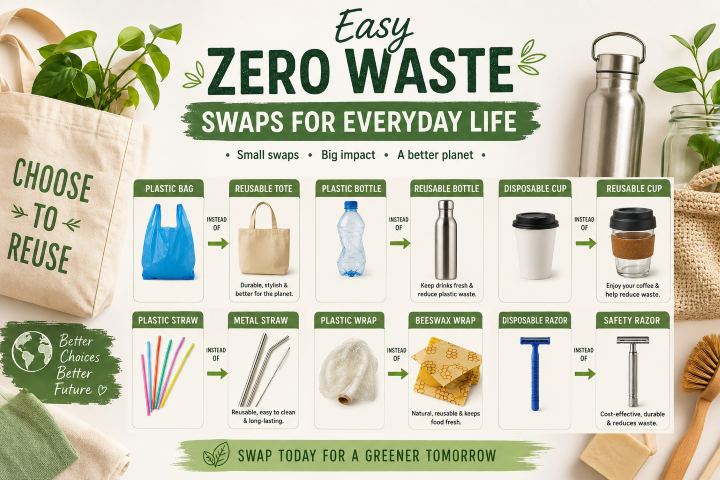
- Use reusable produce bags instead of the thin plastic bags provided at grocery stores.
- Buy food from bulk bins when possible, bringing your own jars or cloth bags to fill.
- Store leftovers in glass containers or beeswax wraps instead of single-use plastic wrap or bags.
- Compost food scraps instead of throwing them in the trash, which diverts organic waste from landfills and creates nutrient-rich soil for gardening.
- Switch from disposable coffee pods to a reusable coffee filter or French press.
Bathroom
The bathroom is filled with disposable products that can easily be swapped for reusable or package-free alternatives:
- Choose bar soap and shampoo bars instead of bottled versions, which reduces plastic packaging significantly.
- Switch to a bamboo toothbrush instead of a plastic one, as bamboo is biodegradable.
- Use reusable cotton rounds instead of disposable cotton balls or pads.
- Consider a safety razor with replaceable blades instead of disposable plastic razors.
- Explore reusable menstrual products, such as menstrual cups or reusable pads, which can drastically reduce waste over time.
Living Room and Home Office
- Buy secondhand furniture and decor whenever possible instead of new items.
- Repair electronics and appliances rather than replacing them at the first sign of trouble.
- Digitize documents and reduce paper use by opting for electronic bills and statements.
- Donate items you no longer use instead of throwing them away, giving them a second life with someone else.
Closet
Fashion is one of the most wasteful industries in the world. To reduce waste in your wardrobe:
- Buy fewer, higher-quality clothing items that will last longer.
- Shop secondhand at thrift stores or online resale platforms.
- Repair torn clothing instead of discarding it.
- Donate or repurpose old clothing rather than throwing it away.
Zero Waste Shopping Strategies
Shopping is one of the areas where waste accumulates the fastest, but with a few strategic changes, you can significantly cut down on the packaging and disposable items that enter your home.
Bring Your Own Containers
Many grocery stores and bulk food shops allow customers to bring their own jars, bags, and containers to fill with items like grains, nuts, spices, and even liquids like oil or soap. This eliminates the need for pre-packaged products entirely.
Choose Products With Minimal Packaging
When shopping for packaged goods, look for products in glass, metal, or paper packaging rather than plastic, as these materials are generally easier to recycle or compost. Better yet, choose products that use no packaging at all.
Buy in Bulk
Purchasing larger quantities of non-perishable items reduces the amount of packaging waste per unit. This applies to pantry staples like rice, pasta, beans, and cleaning supplies.
Support Local and Sustainable Businesses
Farmers markets and local producers often use less packaging than large grocery chains, and buying locally reduces the environmental impact of transportation as well.
Composting: A Key Pillar of Zero Waste Living
Composting is one of the most impactful things you can do as part of a zero waste lifestyle, since food waste makes up a significant portion of household trash. When organic material ends up in a landfill, it decomposes without oxygen and produces methane gas. When composted properly, that same material breaks down aerobically and turns into nutrient-rich soil.
If you have outdoor space, you can start a traditional backyard compost bin using a mix of “greens” like fruit and vegetable scraps, and “browns” like dried leaves or cardboard. For those living in apartments or without outdoor space, options like vermicomposting, which uses worms to break down food scraps, or bokashi composting, which ferments waste in a sealed container, are excellent alternatives. Many cities also offer municipal composting programs that collect food scraps alongside regular trash and recycling.
Overcoming Common Challenges
Adopting a zero waste lifestyle is not without its obstacles. Here are some common challenges people face and practical strategies for overcoming them.
Limited Access to Bulk Stores
Not everyone lives near a store that offers bulk shopping options. If this is the case for you, focus on other strategies such as choosing products with recyclable packaging, buying larger sizes to reduce packaging per use, and prioritizing composting and reuse instead.
Cost of Reusable Products
While reusable items often save money in the long run, the upfront cost can be a barrier for some people. Start slowly by replacing items as they wear out rather than buying everything new at once. You can also look for secondhand reusable products or make your own, such as sewing cloth napkins from old fabric.
Time Constraints
A zero waste lifestyle can feel time-consuming, especially when it comes to activities like meal prepping from scratch or making your own cleaning products. Remember that you do not have to do everything. Choose the changes that fit realistically into your schedule and build from there.
Social Pressure and Convenience Culture
Living differently from those around you can sometimes feel isolating, especially in a culture built around convenience and disposability. Connecting with local zero waste communities, either online or in person, can provide support, motivation, and practical tips from people who understand the journey.
The Bigger Picture: Zero Waste Beyond the Individual
While individual actions matter, it is also important to recognize that systemic change plays a crucial role in solving the global waste crisis. Supporting policies that hold corporations accountable for packaging waste, advocating for better recycling infrastructure, and choosing to buy from companies committed to sustainable practices are all ways to extend the impact of a zero waste lifestyle beyond your own household.
Many communities are also pushing for extended producer responsibility laws, which require manufacturers to take responsibility for the full lifecycle of their products, including disposal. Getting involved in local environmental initiatives or supporting organizations that work on waste reduction policy can amplify the impact of your personal efforts.
Tips for Staying Motivated Long-Term
Sustaining a zero waste lifestyle over the long term requires ongoing motivation and a flexible mindset. Here are some tips to help you stay on track:
- Celebrate small wins, such as successfully avoiding single-use plastic for a week or filling your compost bin for the first time.
- Track your progress by periodically weighing your trash to see how much you have reduced it over time.
- Join online communities or local groups focused on sustainable living for support and inspiration.
- Remember your “why,” whether it is protecting the environment for future generations, saving money, or living a simpler life.
- Be patient with yourself and avoid the trap of eco-perfectionism, which can lead to burnout and discouragement.
Zero Waste Living With Kids and Family
Raising a family while trying to maintain a zero waste lifestyle comes with its own unique set of challenges, from diapers to school lunches to the endless stream of toys and packaging that seem to follow children everywhere. However, with a bit of planning, families can significantly reduce their household waste without sacrificing convenience or fun.
Cloth diapers are one of the most impactful swaps for families with infants, as disposable diapers can take hundreds of years to decompose and contribute heavily to landfill waste. While cloth diapering requires more laundry, many parents find the environmental and financial benefits worth the extra effort. For older children, packing school lunches in reusable containers instead of disposable bags and wrappers can eliminate a significant amount of daily waste. Reusable snack bags, stainless steel water bottles, and cloth napkins are simple additions that make a noticeable difference over the course of a school year.
When it comes to toys, consider secondhand options, toy libraries, or borrowing from friends and family instead of always buying new. Wooden and other durable toys tend to last longer than plastic alternatives and can be passed down or resold when your children outgrow them. Teaching children about the value of reducing waste from a young age also helps instill lifelong habits, turning sustainability into a shared family value rather than a burdensome chore.
Zero Waste Travel Tips
Traveling often disrupts even the most committed zero waste routines, as convenience and unfamiliar environments can make sustainable choices more difficult. Still, there are several strategies that can help minimize waste while on the road.
Packing a travel kit with reusable items is one of the easiest ways to stay prepared. This might include a refillable water bottle, a set of reusable utensils, a cloth napkin, a small reusable bag for snacks or souvenirs, and a portable coffee cup. Many airports and travel destinations now offer water refill stations, making it easier than ever to avoid single-use plastic bottles.
When choosing accommodations, look for hotels or rentals that have sustainability initiatives in place, such as recycling programs or refillable toiletry dispensers instead of miniature single-use bottles. If you are traveling internationally, research local recycling and composting practices, as they can vary significantly from country to country. Finally, try to support local businesses and markets during your travels, as this often means less packaging and a smaller carbon footprint compared to large chain stores.
The Environmental and Economic Cost of Waste
Understanding the true cost of the waste we generate can be a powerful motivator for adopting a zero waste lifestyle. Globally, waste management systems require enormous amounts of energy, land, and resources to collect, transport, and process trash. Landfills take up valuable land space and can leach harmful chemicals into surrounding soil and water sources if not properly managed. Incineration, while it reduces the volume of waste, releases pollutants into the air and still requires ongoing management of the ash byproduct.
From an economic perspective, municipalities spend significant amounts of taxpayer money on waste collection and disposal services. As landfill space becomes scarcer in many regions, the cost of waste management continues to rise. By reducing the amount of waste we generate as individuals, we collectively ease the burden on these systems, potentially freeing up resources for other community needs.
On a personal level, the financial cost of a disposable lifestyle often goes unnoticed because it is spread out over many small purchases. Buying bottled water, individually wrapped snacks, disposable razors, and paper towels repeatedly over the years adds up to a substantial amount of money that could otherwise be saved or invested. When you calculate the long-term savings of switching to reusable alternatives, the financial case for a zero waste lifestyle becomes even more compelling.
Frequently Asked Questions About Zero Waste Living
Is it possible to produce absolutely zero waste?
In practice, producing literally zero waste is nearly impossible in modern society, given the infrastructure and systems most of us rely on. The goal of a zero waste lifestyle is not perfection, but significant reduction. Many committed practitioners still produce a small amount of trash each year, and that is considered a success.
Does a zero waste lifestyle require a lot of money?
While some reusable products have a higher upfront cost, a zero waste lifestyle often saves money over time. Buying less, choosing quality over quantity, and making your own household products are all cost-effective strategies that align with zero waste principles.
How long does it take to transition to a zero waste lifestyle?
There is no set timeline for this transition, as it depends on your starting point, resources, and personal circumstances. Most people find that gradual changes over several months to a year lead to lasting habits, rather than attempting to change everything overnight.
What is the difference between zero waste and recycling?
Recycling is just one part of the zero waste hierarchy, and it is considered a last resort after refusing, reducing, and reusing. While recycling helps divert some materials from landfills, it still requires energy and resources, and not all materials can be recycled indefinitely.
Can I live a zero waste lifestyle in an apartment or small space?
Yes, a zero waste lifestyle is achievable in any living situation, including apartments and small spaces. While backyard composting may not be an option, alternatives like vermicomposting or municipal composting programs can fill that gap.
Final Thoughts
A zero waste lifestyle is not about achieving perfection or eliminating every last piece of trash from your life. It is about making conscious, intentional choices that reduce your environmental impact, save money, and encourage a simpler, more mindful way of living. By starting small, focusing on one change at a time, and building sustainable habits gradually, anyone can begin reducing their waste and moving toward a more sustainable future.
Whether you begin by composting your food scraps, switching to reusable shopping bags, or auditing your household trash, every step you take contributes to a larger movement toward a cleaner, healthier planet. The zero waste lifestyle is ultimately a personal journey, one that looks different for everyone, but that shares a common goal: reducing waste and living more responsibly on this planet we all share.

1 Comment
Pingback: Zero Waste Lifestyle Tips for Absolute Beginners - zerowastelifestyle.net