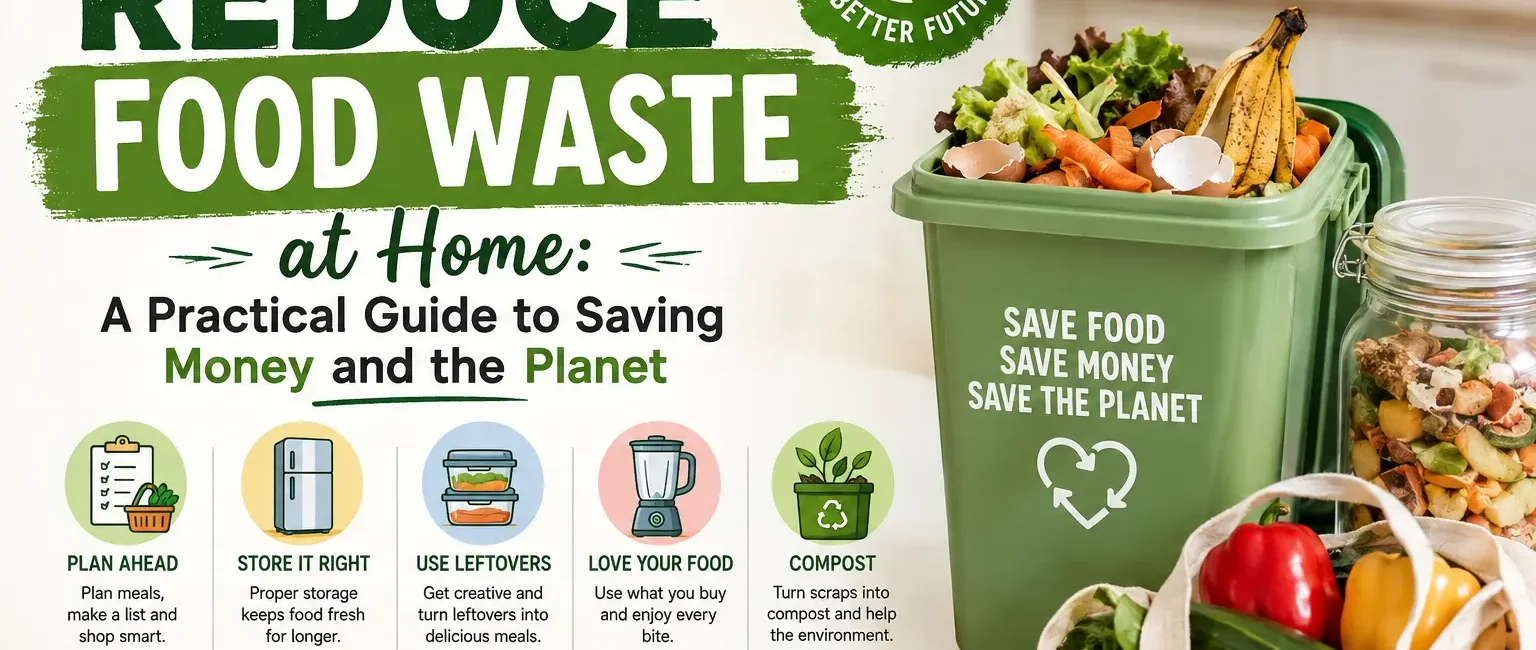
Every week, millions of households throw away food that never had a chance to be eaten. A wilted bag of spinach here, a forgotten container of leftovers there, a loaf of bread that went stale before anyone got to it. On their own, these small losses seem harmless. Added up across an entire year — and across millions of homes — they become one of the most overlooked environmental and financial problems of our time.
If you’ve ever opened your refrigerator and felt a small pang of guilt at what’s gone bad, you’re not alone. Learning how to reduce food waste at home isn’t about becoming a perfect, zero-waste household overnight. It’s about building a handful of simple, repeatable habits that quietly save you money, reduce clutter in your kitchen, and shrink your environmental footprint — one meal at a time.
This guide walks through exactly why food waste happens, what it’s costing you, and more than 25 practical, easy-to-implement strategies for cutting it down, organized by where the problem actually starts: shopping, storage, cooking, and disposal.
Why Reducing Food Waste at Home Matters
Before diving into the “how,” it helps to understand the “why.” The scale of household food waste is larger than most people realize, and the consequences ripple far beyond your own kitchen.
The Real Cost of Food Waste
Recent research suggests that roughly one-third of all food produced for human consumption globally is lost or wasted every year, which adds up to approximately 1.3 billion tonnes. In the United States specifically, food waste is estimated to cost the economy around $408 billion annually, with the average household of four throwing away about $1,500 worth of food every year.
Other estimates paint a similarly sobering picture at the household level. Data aggregated from multiple sources indicates that the household sector accounts for roughly 569 million tonnes of food waste worldwide, and that households in high-income countries waste somewhere between 95 and 115 kilograms of food per person each year. Broken down by category, research shows that around 40% of household food waste is fruits and vegetables, roughly 20% is bread and cereal products, and dairy items like milk and cheese make up about 15% — a pattern that lines up with the perishable items most of us struggle to use up in time.
The financial toll varies by country but tells the same story everywhere. One analysis estimates that US households lose about $1,800 a year to wasted food, while EU households lose roughly €1,700.
The Environmental Footprint
Wasted food isn’t just wasted money — it’s wasted water, energy, land, and labor, all of which went into growing, transporting, and refrigerating food that was never eaten. When that food ends up in a landfill instead of a stomach or a compost bin, it breaks down anaerobically and releases methane, a greenhouse gas that traps far more heat than carbon dioxide over the short term.
According to the UN Environment Programme’s Food Waste Index research, households, food service businesses, and retailers together wasted about 1.05 billion metric tonnes of food in 2022 alone, equal to roughly 19% of all food available to consumers. That same body of research estimates that food loss and waste combined are responsible for somewhere between 8% and 10% of global greenhouse gas emissions — a bigger climate impact than most single industries.
On a more encouraging note, small actions do add up. Composting food scraps at the household level is estimated to offset around 0.39 metric tons of CO2 equivalent per year per household, which becomes meaningful once you multiply it across a neighborhood, a city, or a country.
The bottom line: reducing food waste at home is one of the few environmental actions that pays you back immediately, in the form of lower grocery bills, while also contributing to a much bigger collective good.
Understanding Why Food Gets Wasted in the First Place
Before you can fix a habit, it helps to name it. Most household food waste comes down to a handful of recurring patterns:
- Overbuying — Purchasing more than you realistically need, often driven by bulk discounts or a lack of planning.
- Poor storage — Not knowing the right way to store produce, dairy, or leftovers, which speeds up spoilage.
- Confusion over date labels — Mistaking “best by” and “sell by” dates for hard expiration dates, and tossing perfectly good food as a result.
- Over-preparing meals — Cooking more than your household will eat and not having a plan for the extra.
- Forgotten leftovers — Food that gets pushed to the back of the fridge and rediscovered only after it’s no longer edible.
- Impulse and bulk buying — Grabbing extra items “just in case” without a plan to use them.
Recognizing which of these patterns shows up most in your own home is the fastest way to figure out where to focus your energy first.
Part 1: Smarter Shopping Habits
Reducing food waste starts before you even walk in the front door with your groceries. Most waste is baked in at the shopping stage, so this is the highest-leverage place to make changes.
1. Plan Your Meals for the Week
Meal planning to reduce waste is one of the single most effective habits you can build. Before you shop, sit down and map out what you’ll actually eat over the next several days. You don’t need an elaborate spreadsheet — even a rough list of five or six meals, matched to what’s already in your fridge and pantry, dramatically cuts down on impulse purchases and food that goes unused.
A simple approach:
- Check what perishables you already have that need to be used soon.
- Build 2–3 meals around those ingredients first.
- Fill in the rest of the week with meals that share overlapping ingredients (so nothing gets bought for a single use).
2. Shop With a List — and Stick to It
Grocery stores are designed to encourage impulse buys. A written list, built directly from your meal plan, keeps you focused and prevents the kind of “just in case” purchases that so often end up forgotten in the crisper drawer.
3. Don’t Shop Hungry
This classic piece of advice holds up because it’s true: shopping on an empty stomach makes everything look appealing, which leads to overbuying — especially perishable snacks and pre-made meals that are easy to forget about.
4. Buy Only What You’ll Realistically Use
Bulk discounts are tempting, but they’re only a good deal if you actually eat the food before it spoils. Be honest about your household’s eating habits and pace. If you rarely finish a bag of salad greens before they wilt, buy a smaller bag more frequently instead.
5. Understand Date Labels
One of the most common — and most avoidable — sources of household food waste is confusion over labeling. “Sell by” is a guide for retailers, not a signal that food is unsafe to eat. “Best by” and “best before” refer to peak quality, not safety. “Use by” is the closest to a genuine safety cutoff, particularly for foods like deli meat or soft cheeses. Learning to trust your senses — sight, smell, and texture — alongside these labels can prevent a lot of unnecessary tossing of perfectly good food.
6. Shop Your Kitchen First
Before adding anything to your list, do a quick inventory of your fridge, freezer, and pantry. It’s remarkably easy to forget you already have three cans of chickpeas or a bag of frozen peas, only to buy more at the store.
Part 2: Storage Strategies That Actually Extend Freshness
Even with a great shopping plan, food will go to waste faster than it should if it’s stored incorrectly. Proper food storage is one of the most underrated food waste reduction tips, because a lot of spoilage isn’t really about time — it’s about environment.
7. Understand Your Fridge’s Temperature Zones
Refrigerators aren’t uniform in temperature. The door is the warmest part (not ideal for dairy or eggs, despite the built-in shelves), the top shelves run warmer than the bottom, and the back is typically the coldest. Store dairy and eggs on interior shelves rather than the door, and keep raw meat on the bottom shelf, both to preserve freshness and to prevent drips from contaminating other foods.
8. Separate Ethylene-Producing Fruits From Everything Else
Some fruits — apples, bananas, avocados, and tomatoes among them — release ethylene gas as they ripen, which speeds up spoilage in nearby produce. Store these separately from ethylene-sensitive vegetables like leafy greens, broccoli, and carrots to extend their shelf life significantly.
9. Use the Right Containers
Airtight containers or reusable beeswax wraps keep cut produce fresher for longer than loosely wrapped plastic. For leafy greens, wrapping them loosely in a slightly damp paper towel before sealing in a container can add several extra days of crispness.
10. Freeze Strategically
Your freezer is one of the most powerful (and most underused) tools in the fight against food waste. Bread, butter, cooked grains, shredded cheese, chopped herbs (in oil, frozen into ice cube trays), and even milk can all be frozen well past their typical fridge lifespan. If you know you won’t finish something in time, freeze it rather than let it spoil.
11. Practice First In, First Out (FIFO)
Restaurants use this system for a reason: when you bring new groceries home, move older items to the front of the fridge or pantry shelf so they get used first. It’s a small physical habit that prevents things from getting buried and forgotten.
12. Label and Date Leftovers
A piece of tape and a marker can save you from the “mystery container” problem. Labeling leftovers with the date they were made makes it far easier to prioritize eating them before they go bad — and far less likely they’ll be quietly pushed to the back of the shelf.
13. Store Root Vegetables Properly
Potatoes, onions, and garlic keep best in a cool, dark, well-ventilated place — not in the fridge, and not sealed in plastic bags, which trap moisture and encourage sprouting or mold.
Part 3: Cooking and Meal Habits That Minimize Waste
Even with great shopping and storage habits, waste can still creep in at the cooking stage. These strategies help you make the most of every ingredient you bring into your kitchen.
14. Cook Perishables First
Build your weekly meals around whatever spoils fastest. Fresh herbs, soft fruit, and delicate greens should generally be used within the first few days after shopping, while hardier vegetables like carrots, cabbage, and squash can wait.
15. Embrace “Use It Up” Meals
Set aside one night a week as a flexible meal built entirely from whatever odds and ends are sitting in your fridge — a stir-fry, frittata, soup, or grain bowl are all forgiving formats that welcome small amounts of leftover vegetables, proteins, or grains.
16. Cook Root-to-Stem and Nose-to-Tail
Many parts of fruits and vegetables that typically get discarded are perfectly edible. Broccoli stems can be sliced thin and sautéed or shaved into slaw. Carrot tops make a solid pesto. Vegetable scraps — onion skins, celery ends, carrot peels — can be frozen and later simmered into a homemade stock rather than thrown away.
17. Portion Meals Thoughtfully
Cooking exactly what your household will eat is harder than it sounds, but even rough portioning — using measuring cups for rice or pasta, or being mindful about serving sizes — reduces the amount of cooked food that ends up as an uneaten mystery in the fridge.
18. Repurpose Leftovers Intentionally
Instead of reheating the same dish night after night until it’s abandoned, transform leftovers into something new. Roasted vegetables become a frittata filling. Leftover rice becomes fried rice. Extra roast chicken becomes tacos or a sandwich filling. Giving leftovers a “second life” makes them far more appealing to actually eat.
19. Preserve Gluts of Produce
If you’ve overbought or grown more than you can eat fresh, preserving is a great fallback. Freezing, pickling, fermenting, or making jams and sauces are all ways to extend the useful life of produce that’s about to turn.
20. Batch Cook and Freeze in Portions
Cooking a large batch of a freezer-friendly meal — soups, stews, casseroles, chili — and portioning it into individual containers before freezing gives you ready-made meals for busy nights, reducing the temptation to order takeout or let ingredients spoil while you’re too tired to cook.
Part 4: What to Do With Food You Can’t Eat
Even in the most efficient kitchen, some food waste is inevitable — inedible peels, bones, spoiled items you missed in time. What matters is what happens to that waste next.
21. Start Composting at Home
Composting at home turns food scraps that would otherwise rot in a landfill (producing methane) into nutrient-rich soil for gardens or houseplants. You don’t need a backyard to do this: countertop compost bins, worm composting (vermicomposting) systems, and municipal food-scrap collection programs make composting accessible even in apartments.
22. Donate Excess Food
If you’ve overbought non-perishables or have unopened items you won’t use, local food banks and community fridges are almost always looking for donations. Many also accept fresh produce from home gardens.
23. Feed Safe Scraps to Animals
If you keep chickens, or know someone who does, many vegetable scraps and stale bread can be safely repurposed as animal feed instead of going in the trash. (Always check what’s safe for the specific animal first.)
24. Use a Community Fridge or Sharing App
Community fridges and food-sharing apps connect neighbors with surplus food — from a bag of extra zucchini from the garden to a catering order that came in too large. These platforms are growing in many cities and are worth checking for your area.
25. Track What You Throw Away
For one or two weeks, keep a simple written log of what food you throw out and why. This “waste audit” often reveals surprising patterns — maybe it’s always the same vegetable, or food waste spikes right after big grocery trips — and gives you a clear, personalized starting point for change.
Building a Zero Waste Kitchen: Bringing It All Together
None of these strategies require a complete lifestyle overhaul. A genuinely effective zero waste kitchen is built gradually, habit by habit, not achieved overnight. If you’re not sure where to start, here’s a simple progression:
Week 1–2: Start meal planning and shopping with a list. Do a “shop your kitchen” check before every grocery trip.
Week 3–4: Reorganize your fridge using proper storage zones. And start labeling leftovers with dates.
Week 5–6: Introduce one “use it up” night per week and start freezing food you won’t finish in time.
Week 7 onward: Set up a composting system for scraps that can’t be avoided, and consider a simple food waste log to catch remaining blind spots.
By the time you’ve worked through this progression, reducing food waste at home stops being a conscious effort and becomes simply how your kitchen runs.
Common Food Waste Myths, Debunked
A lot of well-intentioned households struggle to reduce food waste at home simply because of a few persistent myths. Clearing these up can make the whole process easier.
Myth: “Best by” dates mean food is unsafe to eat afterward. In most cases, “best by” and “best before” dates are about peak flavor and texture, not safety. Plenty of food is perfectly fine to eat for days or even weeks past this date, especially shelf-stable items like pasta, rice, and canned goods. Trust your senses — smell, appearance, and texture — as much as the printed date.
Myth: The fridge is the best place for all produce. Some produce actually degrades faster in the fridge. Tomatoes, potatoes, onions, garlic, and whole melons all do better at room temperature in a cool, dry spot. Refrigerating them can affect texture and flavor without meaningfully extending shelf life.
Myth: Composting requires a backyard and a lot of effort. As covered earlier, countertop bins, small vermicomposting setups, and municipal food-scrap collection programs have made composting at home realistic for renters and apartment dwellers, not just people with outdoor space.
Myth: Meal planning takes too much time to be worth it. Meal planning to reduce waste doesn’t require elaborate spreadsheets or hours of prep. A five-minute list made from what’s already in your fridge, jotted on your phone before you shop, delivers most of the benefit with almost none of the time investment.
Myth: Frozen food is less nutritious than fresh. Freezing actually locks in nutrients at the point of freezing, and in many cases retains more vitamins than “fresh” produce that has spent days in transit and on a store shelf before reaching your kitchen.
Letting go of these misconceptions removes a lot of the friction that keeps people from building better habits in the first place.
Frequently Asked Questions
What is the biggest cause of food waste at home? Overbuying and poor meal planning are consistently among the top causes, followed by improper storage that causes food to spoil faster than expected, and confusion over “best by” versus “use by” date labels.
How much money can I save by reducing food waste? Estimates vary, but multiple analyses put average household losses from wasted food between roughly $1,500 and $1,800 per year in the US, and similarly high figures in Europe. Even modest improvements in shopping and storage habits can translate into meaningful monthly savings.
Is composting worth it if I live in an apartment? Yes. Countertop compost bins, small-scale vermicomposting systems, and municipal food-scrap drop-off or collection programs make composting realistic even without outdoor space.
Do frozen foods lose nutritional value? Freezing is one of the best ways to preserve nutrients in food that would otherwise spoil. In many cases, produce frozen shortly after harvest retains nutrients comparably to fresh produce that’s been sitting for days in transit and storage.
What’s the difference between “best by” and “use by” dates? “Best by” refers to peak quality or flavor, not safety — food is often still fine to eat after this date. “Use by” is a more safety-oriented cutoff, especially for perishable items like deli meats and soft cheeses, and should be taken more seriously.
Final Thoughts
Learning how to reduce food waste at home is less about perfection and more about awareness. Every meal planned instead of improvised, every container labeled instead of forgotten, and every vegetable scrap composted instead of landfilled adds up — for your wallet, and for the planet. Start with one or two habits from this guide, build from there, and you’ll likely be surprised at how much less ends up in the trash within just a few weeks.
Also Read: zero waste lifestyle