

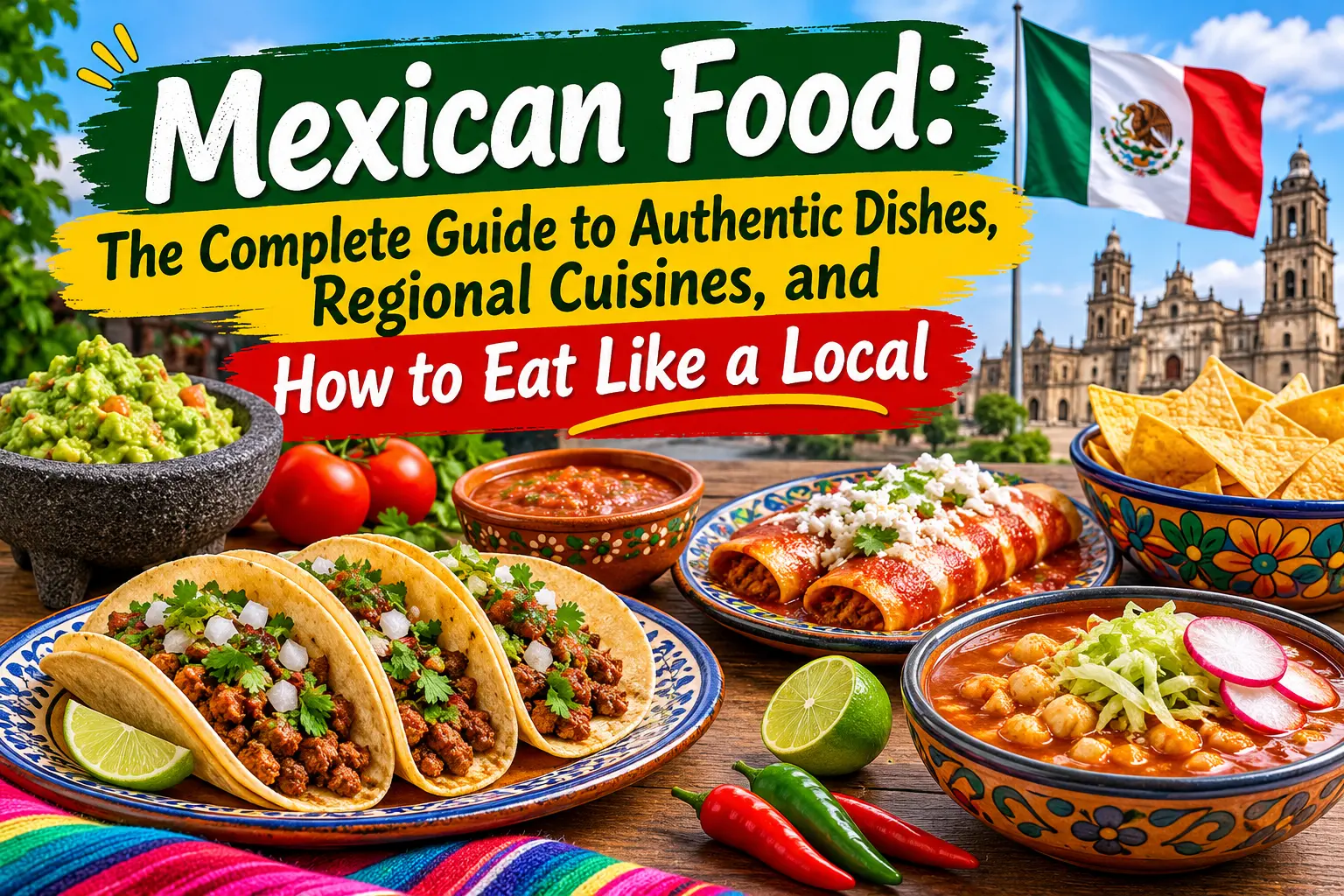
Introduction: Why Mexican Food Deserves a Closer Look
Mention Mexican food, and most people picture tacos, burritos, and a basket of chips with salsa. Those foods are delicious, but they are only a small slice of one of the most sophisticated culinary traditions on Earth. Mexico is a large, geographically varied country with dozens of Indigenous cultures, a long colonial history, and coastlines, deserts, mountains, and jungles. The food reflects every bit of that diversity.
In 2010, UNESCO added traditional Mexican cuisine to its list of the Intangible Cultural Heritage of Humanity, recognizing it not only as a set of recipes but as a living community tradition that connects farming, ritual, cooking techniques, and family life. That is a rare honor for a food culture, and it tells you something important: Mexican food is not a menu category. It is a way of organizing a community around the table.
This guide is written for curious eaters. Maybe you are planning a trip to Mexico, maybe you want to understand what you are ordering at a local restaurant, or maybe you want to cook better Mexican food at home. Here is what you will learn:
- What defines Mexican cuisine, and which ingredients and techniques sit at its core
- How the country’s major regional cuisines differ from one another
- More than 25 traditional Mexican dishes, with context on where they come from and what makes them special
- A guide to Mexican street food, breakfast, soups, desserts, and drinks
- How Tex-Mex and other regional American styles differ from food in Mexico
- Practical tips for cooking Mexican food at home and spotting authentic restaurants
What Is Mexican Food? A Quick Answer
Mexican food is the collection of regional cuisines of Mexico, built on corn, beans, chiles, and squash, and shaped by Indigenous traditions blended with Spanish, African, Middle Eastern, and Asian influences. Typical hallmarks include handmade corn tortillas, layered salsas, slow-cooked meats, complex chile-based sauces called moles, fresh herbs and citrus, and a deep emphasis on texture and balance rather than just heat.
There is no single “Mexican cuisine” in the way many outsiders imagine. As one widely quoted chef observation puts it, people should talk about Oaxaca, Veracruz, Mérida, or the central valley rather than a monolithic national style. Oaxacan food shares surprisingly little with Yucatecan food, and the grilled beef of the north looks nothing like the banana-leaf-wrapped pork of the southeast.
The Foundations of Mexican Cuisine
To understand any dish in this guide, it helps to know the building blocks. A short tour of the pantry explains a surprising amount about why Mexican food tastes the way it does.
Corn: The Heart of Everything
Corn was domesticated in what is now Mexico roughly 9,000 years ago from a wild grass called teosinte. It remains the single most important ingredient in the national diet. But Mexican corn cooking is not simply boiling cobs. The key technique is nixtamalization: soaking and cooking dried corn in an alkaline solution, traditionally water mixed with calcium hydroxide (cal, or slaked lime). This loosens the hull, improves flavor, makes the corn easier to grind into a pliable dough called masa, and makes nutrients such as niacin more available to the body.
From masa come tortillas, tamales, sopes, tlacoyos, gorditas, atole, and countless other foods. Corn also appears as hominy in pozole, as roasted street-food cobs (elote), and as the dark, earthy corn fungus called huitlacoche, often described as Mexico’s answer to a truffle.
Beans and Squash: The Companions
Corn, beans, and squash are traditionally grown together in a system known as the “three sisters.” Beans fix nitrogen in the soil, corn provides a stalk to climb, and squash shades the ground. Nutritionally the trio is complementary too. Pots of black, pinto, or bayo beans simmered with onion and herbs (frijoles de la olla) appear on tables across the country, and squash blossoms, squash seeds (pepitas), and tender squash all feature in regional cooking.
Chiles: Flavor Before Fire
Mexico uses dozens of chile varieties, fresh and dried, and each has a distinct flavor. The mistake many newcomers make is assuming chiles are mostly about heat. In Mexican cooking they are used for fruitiness, smokiness, bitterness, sweetness, and color.
A few essentials:
- Jalapeño: a mild-to-medium fresh chile, roughly 2,500 to 8,000 Scoville heat units. Smoked and dried, it becomes the chipotle.
- Poblano: a large, mild green chile used for chiles rellenos and rajas. Dried, it is called ancho.
- Guajillo: a dried chile with bright, tangy, berry-like notes that colors many red sauces and adobos.
- Pasilla: a dried chile with raisin-like depth, common in moles.
- Chile de árbol: a small, thin, fiery dried chile used in table salsas.
- Habanero: a fruity, very hot chile (roughly 100,000 to 350,000 Scoville units) that is a signature of Yucatán cooking.
Fresh Herbs, Citrus, and Aromatics
Cilantro, epazote, hoja santa, oregano (Mexican oregano is a different plant from the Mediterranean kind), and avocado leaves each lend a distinct character to regional dishes. Limes, sour oranges, and pineapple bring acidity. White onion, garlic, tomatoes, and tomatillos provide the base for many salsas and stews.
Foods the Spanish and Others Brought
The Spanish arrival introduced pork, beef, chicken, wheat, rice, cheese, dairy, garlic, onion, citrus, and cinnamon, among other ingredients. African influence is especially strong in Veracruz and the Pacific coast of Guerrero and Oaxaca. Lebanese immigrants in the twentieth century left a major mark, most famously in tacos al pastor. Trade through the Manila galleon route also brought Asian ingredients and techniques into the Mexican kitchen. Importantly, Mexican cooks did not simply copy these ingredients. They absorbed them into the local system and created entirely new dishes.
Chocolate and Vanilla
Both cacao and vanilla are native to Mesoamerica. Long before sweetened chocolate bars existed, Maya and Aztec cultures prepared cacao as a bitter, frothy drink, often spiced. That heritage lives on today in Mexican hot chocolate and in the savory-sweet complexity of mole.
Mexico’s Regional Cuisines at a Glance
Food writers divide Mexico into anywhere from six to eight culinary regions, depending on who is drawing the map. The following overview gives a practical, traveler-friendly picture. Think of these as flavor neighborhoods rather than strict borders.
Northern Mexico: Ranches, Grills, and Flour Tortillas
The states of Sonora, Chihuahua, Coahuila, Nuevo León, and Tamaulipas are shaped by cattle ranching, dry climate, and proximity to the United States. Beef is king here. Look for carne asada (grilled beef), machaca (dried, shredded, rehydrated meat scrambled with eggs or served in burritos), cabrito (roast kid goat, a signature of Monterrey), and caldo de res (beef and vegetable soup).
This is also the land of flour tortillas. In Sonora, tortillas de harina can be stretched as thin and wide as a dinner table. Northern cooks also gave the world the early forms of the burrito, and Sonora is famed for its bacon-wrapped hot dogs. Cheese plays a big role too, including melted queso for dipping and quesadillas.
Baja California: Seafood and the Border Kitchen
Baja is its own culinary world. Fish and shrimp tacos in the battered, fried style are closely associated with Ensenada and Baja generally. The region is also known for oysters, abalone, lobster in Puerto Nuevo, and the creative cuisine sometimes called Baja Med, which blends Mexican ingredients with Mediterranean and Asian influences and relies on the area’s wine country. Tijuana is credited with popularizing birria de res tacos with consomé, and the Caesar salad is said to have been created there in the 1920s.
The Pacific Coast: Seafood, Ceviche, and Tropical Fruit
Along the Pacific coast from Nayarit to Guerrero, expect raw and cooked seafood: aguachile (shrimp bathed in lime, chile, and cucumber), ceviche, zarandeado fish (a split fish grilled over coals, famous in Nayarit), and coconut-heavy dishes. Guerrero is also associated with pozole in its white, green, and red versions.
Western and Central-West Mexico: Jalisco and Michoacán
Jalisco is the home of tequila, mariachi, and a trio of iconic foods: birria, torta ahogada (a crusty roll stuffed with pork and drowned in spicy tomato sauce), and pozole rojo. Michoacán gives us carnitas, pork slow-cooked in its own fat until tender and crisp at the edges, especially associated with the town of Quiroga, as well as corundas and uchepos, which are regional tamales.
Central Mexico: Mexico City and Puebla
Mexico City is perhaps the world’s great street-food capital. You will find tacos al pastor, tacos de canasta, tlacoyos, huaraches, quesadillas, tortas, tamales, and pambazos, along with a booming fine-dining scene that reinterprets traditional techniques. Neighboring Puebla is the birthplace of mole poblano, chiles en nogada, and cemitas (sesame-seed sandwiches), among many other classics. The central region is where Indigenous, colonial, and modern influences collide most visibly.
Oaxaca: The Land of Seven Moles
Oaxaca is often called the culinary heart of Mexico, and many food lovers travel there for the food alone. It is known for its seven moles (negro, rojo, amarillo, coloradito, verde, chichilo, and manchamantel), tlayudas (huge crisp tortillas topped with beans, cheese, and meat), stringy quesillo cheese, chapulines (toasted grasshoppers seasoned with lime and chile), and mezcal. Oaxaca’s markets, with their grilled meats, chocolate mills, and tamale vendors, are an education in themselves.
The Gulf Coast: Veracruz and Tabasco
Veracruz cuisine blends Indigenous, Spanish, African, and Caribbean traditions. The best-known dish is huachinango a la veracruzana, red snapper cooked with tomatoes, olives, capers, and chiles. Seafood rice dishes like arroz a la tumbada, empanadas, and strong coffee are staples. Tabasco and neighboring areas add chocolate, freshwater fish, and tropical flavors.
The Yucatán Peninsula: Maya Roots with Caribbean Flair
Yucatecan food is among the most distinctive in the country. Tangy sour orange, achiote (annatto), banana leaves, habanero, pickled red onions, and pumpkin seeds define it. Classics include cochinita pibil, sopa de lima, panuchos, salbutes, papadzules, poc chuc, and the dark, smoky relleno negro. Middle Eastern, Caribbean, and Maya influences all show up here.
Chiapas and the Southeast
Chiapas offers tamales wrapped with herbs such as chipilín, slow-cooked pork dishes, and strong Maya and Central American flavors. Its coffee and cacao are celebrated, and its cheeses and breads reflect highland traditions.
25+ Traditional Mexican Dishes You Should Know
Here is a curated list of iconic Mexican dishes, with context on what they are, where they come from, and what to look for when you try them. It is organized by category so you can scan quickly or read straight through.
Tacos: The Most Famous Mexican Food
A taco is simply a tortilla wrapped or folded around a filling, but within that simple idea lives enormous variety. In Mexico, the tortilla is usually corn, small, warm, and often doubled, and the toppings are modest: chopped onion, cilantro, lime, and one or two salsas. Here are the types worth knowing.
1. Tacos al Pastor
Thinly sliced pork marinated in dried chiles, achiote, and spices, stacked on a vertical spit called a trompo, and shaved onto small tortillas with a sliver of roasted pineapple. The technique is clearly related to Lebanese shawarma, brought by immigrants who arrived in Mexico in the early twentieth century and adapted it with local ingredients. Mexico City is the classic place to try it.
2. Tacos de Carnitas
Pork slowly simmered in lard until meltingly tender, then crisped. Michoacán is considered the heartland, and a good plate comes with a mix of cuts, from lean meat to richer skin and fat, scooped into tortillas with onion and salsa verde.
3. Tacos de Carne Asada
The signature taco of the north: grilled beef, often skirt or flank, chopped and served with grilled onions, guacamole, and salsa. It is also the centerpiece of weekend backyard gatherings known as carnes asadas.
4. Birria and Quesabirria
Birria is a rich stew from Jalisco, traditionally made from goat but now often beef, seasoned with a paste of dried chiles, vinegar, garlic, and spices and cooked low and slow. It is served as a stew, as tacos, and with a cup of the broth (consomé) for dipping. The cheese-filled, griddled version called quesabirria rose to fame via Tijuana and has since gone global.
5. Tacos de Pescado and Camarón
Baja-style fish and shrimp tacos usually feature lightly battered, fried seafood in a corn tortilla with cabbage, a creamy sauce, and a squeeze of lime. They are a coastal classic and a good example of how Mexican food varies by geography.
Antojitos and Masa Dishes
Antojitos means “little cravings.” These are the snacks and light meals that fill Mexican markets and street corners, and most are built from masa.
6. Tamales
Steamed packets of masa filled with meat, cheese, chiles, vegetables, or sweet ingredients, wrapped in corn husks or banana leaves. Tamales are an ancient food, found in nearly every Mexican state, and are essential at celebrations such as Día de la Candelaria on February 2 and Christmas. Regional versions include Oaxacan tamales wrapped in banana leaves and filled with mole, and the Yucatecan mucbipollo, a large tamal baked in an earth oven for Day of the Dead.
7. Sopes, Tlacoyos, and Huaraches
These are thick masa bases topped or filled with beans, meat, cheese, lettuce, salsa, and crema. A sope has pinched edges like a small tart. A tlacoyo is an oval of masa stuffed with beans, fava beans, or cheese. A huarache is a long, sandal-shaped masa base loaded with toppings.
8. Gorditas
Thick, pocket-like masa cakes split and stuffed with fillings such as chicharrón, picadillo, or cheese. They are especially popular in northern and central Mexico.
9. Quesadillas
In Mexico City, a quesadilla is often a folded masa tortilla filled with Oaxaca cheese, squash blossoms, mushrooms, or meat, and notably, in the capital a quesadilla may not contain cheese at all unless you ask for it. That quirk is a famous source of friendly debate. Elsewhere in Mexico and the United States, the cheese-filled flour tortilla version is more common.
10. Tostadas
Crisp, fried or toasted tortillas topped with ceviche, shredded chicken (tinga), beans, or pig’s feet. They are light, crunchy, and extremely popular as both street food and a starter.
Sauces and Stews: The Complex Side of Mexican Food
11. Mole Poblano
Mole (from the Nahuatl word molli, meaning sauce) is a family of complex sauces made from dried chiles, nuts, seeds, spices, and sometimes chocolate and fruit. Mole poblano from Puebla is the most famous and is often served over turkey or chicken. Legend credits nuns at a Puebla convent for inventing it, but historians generally view mole as having much deeper Indigenous roots that were refined over time. Whatever its origin, a well-made mole can involve 20 or more ingredients and hours of work. Chocolate is only a minor component, not the main flavor.
12. Enchiladas
Corn tortillas dipped in chile sauce, filled or topped, and baked or served fresh. Variations include enchiladas rojas, enchiladas verdes (tomatillo-based), enchiladas suizas (with cream), enchiladas de mole, and enmoladas. In Mexico the focus is on the sauce and tortilla, not a blanket of melted yellow cheese.
13. Chiles Rellenos
Roasted poblano chiles stuffed with cheese or meat, battered in egg, fried, and often served in a tomato broth. They are a popular home-style dish across central Mexico.
14. Chiles en Nogada
A celebrated seasonal dish from Puebla: a roasted poblano stuffed with a sweet-savory mix of meat, dried and fresh fruit, and spices, topped with a creamy walnut sauce (nogada), pomegranate seeds, and parsley. Its green, white, and red colors mirror the Mexican flag, and it is traditionally eaten in late summer, around Independence Day on September 16, when fresh walnuts and pomegranates are in season.
15. Cochinita Pibil
A Yucatecan icon. Pork is marinated in achiote paste and sour orange juice, wrapped in banana leaves, and slow-cooked, traditionally in an underground pit oven called a pib. It is served shredded in tacos, tortas, or panuchos, with bright pink pickled red onions and a fiery habanero salsa.
16. Barbacoa
Slow-cooked meat, traditionally lamb or goat cooked in an underground pit lined with maguey leaves, though beef cheeks and other cuts are common today. It is a weekend breakfast tradition in central Mexico, often served with consomé, tortillas, and salsa.
17. Cochito and Regional Stews
Across the country you will find pork and beef stews that reflect local pantries, such as Chiapas’s slow-cooked pork dishes and Oaxaca’s tasajo and cecina grilled meats. Seek out the daily comida corrida at local fondas to taste what home cooks actually prepare.
Soups and Broths
18. Pozole
A hearty stew built on hominy (large, nixtamalized corn kernels) and usually pork or chicken. It comes in three classic styles: rojo (red, with guajillo and ancho chiles), blanco (white, a clear broth), and verde (green, thickened with pumpkin seeds and tomatillos). Diners customize each bowl with shredded cabbage or lettuce, radish, onion, oregano, lime, and crushed chile. Pozole is a celebration dish, popular on Independence Day, at Christmas, and at family gatherings.
19. Menudo
A tripe soup in a red chile broth, often served on weekend mornings and famously considered a hangover remedy. It is a deeply traditional dish with strong regional versions, and an acquired taste for some.
20. Sopa de Tortilla (Sopa Azteca)
A tomato-and-chile broth topped with crispy tortilla strips, avocado, crumbled cheese, crema, and a dried pasilla chile. It is comforting, fragrant, and easy to find across central Mexico.
21. Caldo de Res and Caldo de Pollo
Simple, nourishing beef or chicken soups with corn, carrots, cabbage, and squash, served with rice, tortillas, and lime. They are everyday family food and the type of meal a Mexican grandmother serves when someone is under the weather.
Breakfast Dishes
Mexican breakfast is hearty, savory, and often built from leftovers or from the previous night’s sauce. It is not a quick coffee and pastry affair; it can be a social, hour-long meal.
22. Chilaquiles
Fried tortilla chips simmered briefly in red (guajillo) or green (tomatillo) salsa until just softened, then topped with crema, queso fresco, onion, and often a fried egg or shredded chicken. Texture is the whole point, so a good plate keeps some crunch. Chilaquiles are one of the best ways to start a day in Mexico.
23. Huevos Rancheros and Huevos Divorciados
Fried eggs on lightly fried tortillas, covered in tomato-chile salsa and served with beans. In huevos divorciados (“divorced eggs”), one egg wears red salsa and the other green, usually separated by a line of refried beans.
24. Molletes and Enfrijoladas
Molletes are split bolillo rolls spread with refried beans, topped with cheese and broiled, then finished with pico de gallo. Enfrijoladas are tortillas dipped in a smooth bean sauce, folded, and topped with cheese and crema. Both are inexpensive, satisfying, and distinctly Mexican.
Street Food Favorites
Mexico’s street food culture is legendary, and a good chunk of the country’s best cooking happens at carts, stalls, and market counters rather than formal restaurants.
25. Elote and Esquites
Elote is grilled or boiled corn on the cob slathered with mayonnaise, rolled in crumbled cotija cheese, and sprinkled with chile powder and lime. Esquites is the same flavor profile served in a cup, with kernels simmered with epazote and broth. Carts selling both appear in the early evening in nearly every town.
26. Tortas
Mexican sandwiches served on soft, crusty rolls (bolillo or telera) layered with meat, beans, avocado, cheese, pickled jalapeños, and more. Regional stars include the torta ahogada of Guadalajara, the cemita of Puebla, and the pambazo of Mexico City, a roll dipped in guajillo sauce and fried.
27. Tlayudas
Often described as Oaxacan pizzas, though they are not baked like pizza: a large, thin, crisp tortilla spread with pork lard (asiento) and beans, topped with Oaxacan string cheese, cabbage, tomato, avocado, and grilled meat such as tasajo or cecina, then folded over and served hot.
28. Guacamole and Salsas
Guacamole is more than a dip. Traditionally it is mashed in a molcajete (a volcanic-stone mortar) with ripe avocado, onion, chile, cilantro, and salt, with lime added at the end. Table salsas are equally important and highly varied: salsa roja (cooked or raw tomato and chile), salsa verde (tomatillo), salsa macha (a rich, oily chile and nut condiment from Veracruz), and pico de gallo (fresh chopped tomato, onion, chile, and cilantro). In Mexico, salsa is a seasoning you choose and adjust at the table, not a one-size-fits-all dip.
29. Chapulines and Other Ancient Snacks
Toasted grasshoppers with lime, garlic, and salt are a popular Oaxacan snack, a reminder that Indigenous foods such as insects, nopales (cactus paddles), and huitlacoche still play a living role in the national diet.
Mexican Desserts and Sweet Treats
Mexican sweets reflect Indigenous ingredients (cacao, vanilla, corn, amaranth) and European traditions (milk, sugar, wheat, eggs), often fused together.
- Churros: fried dough sticks rolled in cinnamon sugar, served with chocolate or cajeta (goat’s-milk caramel).
- Flan: a silky custard with caramel, a staple of home kitchens and restaurants.
- Tres leches cake: sponge cake soaked in three kinds of milk, popular at celebrations.
- Arroz con leche: creamy cinnamon rice pudding.
- Pan dulce: an entire category of sweet breads, including the shell-topped concha, found in every panadería.
- Buñuelos: crisp fried fritters dusted with sugar, traditionally enjoyed at Christmas.
- Pan de muerto: a sweet bread baked for Day of the Dead, often decorated with bone-shaped strips of dough.
- Paletas and helado: fruit ice pops and ice cream, with flavors like mango with chile, tamarind, hibiscus, and prickly pear.
Mexican Drinks: Beyond the Margarita
A full meal in Mexico often comes with a distinctive beverage, and many of the best are non-alcoholic.
Non-Alcoholic Drinks
- Aguas frescas: light, refreshing drinks made from fruit, flowers, or grains blended with water and sugar. Common flavors are jamaica (hibiscus), horchata (rice and cinnamon), tamarindo, and lime.
- Atole and champurrado: warm, thick drinks made from masa. Champurrado is flavored with chocolate and often paired with tamales.
- Café de olla: coffee brewed in a clay pot with cinnamon and unrefined cane sugar (piloncillo).
- Mexican hot chocolate: stone-ground chocolate with cinnamon, whisked or frothed with a wooden molinillo.
- Tepache: a lightly fermented pineapple drink, tangy and mildly fizzy.
Alcoholic Drinks
- Tequila: made from blue Weber agave, produced mainly in Jalisco and designated regions. Look for bottles labeled 100% de agave for the best quality.
- Mezcal: made from many varieties of agave, most commonly in Oaxaca, and often smoky because the agave hearts are roasted in earthen pits. It is best sipped slowly, with orange slices and sal de gusano (worm salt) in traditional settings.
- Cerveza and michelada: Mexico has a rich beer culture. A michelada mixes beer with lime, hot sauce, and spices, often served in a salt-rimmed glass.
- Paloma: tequila with grapefruit soda and lime, widely considered the more popular cocktail in Mexico than the margarita.
- Pulque: a pre-Hispanic, mildly alcoholic, slightly viscous drink made from fermented agave sap, enjoying a modern revival in Mexico City.
Tex-Mex vs. Authentic Mexican Food: What’s the Difference?
One of the most common questions about Mexican food is how it differs from the food at many restaurants in the United States. The short answer: Tex-Mex is a legitimate regional cuisine of its own, created by Mexican-American communities in Texas, with its own history. It is not “fake” Mexican food, but it is different.
| Feature | Food in Mexico | Tex-Mex |
|---|---|---|
| Tortillas | Mostly corn in the center and south; flour in the north | Often flour, plus crisp fried shells |
| Cheese | Fresh and aged Mexican cheeses (queso fresco, Oaxaca, cotija) | Melted yellow or white cheese, often heavily used |
| Spices | Dried chiles, fresh herbs | Cumin and chili powder are common |
| Signature dishes | Moles, pozole, tamales, regional tacos | Fajitas, chili con carne, nachos, combination plates |
| Presentation | Smaller portions, individual dishes | Large combination platters with rice and beans |
Some famous “American” dishes have Mexican roots. Nachos, for example, are traditionally credited to Ignacio “Nacho” Anaya, who created them in 1943 in Piedras Negras, Coahuila. The burrito originated in northern Mexico, while the large, foil-wrapped Mission-style burrito developed in San Francisco. Crunchy hard-shell tacos are more a U.S. phenomenon, though fried tacos dorados do exist in Mexico. Fajitas and chili con carne are products of Texas and Tex-Mex culture.
Mexican Food Customs and Dining Culture
Understanding when and how Mexicans eat makes travel and cooking more rewarding.
- Meal timing: Breakfast (desayuno) is hearty, the main meal (la comida) is typically eaten in the early or mid-afternoon, between roughly 2 and 4 p.m., and dinner (cena) is lighter and eaten later in the evening.
- Tortillas as utensils: Tortillas are used to scoop and wrap food. It is normal to eat tacos with your hands.
- Table salsas: Taste a salsa carefully before you pour it on; some are very hot.
- Tipping: In Mexican restaurants, a tip of about 10 to 15 percent is customary, and it is often placed in cash even when paying by card.
- Sharing: Meals are social. Expect generosity, conversation, and long tables.
Food and Festivals
Many dishes are tied to the calendar. Tamales and atole mark Día de la Candelaria in February. Pan de muerto, mole, and sweet calaveras decorate Day of the Dead on November 1 and 2. Pozole and chiles en nogada are tied to Independence Day on September 16. At Christmas, families prepare tamales, buñuelos, ponche (a warm fruit punch), and, in some regions, romeritos (a wild green in mole with shrimp patties) and salted cod.
How to Cook Mexican Food at Home
You do not need special equipment to cook good Mexican food at home, but a few habits make a huge difference.
Start with the Right Ingredients
- Buy good tortillas: Fresh corn tortillas from a tortillería or Latin market are far better than most packaged ones. Warm them on a dry skillet or comal until they puff and soften.
- Toast and rehydrate dried chiles: Briefly toast them in a dry pan (a few seconds per side so they do not burn), then soak in hot water until soft. Blend with garlic, spices, and some of the soaking liquid for an instant sauce base.
- Use fresh limes and herbs: Acid and herbs lift every dish.
- Use Mexican oregano and real Mexican cheeses: if you can find them. Queso fresco, cotija, and Oaxaca cheese behave very differently from cheddar.
- Cook beans from scratch: A pot of beans simmered with onion and a little salt is easy, inexpensive, and tastes far better than canned.
Three Beginner-Friendly Recipes
- Simple salsa roja: Blend 4 ripe tomatoes (roasted or boiled), 1 to 2 serrano or jalapeño chiles, 1/4 white onion, 1 garlic clove, a handful of cilantro, salt, and a squeeze of lime. Adjust heat and salt to taste. Serve with chips, eggs, or grilled meat.
- Classic guacamole: Mash 3 ripe avocados with 2 tablespoons finely chopped white onion, 1 minced serrano chile, a handful of chopped cilantro, juice of 1 lime, and salt. Keep it chunky and taste as you go.
- Quick chicken tinga tacos: Simmer shredded cooked chicken in a sauce of blended roasted tomatoes, chipotle in adobo, garlic, and onion until thick. Serve on warm corn tortillas with avocado and crema. It is fast, flexible, and a good gateway to deeper Mexican cooking.
Common Mistakes to Avoid
- Using pre-mixed taco seasoning in place of real chiles and spices
- Overloading tacos with too many toppings, which hides the filling
- Burning dried chiles, which turns them bitter
- Skipping salt and acid, the two things most home cooks under-use
- Assuming all Mexican food is spicy. Many dishes are mild, and heat usually comes from salsa you add yourself
How to Spot Authentic Mexican Food at Restaurants
“Authentic” is a loaded word, since cooking evolves and many great restaurants outside Mexico blend traditions on purpose. Still, there are signs that a restaurant takes Mexican cooking seriously:
- Handmade tortillas or freshly pressed masa rather than packaged ones
- A focused menu rather than 15 pages covering every possible dish
- Regional specificity, such as Oaxacan, Yucatecan, or Pueblan dishes named on the menu
- A trompo (vertical spit) for al pastor, or house-made carnitas and barbacoa
- Several house salsas with distinct flavors, not just one red jar
- Mexican customers, long lines at lunchtime, and a menu that changes with the season
Do not be afraid to ask the staff what they recommend. Most cooks are proud of their regional dishes and will happily steer you toward the best ones.
Eating Mexican Food Safely and Comfortably
Food safety worries stop many travelers from enjoying street food, but a few sensible habits help:
- Choose busy stalls with high turnover, where food is cooked fresh and served quickly.
- Watch the food being cooked, and pick items that are served hot.
- Drink bottled or purified water, and ask whether ice is made from purified water.
- Wash or sanitize your hands before eating, since you will probably eat with them.
- Introduce rich, spicy dishes gradually if your stomach is not used to them.
These are general precautions rather than medical advice. If you have specific health concerns or a medical condition, check with a doctor before traveling.
Dietary Considerations: Vegetarian, Vegan, and Gluten-Free Mexican Food
Traditional Mexican food can be friendly to many diets, with a few caveats.
- Vegetarian and vegan: Many dishes are naturally plant-based, including nopales, squash blossom quesadillas, beans, mushroom tacos, and salsas. However, beans and rice are often cooked with lard or chicken stock, so always ask.
- Gluten-free: Corn tortillas are naturally gluten-free, though cross-contact can occur at shared griddles. Flour tortillas, many breads, and some sauces contain gluten.
- Dairy-free: Many dishes are easy to adapt by skipping cheese and crema.
- Allergies: Mole often contains nuts and seeds. People with allergies should ask about ingredients before ordering.
If you have a severe allergy, confirm directly with the kitchen. Learning a few Spanish phrases, such as sin carne (without meat) and sin queso (without cheese), is helpful.
Frequently Asked Questions About Mexican Food
What is the most popular Mexican food?
Tacos are widely considered the most popular Mexican food both in Mexico and around the world, followed closely by tamales, enchiladas, pozole, and quesadillas. Popularity varies by region, and many Mexicans would name a regional dish as their favorite.
What are the main ingredients in Mexican food?
Corn, beans, chiles, tomatoes, tomatillos, squash, avocado, onion, garlic, and fresh herbs such as cilantro form the base. Proteins include pork, beef, chicken, goat, seafood, and eggs, along with local cheeses and spices.
Is all Mexican food spicy?
No. Many dishes are mild, and heat is often added at the table with salsa. Chiles provide flavor, color, and depth as much as heat.
What is the national dish of Mexico?
Mexico has no officially declared national dish, but mole poblano and chiles en nogada are often described as national dishes for their cultural weight, and tacos are the most iconic everyday food.
What is the difference between a taco, a burrito, and an enchilada?
A taco is a folded or rolled tortilla with a filling, eaten by hand. A burrito is a large flour tortilla wrapped around fillings such as meat, beans, and rice. An enchilada is a tortilla dipped in sauce, filled or topped, and typically served on a plate with sauce.
What is mole made of?
Mole is a sauce made from dried chiles, ground seeds or nuts, spices, aromatics, and sometimes fruit and chocolate. Each region and family has its own recipe, and some versions contain more than 30 ingredients.
Is Mexican food healthy?
It can be. Traditional home cooking centers on beans, corn, vegetables, fresh salsas, and moderate portions of meat. Healthfulness depends on the specific dish and portion size: fried foods, heavy cheese, and large combination platters are richer than a plate of grilled fish with beans and salsa.
Where can I find the best Mexican food?
Mexico City, Oaxaca, Puebla, Guadalajara, Mérida, and Monterrey are favorite destinations for food travelers. Outside Mexico, large cities with sizable Mexican communities, such as Los Angeles, Chicago, Houston, and San Antonio, have excellent regional restaurants.
Final Thoughts: Eat Curiously
Mexican food rewards curiosity. The more you explore, the more you realize that tacos and burritos are only the doorway to a larger house with many rooms: the slow-cooked pits of Yucatán, the seven moles of Oaxaca, the grill culture of the north, the seafood of the coasts, and the street-food energy of Mexico City.
Whether you are traveling, ordering at a local restaurant, or standing at your own stove, start with a simple principle: look for freshness, regional character, and balance. Ask questions, try something unfamiliar, and treat salsa as an invitation to experiment. Above all, remember that Mexican cuisine is not just a list of recipes. It is a living culture that has been shared across tables for thousands of years, and it continues to evolve with every generation.
