

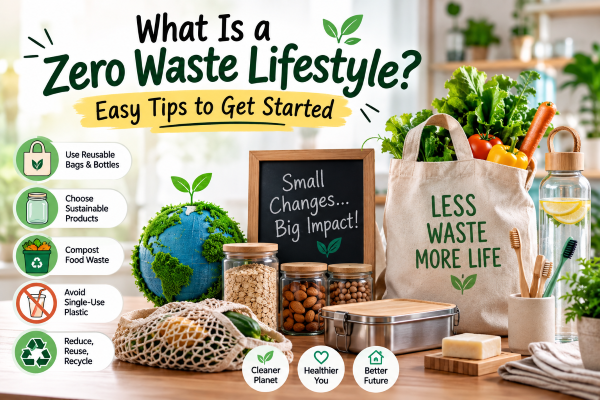
Have you ever looked at your trash can at the end of the week and wondered, “Where did all of this come from?” Plastic wrappers, empty bottles, food scraps, old boxes — it piles up fast. Most of us don’t even notice it because throwing things away has become such a normal part of daily life.
But here’s the thing. All that trash has to go somewhere. And most of it ends up in landfills, rivers, or oceans, where it can take hundreds of years to break down. This is where the idea of a zero waste lifestyle comes in.
In this blog, we will explain what a zero waste lifestyle really means, why it matters, and most importantly, we will share simple, easy-to-follow tips that you can start using today. You don’t need to be an expert or spend a lot of money. You just need to be willing to make small changes, one step at a time.
What is a Zero Waste Lifestyle?
A zero waste lifestyle is a way of living that focuses on creating as little trash as possible. Instead of buying, using, and throwing things away, people who follow this lifestyle try to reduce what they use, reuse what they already have, and recycle or compost whatever is left.
The goal is simple: keep as much waste as possible out of landfills, oceans, and incinerators.
It does not mean you need to produce absolutely zero garbage. That would be almost impossible for most people. Instead, think of it as a mindset. It’s about being more thoughtful with your choices. It’s about asking yourself, “Do I really need this? Can I reuse something I already have? Is there a way to avoid this packaging?”
Zero waste living is not about being perfect. It’s about doing better, little by little, every single day.
Why Should You Care About a Zero Waste Lifestyle?
You might be thinking, “I’m just one person. Will my small changes even matter?” The answer is yes, and here’s why.
1. It Helps the Environment
Every year, the world produces billions of tons of waste. A lot of this waste, especially plastic, ends up in oceans and harms sea animals, birds, and even the food we eat. When you reduce your waste, you are directly reducing the pollution that harms our planet.
2. It Saves You Money
This might surprise you, but living with less waste often means spending less money. When you buy fewer disposable items, cook more meals at home, and reuse things instead of replacing them, your wallet feels the difference too.
3. It Reduces Your Carbon Footprint
Making new products from raw materials uses a lot of energy and creates greenhouse gases. When you reuse and recycle instead of buying new, you help lower the amount of carbon released into the air.
4. It Encourages Mindful Living
A zero waste lifestyle pushes you to slow down and think before you buy. This mindfulness often spreads into other parts of your life too, like your health, your finances, and even your relationships.
5. It Inspires Others
When people see you carrying a reusable bag, using a metal straw, or composting food scraps, it often makes them curious. Small actions can inspire the people around you to make changes too.
The 5 Rs of Zero Waste Living
Most zero waste experts talk about a simple framework called the “5 Rs.” This is a great place to start because it gives you an easy order to follow.
1. Refuse
Say no to things you don’t need. This includes free plastic bags, straws, flyers, or promotional items. If you don’t need it, don’t take it. Refusing is the first and most powerful step because it stops waste before it even enters your home.
2. Reduce
Cut down on what you actually use and buy. This does not mean giving up everything you love. It simply means being more careful about how much you consume. For example, buying only what you will actually eat, instead of letting food go bad in the fridge.
3. Reuse
Instead of throwing things away after one use, find ways to use them again. Glass jars, cloth bags, and old containers can all be reused in creative ways. Reusing also means choosing items that are made to last, instead of cheap items that break quickly.
4. Recycle
Recycle whatever you cannot refuse, reduce, or reuse. It’s important to know that recycling should be your last option, not your first. Many people think recycling alone solves the waste problem, but it actually uses a lot of energy and not everything can be recycled.
5. Rot (Compost)
Food scraps and other organic waste can be composted instead of thrown in the trash. Composting turns waste into rich soil that can be used for gardening, and it keeps organic waste out of landfills where it produces harmful gases as it decomposes.
Remember this simple order: Refuse first, then Reduce, then Reuse, then Recycle, and finally Rot. Following this order helps you create the least amount of waste possible.
Common Myths About Zero Waste Living
Before we jump into the tips, let’s clear up a few misunderstandings that stop people from even trying.
Myth 1: You need to produce literally zero trash: This is simply not true. Even the most dedicated zero waste bloggers still create a small amount of waste. The goal is progress, not perfection.
Myth 2: It’s expensive: While some zero waste products can be pricey, the lifestyle itself usually saves money over time because you buy less and reuse more.
Myth 3: It takes too much time and effort: Yes, it takes a bit of planning at first. But once you build new habits, they become second nature, just like brushing your teeth.
Myth 4: You have to change everything overnight: Zero waste living is a journey, not a race. Small, steady changes add up to a big impact over time.
Now that we’ve cleared the air, let’s talk about how you can actually start living this way.
Easy Tips on How to Achieve a Zero Waste Lifestyle
Here are simple, practical tips you can use in your everyday life. You don’t have to do all of them at once. Pick one or two, get comfortable with them, and then move on to the next.
1. Start With a Trash Audit
Before you change anything, take a look at what you’re actually throwing away. For one week, pay attention to what fills up your trash can. Is it food packaging? Plastic bottles? Paper towels? Once you know what you throw away the most, you can find better alternatives for those specific items.
2. Carry Reusable Bags
Keep a few reusable cloth bags in your car, your backpack, or by your front door. This way, you’ll always have one ready when you go shopping, and you won’t need to take a plastic bag from the store.
3. Switch to a Reusable Water Bottle
Instead of buying single-use plastic water bottles, invest in one good reusable bottle. Fill it up at home or refill stations throughout the day. This one simple swap can save hundreds of plastic bottles every year.
4. Say No to Single-Use Plastics
Plastic straws, cutlery, cups, and plates are used for a few minutes but stay on the planet for hundreds of years. Try switching to reusable straws, metal cutlery, and cloth napkins that you can use again and again.
5. Buy in Bulk When You Can
Many stores now offer bulk sections for grains, nuts, spices, and even cleaning products. Bring your own containers or bags and fill them up. This cuts down on packaging waste significantly.
6. Meal Plan to Reduce Food Waste
Food waste is one of the biggest contributors to household trash. Plan your meals for the week, make a shopping list, and only buy what you actually need. This helps you avoid throwing away food that goes bad before you get to eat it.
7. Store Leftovers Properly
Instead of throwing away leftover food, store it in reusable containers and eat it the next day. Get creative with leftovers by turning them into new meals.
8. Start Composting
If you have a garden or even just a small balcony, you can start composting your fruit and vegetable scraps, coffee grounds, and eggshells. If you don’t have space, many cities now offer community composting programs.
9. Choose Products With Less Packaging
When shopping, choose products that use minimal packaging or packaging that can be recycled. Buying fruits and vegetables without plastic wrapping, for example, is an easy switch.
10. Repair Instead of Replace
Before throwing something away because it’s broken, see if it can be fixed. Many communities now have “repair cafés” where volunteers help fix clothes, electronics, and furniture for free or a small fee.
11. Buy Second-Hand
Thrift stores, online marketplaces, and garage sales are wonderful places to find clothes, furniture, and household items. Buying second-hand reduces demand for new products and keeps usable items out of landfills.
12. Use Cloth Instead of Paper
Swap paper towels for reusable cloth towels. Use cloth napkins instead of paper ones. These small swaps might seem minor, but they add up over months and years.
13. Make Your Own Cleaning Products
Many household cleaners can be made at home using simple ingredients like vinegar, baking soda, and lemon. This reduces plastic bottle waste and is often cheaper too.
14. Choose Reusable Period and Baby Products
Products like reusable menstrual cups, cloth pads, and cloth diapers are becoming more popular. They save money over time and drastically cut down on waste.
15. Digitize Where Possible
Instead of printing receipts, bills, or documents, choose digital versions whenever you can. This reduces paper waste significantly.
16. Bring Your Own Containers
When ordering takeout or getting food from a bakery or deli, bring your own container if the store allows it. This avoids extra plastic or styrofoam packaging.
17. Donate Instead of Throwing Away
Before throwing away clothes, toys, or furniture, consider donating them to someone who might need them. Someone else’s trash can easily become someone’s treasure.
18. Choose Quality Over Quantity
Instead of buying cheap items that break quickly and need to be replaced often, invest in fewer, high-quality items that last much longer. This applies to clothes, shoes, kitchenware, and even electronics.
19. Grow Your Own Food
If you have any outdoor or indoor space, growing even a few herbs or vegetables can reduce your dependence on store-bought, packaged produce.
20. Join a Zero Waste Community
Look for local groups, online forums, or social media communities focused on zero waste living. Being around others on the same journey keeps you motivated and gives you fresh ideas.
Zero Waste Tips for Different Areas of Your Life
Let’s break this down even further by looking at specific areas of daily life.
In the Kitchen

- Use glass jars to store leftovers instead of plastic wrap.
- Keep a compost bin under the sink for food scraps.
- Buy loose fruits and vegetables instead of pre-packaged ones.
- Use beeswax wraps instead of plastic cling film.
In the Bathroom
- Switch to bar soap and shampoo bars instead of bottled versions.
- Use a bamboo toothbrush instead of a plastic one.
- Try a safety razor instead of disposable plastic razors.
- Choose refillable containers for lotions and soaps when available.
At Work
- Bring your own coffee mug instead of using disposable cups.
- Pack your lunch in reusable containers.
- Print only when absolutely necessary.
- Keep a reusable water bottle at your desk.
While Shopping
- Bring your own bags every time.
- Choose products with recyclable or minimal packaging.
- Support local businesses that focus on sustainability.
- Buy only what you need, not what’s on sale just because it’s cheap.
While Traveling
- Pack a reusable water bottle and snack containers.
- Bring your own toiletries instead of using hotel mini bottles.
- Choose destinations and hotels that support eco-friendly practices.
- Avoid single-use items on flights when possible, like headphones or blankets you won’t reuse.
How to Stay Motivated on Your Zero Waste Journey
Change is hard, especially when it comes to breaking old habits. Here are a few ways to stay on track.
Start Small
Don’t try to change your entire lifestyle overnight. Pick one habit, master it, and then move to the next. This makes the process feel manageable instead of overwhelming.
Track Your Progress
Keep a simple journal or note on your phone tracking the changes you’ve made. Seeing how far you’ve come can be a great motivator.
Celebrate Small Wins
Every reusable bag used, every meal cooked instead of ordered, and every item repaired instead of replaced is a win. Celebrate these small victories.
Be Kind to Yourself
You will not be perfect, and that’s okay. Some days you might forget your reusable bag or end up buying something with plastic packaging. Don’t let this discourage you. Progress matters more than perfection.
Involve Your Family and Friends
Zero waste living becomes easier and more fun when you involve the people around you. Encourage your family to join you, or find friends who share the same goals.
Benefits You’ll Notice Over Time
As you continue on this journey, you’ll likely notice several positive changes in your life.
- Lower monthly expenses, since you’ll be buying less and reusing more.
- A cleaner, more organized home, since you’ll own fewer unnecessary items.
- A stronger connection to your community, especially if you join local zero waste groups.
- A sense of purpose, knowing that your daily choices are helping the planet.
- Better health, since many zero waste swaps, like cooking at home more often, also lead to healthier eating habits.
Zero Waste Living for Beginners: A Simple 30-Day Idea
If you’re not sure where to start, here’s an easy way to ease into zero waste living without feeling overwhelmed. Instead of changing everything at once, try focusing on just one new habit each week.
Week 1: Awareness Spend this week simply watching your habits. Notice what you throw away, what you buy without thinking, and where most of your waste comes from. Don’t change anything yet, just observe.
Week 2: Kitchen Swaps Start bringing reusable bags to the grocery store. Begin storing leftovers in glass containers instead of plastic wrap. Try planning your meals for the week so you buy only what you need.
Week 3: Bathroom Swaps Replace one disposable bathroom item with a reusable one. This could be swapping your plastic razor for a safety razor, or your bottled shampoo for a bar version.
Week 4: Community and Composting Look into composting options in your area, whether that’s a backyard bin or a community drop-off point. Also, search for local zero waste groups or repair cafés near you.
By the end of the month, you’ll have built several new habits without feeling like your whole life changed overnight. And that’s exactly the point. Zero waste living works best when it feels natural, not forced.
Zero Waste Living With Kids
If you have children, teaching them about zero waste living early on can shape lifelong habits. Kids are naturally curious, and they often enjoy being part of something that feels like a fun challenge.
- Let them help sort recyclables and compost items so they understand where things go.
- Turn shopping trips into a game by asking them to help you spot products with less packaging.
- Encourage hand-me-downs for clothes and toys instead of always buying new.
- Pack school lunches in reusable containers instead of disposable bags.
- Teach them to repair broken toys instead of throwing them away immediately.
Kids who grow up understanding the value of reducing waste often carry these habits into adulthood, creating a ripple effect that lasts for generations.
Zero Waste Living on a Budget
One worry people often have is that zero waste products, like bamboo toothbrushes or stainless steel containers, can be expensive. While some specialty products do cost more upfront, here are ways to keep costs low.
- Use what you already own first: Don’t rush to buy new “zero waste” products. Use up your existing plastic containers and bottles before replacing them.
- Make your own products: Homemade cleaning sprays, scrubs, and even some beauty products can be made with basic kitchen ingredients.
- Shop second-hand: Thrift stores often carry reusable containers, cloth bags, and jars for a fraction of the price of new “eco” products.
- Buy in bulk with friends: Splitting a bulk order of pantry staples with friends or neighbors can lower costs for everyone.
- Focus on reducing, not just replacing: Remember, the most zero waste choice is often to simply buy less, not to buy a new eco-friendly version of everything.
Common Challenges and How to Overcome Them
Even with the best intentions, zero waste living comes with its own set of challenges. Here’s how to work through some of the most common ones.
- Challenge: Not enough time to plan ahead: Solution: Start with just one habit at a time instead of trying to overhaul your entire routine. Meal planning once a week, for example, can be done in just 15 minutes.
- Challenge: Products aren’t always available nearby: Solution: Look for online stores that ship zero waste products, or simply focus on the swaps that are realistic for your location, like reusing containers or composting.
- Challenge: Family members aren’t on board: Solution: Lead by example rather than forcing change. Over time, others often become curious and start joining in on their own.
- Challenge: Feeling guilty about imperfect efforts: Solution: Remind yourself that zero waste living is about progress, not perfection. Every small effort counts, even if you can’t do everything perfectly.
- Challenge: Extra costs for eco-friendly products: Solution: Focus first on reducing and reusing, which usually costs nothing, before investing in new sustainable products.
Frequently Asked Questions About Zero Waste Living
Is it possible to live a 100% zero waste lifestyle? It’s extremely difficult to produce absolutely zero waste in today’s world. Most people who follow this lifestyle aim to significantly reduce their waste rather than eliminate it completely. Progress matters more than perfection.
Does zero waste living cost more money? Not usually. While some specific products might cost more upfront, the overall lifestyle tends to save money because you’re buying less, reusing more, and avoiding unnecessary purchases.
What is the easiest way to start a zero waste lifestyle? The easiest way to start is by picking just one habit, like carrying a reusable bag or water bottle, and building from there. Trying to change everything at once often leads to burnout.
Can I live a zero waste lifestyle in a small apartment or city? Yes, definitely. Many zero waste habits, like reducing packaging, reusing containers, and buying second-hand, work just as well in cities and apartments as they do in houses with yards.
What if I don’t have space to compost? Many cities now offer community composting drop-off points or curbside compost pickup. You can also look into countertop composting devices designed for small spaces.
How long does it take to build zero waste habits? It varies from person to person, but most habits take a few weeks of consistent practice to feel natural. Be patient with yourself during this adjustment period.
Final Thoughts
A zero waste lifestyle is not about being perfect or never creating any trash at all. It’s about making thoughtful choices, one small step at a time. It’s about asking yourself before every purchase, “Do I really need this, and is there a better way?”
Start small. Maybe this week, you switch to a reusable water bottle. Next month, you start composting. Over time, these small changes build into a lifestyle that is not only better for the planet but also better for your wallet and your peace of mind.
Remember, nobody expects you to be perfect. Every small step you take matters, and every person who joins this movement makes a difference. The planet doesn’t need a few people living a zero waste lifestyle perfectly. It needs millions of people doing it imperfectly, but consistently.
So, are you ready to take your first step toward a zero waste lifestyle? Start today, start small, and watch how these little changes create a big impact over time.
