

Introduction
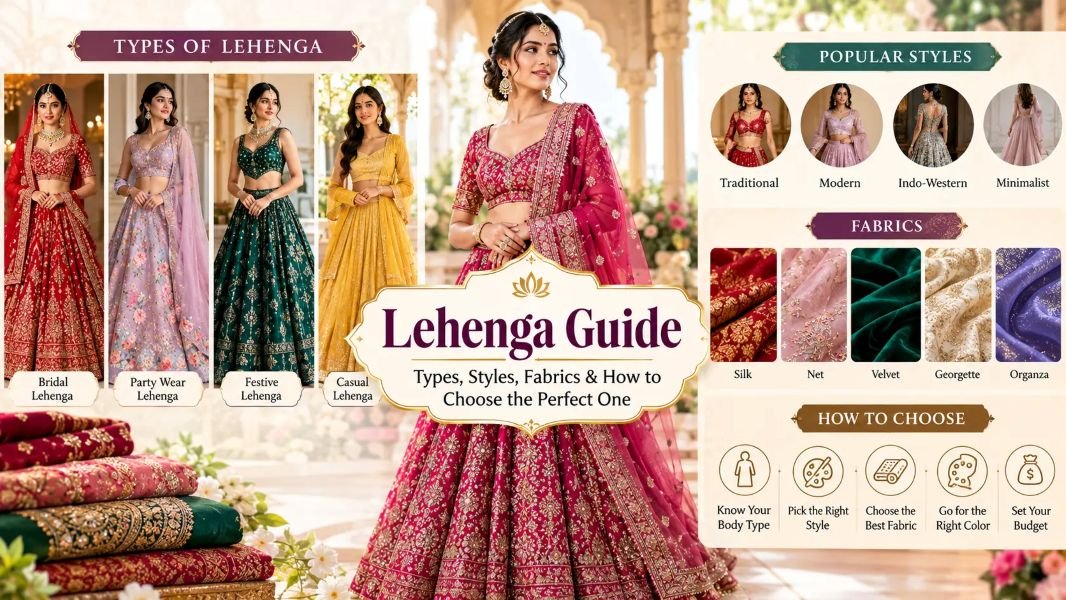
The lehenga is the outfit most Indian families picture when they imagine a celebration. It twirls at a sangeet, glows under wedding lights, and turns up again at Diwali parties, engagements and receptions. Few garments carry as much craft, memory and emotion in one flared skirt.
Yet buying one is rarely simple. The choice runs from a lightweight georgette lehenga for a day function to a hand-embroidered bridal lehenga that took months to make. There are dozens of silhouettes, a long list of fabrics and embroideries, and a wide spread of prices. Add family opinions, body-shape worries and a wedding calendar, and it is easy to feel lost.
This guide is written to make that decision calmer. Whether you search for it as lehenga, lehanga or lehnga, you will find the same garment explained in plain language. We cover where it came from, the main lehenga styles, the fabrics and embroidery that define quality, and what to wear for each occasion. We also explain how to choose by body type, how to style the blouse and dupatta, what to budget, and how to look after the outfit for years.
By the end you should be able to walk into a boutique or open a shopping app knowing what you want, what to ask, and what to avoid.
What Is a Lehenga? Meaning, Origin and History
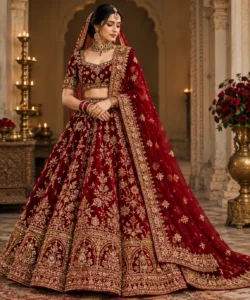
A lehenga is a long, flared skirt, traditionally worn with a fitted blouse (choli) and a dupatta. Together the three pieces are called a lehenga choli. The skirt is gathered or pleated at the waist and tied with a drawstring or fastened with a zip or hooks. It falls to the ankle, and its volume is what makes it so photogenic when the wearer moves.
The three pieces
- Skirt (lehenga): The main canvas for embroidery, print or weaving. Its flare, length and lining decide how it moves and how heavy it feels.
- Blouse (choli): A fitted top that can be sleeveless, short-sleeved or full-sleeved, with necklines from modest to plunging.
- Dupatta: A long scarf draped over the shoulder, head or both. A second dupatta, or a cape, is a popular modern addition.
A short history
The lehenga did not appear overnight. Gathered skirts worn with short blouses and veils have been part of South Asian dress for centuries, and regional versions such as the ghagra, ghagri and langa show how widely the silhouette travelled. Historians generally link the richly embroidered, court-style version to the Mughal and Rajput eras, when royal workshops produced brocade, zari and fine muslin on a grand scale. Rajasthan and Gujarat kept the voluminous skirt alive in everyday and ceremonial dress, while cities such as Banaras, Lucknow and Hyderabad developed their own weaving and embroidery traditions.
In the twentieth century the garment moved from regional dress to national bridal wear, helped by Hindi cinema and later by Indian designers who rebuilt it with lighter fabrics, new cuts and modern colour. Today a lehenga can be a heavy heirloom, a pastel party piece, a pre-draped fusion set or a cape-and-skirt combination, all sold under the same name.
Lehenga, lehanga or lehnga?
All three spellings are used because the word is transliterated from Hindi and Urdu, and there is no single fixed English form. Lehenga is the most common and the one most designers and retailers use, so it is the safest choice for labels and search. You will also see “ghagra choli” and “chaniya choli” in some regions, which describe closely related outfits.
Types of Lehenga Styles
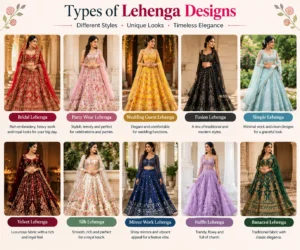
The silhouette is the first decision, because it determines how the outfit fits, moves and photographs. Here are the main lehenga designs and the people they tend to suit.
A-line lehenga
Fitted at the waist and flaring gently to the hem, the A-line is the easiest silhouette to wear. It balances the hips, allows comfortable walking and dancing, and works for almost every body type. If you are buying your first lehenga, start here.
Circular or flared lehenga
Cut as a wide circle, this style has dramatic volume and spins beautifully. It is a favourite for sangeet nights and for brides who want a classic, royal look. Because it uses a lot of fabric, it can feel heavy, so lining and fabric choice matter. Lightweight net or organza helps a lot.
Mermaid or fishtail lehenga
Snug through the hips and thighs, then flaring out below the knee, the mermaid cut is glamorous and modern. It highlights curves and suits hourglass and tall frames. It limits stride length, so practise sitting, climbing stairs and dancing before you commit.
Panelled or kalidar lehenga
Made from many vertical panels stitched together, a kalidar skirt has a smooth fit at the waist and a rich flare at the hem. The seams give designers a chance to vary colours or embroidery panel by panel. It is a versatile, flattering choice for most shapes.
Straight or column lehenga
A slim, narrow skirt that falls straight to the ankle, often paired with a long jacket or a cape. It reads as contemporary and elegant, and it is comfortable for cocktail evenings and receptions. It suits taller or slimmer frames, but a slit or soft pleats can make walking easier for everyone.
Jacket-style lehenga
Here the choli is replaced by, or layered with, a long jacket or a short bolero. It adds coverage and structure, which many wearers like for formal weddings and winter events. It also gives you an extra piece that can be worn separately later.
Pant or sharara-style lehenga
A fusion option where the skirt is replaced by wide-legged sharara or palazzo-style trousers, or the skirt has hidden pants underneath. It is practical for people who want the lehenga look with easier movement.
Cape lehenga
The dupatta is swapped for a cape draped from the shoulders. Cape sets are popular for engagements and cocktail parties because they feel modern and photograph well, and they free the hands from managing a long scarf.
Saree-style or pre-draped lehenga
A lehenga with a stitched, pre-pleated dupatta that mimics a saree drape. It is useful when you want the saree look without the draping skill, or when you need to get dressed quickly.
Quick comparison
| Style | Best for | Comfort | Occasion |
|---|---|---|---|
| A-line | Most body types | High | Weddings, parties, festivals |
| Circular | Dancing, drama | Medium (can be heavy) | Sangeet, bridal |
| Mermaid | Curves, tall frames | Lower | Reception, cocktail |
| Kalidar | Balanced shapes | High | Weddings, festive |
| Straight | Slim, modern look | High | Cocktail, engagement |
| Pre-draped | Easy dressing | High | Receptions, parties |
Lehenga Fabrics and Embroidery
Two lehengas with the same silhouette can feel completely different depending on the fabric and the work on it. Understanding both helps you judge price and comfort.
Popular lehenga fabrics
- Silk and raw silk: Rich, structured and traditional. It holds its shape well and suits bridal and ceremonial wear, though pure silk can be heavy and warm.
- Banarasi brocade: Woven with zari patterns, this is the classic choice for heirloom lehengas. It is dense, so consider a lighter lining.
- Velvet: Deep, luxurious and ideal for winter weddings. It drapes heavily and can feel warm indoors.
- Georgette: Light and flowy, easy to move in, and good for day functions and summer events.
- Net: Sheer and airy, usually layered over an inner fabric. It is popular for volume without much weight.
- Organza: Crisp and translucent with a soft sheen. It adds body to the flare and suits pastels well.
- Chiffon: Very light and fluid, good for dupattas and soft skirts, though it needs careful handling.
- Cotton and linen blends: Breathable and comfortable for mehendi, haldi and daytime festivals.
Embroidery and surface work
- Zari and zardozi: Metallic thread work, often raised and sculpted. Hand zardozi is among the most labour-intensive and expensive techniques.
- Gota patti: Appliqué using small pieces of metallic ribbon, strongly associated with Rajasthan and loved for its lightness and shine.
- Resham and thread work: Silk thread embroidery in floral and paisley designs, offering colour without the weight of metal.
- Mirror work: Small mirrors stitched in with thread, a staple of Gujarat and Rajasthan and a recurring favourite in modern designs.
- Sequins and beads: Create sparkle for parties, though cheaper versions can shed or snag.
- Chikankari. Delicate white-on-white embroidery from Lucknow, ideal for elegant, light outfits.
How to judge quality
Turn the lehenga inside out. Neat, well-finished inner seams and a smooth lining suggest careful making. Check that embroidery threads are secure, that stones are firmly set, and that motifs line up across seams. Ask whether the embroidery is hand or machine work, since both are legitimate but priced very differently.
Weight and comfort
A lehenga can range from under two kilograms to well above that for heavily worked bridal pieces. If you will wear it for many hours, ask about the weight, request a soft inner lining, and choose a fabric suited to the season. Lighter constructions are a clear 2026 theme, as many designers now focus on pieces that look rich but feel comfortable for a long day.
Best Lehenga for Every Occasion
The right lehenga depends as much on the event as on your taste. Use this section as a quick planner.
Bridal lehenga
A bridal lehenga is the centrepiece of the wedding wardrobe. Traditional choices include red, maroon and deep pink in silk, velvet or brocade with zardozi, but many brides now choose ivory, blush, sage or gold. Think about rehearsing the full look, including walking, sitting for rituals and dancing. Ask for a lining that feels soft against skin, and consider a lighter outfit for the second half of the day.
Engagement and ring ceremony
This is a great place for pastels, metallics or a cape lehenga. A lighter outfit lets you move through photos and greetings comfortably.
Haldi
Choose yellow, orange or light cotton lehengas that you do not mind staining. Easy fabrics and simple embroidery work best here.
Mehendi
Greens, pinks and playful prints suit this relaxed event. Lightweight georgette or cotton with mirror or thread work keeps you comfortable while sitting for hours.
Sangeet
Volume, shimmer and ease of movement matter most. A circular or A-line lehenga in net or organza is ideal for dancing. Check that the hem is the right length so you do not trip, and that the blouse allows your arms to move.
Reception
This is the time for glamour, so mermaid cuts, sequin work, deep jewel tones and structured blouses are popular. A pre-draped dupatta or cape adds elegance without fuss.
Wedding guest lehenga
A wedding guest lehenga should be festive without competing with the bride. Avoid all-white, and be careful with very bright reds if the family traditionally uses them for the bride. Pastels, jewel tones and softly embroidered designs usually work well.
Festive wear: Diwali, Navratri, Karwa Chauth and Eid
- Diwali: Rich colours and metallic accents suit the festival of lights, as do lightweight silks.
- Navratri: Colourful chaniya cholis with mirror work and plenty of flare are traditional and comfortable for garba.
- Karwa Chauth: Red, maroon and other auspicious shades are popular, and comfort matters because the day is long.
- Eid: Pastels, pearls and chikankari or gota work create a graceful, celebratory look.
Party wear and cocktail
A party wear lehenga can be bolder: sequins, crop tops, capes and slits are common. Choose something you can sit and dance in, and keep styling consistent with the venue.
Occasion cheat sheet
| Occasion | Colour ideas | Fabric ideas |
|---|---|---|
| Bridal | Red, maroon, ivory, gold, blush | Silk, velvet, brocade |
| Haldi | Yellow, orange, pastel | Cotton, georgette |
| Mehendi | Green, pink, multi | Georgette, cotton silk |
| Sangeet | Jewel tones, metallics | Net, organza |
| Reception | Wine, emerald, champagne | Velvet, satin, sequin |
| Diwali and festive | Rich colours, gold accents | Silk, brocade, georgette |
Lehenga Colour Guide and 2026 Trends
Colour is often the first thing people notice, and it shapes the whole mood of your look.
Classic bridal shades
Red remains the iconic bridal colour, along with maroon, deep pink and gold, and it carries strong cultural meaning in many communities. Brands covering the 2026 season note that red is still popular but is being worn with more variety, including berry and orange-red tones and unusual fabric pairings.
The pastel wave
Pastels have moved from pre-wedding functions into mainstream bridal and festive wear. Retail trend guides for 2026 highlight blush pink, powder blue, mint, lavender, pistachio and soft butter yellow. They work especially well for daytime events, destination weddings, bridesmaids and Diwali or Eid gatherings. Pair them with softer makeup, since heavy, dramatic makeup can overpower delicate shades.
Jewel tones and neutrals
Emerald, sapphire, wine and teal look striking on most skin tones and photograph richly at night events. Ivory, champagne and gold remain reliable neutrals, particularly for receptions and minimalist brides.
Choosing colour by skin tone
These are guides, not rules. Always check the shade in natural light.
- Fair skin: Jewel tones, dusty pinks, deep greens and soft pastels all work.
- Medium or wheatish skin: Peach, coral, mustard, olive, teal and rich reds look warm and flattering.
- Deep skin: Bright fuchsia, orange, emerald, gold, white and bold blues create strong contrast.
Trends to watch in 2026
- Lighter, breathable construction that still looks rich.
- Mirror work extended from the blouse across the skirt and dupatta.
- Cape and double-dupatta styling for a fusion feel.
- Interest in sustainable fabrics and outfits designed to be worn again.
- Sculpted blouses with structured necklines.
Trends change quickly, so choose what you love and can wear comfortably rather than copying every look. A lehenga you feel confident in will always photograph better than a trend you are unsure about.
How to Choose a Lehenga for Your Body Type
The goal is not to hide your body but to feel balanced and comfortable. These suggestions are starting points. Trying the outfit on is always the final test.
Pear shape (wider hips, narrower shoulders)
Choose an A-line or kalidar skirt that skims the hips instead of clinging. Put detail on the blouse, such as embroidered sleeves, a boat neck or structured shoulders, to draw the eye upward. Keep the skirt embroidery lighter around the hips.
Apple shape (fuller midsection)
A high-waisted A-line lehenga with a flowing skirt works well. Pick a blouse with a V-neck or a longer length, and drape the dupatta to give a soft, vertical line. Avoid stiff, bulky fabrics around the waist.
Hourglass shape
Most silhouettes work, and mermaid or fitted kalidar styles show off your proportions. Keep the waist defined, and choose a blouse that fits well at the bust, since poor fit there is the biggest issue.
Rectangle shape (straight proportions)
Add shape with a circular or heavily flared skirt, layered net or ruffles. A blouse with sleeve detail, peplum or an embellished neckline adds curve.
Petite frame
Choose a lehenga that is not too voluminous, since heavy flare can overwhelm a small frame. Keep the hem at the right length so the skirt does not swallow you, and wear heels or wedges you can walk in. A matching or tonal colour palette creates a longer line.
Tall frame
You can carry dramatic silhouettes such as mermaid, circular or layered skirts. Large borders, bold prints and contrasting blouses work well.
Plus-size
Fit and fabric matter more than any rule. Choose structured but soft fabrics that skim instead of cling, and make sure the waist is comfortable all day. A well-cut A-line or kalidar with a supportive blouse, vertical embroidery and a flowing dupatta is flattering and practical. Insist on a custom fit or good alterations, and ask a tailor to add hidden support in the blouse if needed.
Fit checklist before you buy
- Sit, stand, raise your arms and walk a few steps in the outfit.
- Check that the blouse does not dig in or ride up.
- Make sure the waistband is comfortable after an hour, not only in the first minute.
- Confirm the hem touches the floor correctly with your intended footwear.
- Ask for a spare seam allowance so alterations are possible.
Regional Lehenga Traditions Across India
A lehenga looks different depending on where it comes from, and knowing the regional styles helps you appreciate what you are buying.
Banarasi lehenga
A Banarasi lehenga is woven with the famous brocade of Banaras, often with zari motifs such as florals, paisleys and the jaal pattern. It is rich, structured and usually chosen for weddings, and genuine handloom pieces can become heirlooms. Ask about the weave, the zari type and whether it is handloom or power loom.
Rajasthani and Gujarati chaniya choli
Bold colours, mirror work, bandhani tie-dye and heavy flare define this tradition. It is the classic Navratri outfit, designed for dance and movement.
Lucknowi and chikankari
The fine white thread work of Lucknow produces soft, elegant lehengas that suit summer weddings, Eid and day functions.
Kanjivaram and South Indian styles
Kanjivaram silk is known for strong colour, wide borders and a rich feel. Lehenga-style outfits and half-saree sets in this silk are popular for South Indian weddings and festive occasions.
Kashmiri and Punjabi influences
Kashmiri embroidery, such as aari and sozni work, brings delicate floral designs, while Punjabi styles often use bright colours, phulkari motifs and generous volume.
Hyderabadi khada dupatta
The traditional Hyderabadi bridal outfit includes a long, pleated dupatta worn in a distinctive style with a heavy skirt. It is a good example of a regional drape still worn today.
Why regional awareness matters
If you want a traditional look for a family ceremony, pick a regional style that respects customs. If you want something modern, you can mix elements, such as a Banarasi skirt with a contemporary blouse or a chikankari lehenga with a cape.
Styling Your Lehenga: Blouse, Dupatta, Jewellery and More
Styling can turn a good lehenga into a memorable look. The idea is to choose a focus and let everything else support it.
Blouse designs
The blouse frames your face and shapes the upper body. Popular lehenga blouse designs include:
- Sweetheart or plunging V-neck for a bold look that suits heavy necklaces.
- Boat neck for an elegant, modest line.
- High neck or collar for a regal, structured style.
- Backless or tie-back for drama, with proper support.
- Full sleeves or cape sleeves for coverage and a graceful silhouette.
Comfort should come before style. A blouse that fits well matters more than any neckline.
Dupatta draping
- Classic shoulder drape, pinned neatly and left to fall at the back.
- Head and shoulder drape for rituals and traditional events.
- Double dupatta, one on the head and one on the shoulder, popular for brides.
- Cape drape, which is pre-stitched and low maintenance.
- One-side pleated drape for a saree-inspired look.
Use invisible pins and test the drape while moving, so it does not slip when you walk or dance.
Jewellery pairing
Balance is the key. If the lehenga is heavily embroidered, keep jewellery simpler. If the outfit is minimal, you can wear statement pieces.
- Pair high necklines with earrings and a maang tikka instead of a heavy necklace.
- Pair plunging necklines with a choker or layered necklace.
- Choose gold, kundan, polki, pearls or oxidised silver depending on the colour palette and mood.
- With pastels, soft stones such as pearls, pink tourmaline or light kundan look refined.
Hair and makeup
Soft curls, a sleek bun with flowers, or a braid with accessories all work. Match the makeup intensity to the lehenga. Delicate pastels pair well with soft, dewy makeup, while deep jewel tones can take bolder lips or eyes. Do a trial run, and take photos in different lighting.
Footwear and accessories
A long skirt hides most shoes, so prioritise comfort. Block heels, wedges and embellished flats work well. Carry a small potli or clutch, and keep emergency items such as safety pins, tissues and a small sewing kit within reach.
Lehenga Price Guide and Buying Tips
Lehenga price varies enormously because fabric, hand embroidery, brand and custom tailoring all change the cost. The figures below are rough ranges in Indian rupees and should be checked against current market rates before you budget.
| Category | Approximate range (INR) | What you typically get |
|---|---|---|
| Budget ready-to-wear | 2,000 to 10,000 | Machine embroidery, synthetic fabrics, standard sizes |
| Mid-range boutique | 10,000 to 50,000 | Better fabrics, mixed hand and machine work, some customisation |
| Designer lehenga | 50,000 to 3,00,000 | Hand embroidery, quality lining, custom fit |
| Luxury bridal couture | 3,00,000 and above | Intricate zardozi, premium fabrics, extended making time |
| Rental | 3,000 to 30,000 per event | Wearable for a day or weekend, often with alterations |
Where to buy
- Local markets and wholesale hubs: Often the best value, and many allow custom stitching. Bargaining is common, so go with a clear budget.
- Boutiques and designers: Better for custom fit, unique design and guidance, but typically costlier and slower.
- Online stores and apps: Wide choice and easy comparison. Check the return policy, size chart and real customer photos.
- Rental services: A smart option for guests, since you wear the outfit once and avoid storage.
Buying checklist
- Set a total budget: That includes alterations, accessories, jewellery and styling.
- Order early: Bridal and custom pieces often take several weeks or months, so allow time for fittings.
- Take accurate measurements: Ask the seller for a size guide and confirm bust, waist, hip, blouse length and skirt length.
- Ask about fabric and work: Is it pure silk or blended? Hand or machine embroidery? Request clear answers in writing.
- Inspect the lining and finishing: Poor stitching, loose stones and scratchy lining are warning signs.
- Confirm the return and alteration policy: Before paying, especially for online orders.
Red flags
- Extremely low prices for supposedly pure silk or hand-embroidered work.
- Stock photos with no real pictures of the outfit.
- Vague answers about fabric, delivery time or returns.
- Pressure to pay the full amount upfront with no written agreement.
A good seller will welcome your questions, so use them to judge how trustworthy the shop is.
How to Care for and Store Your Lehenga
A good lehenga can last for decades if you treat it carefully. Most damage happens after the event, during cleaning and storage.
After wearing
Air the outfit in a shaded, well-ventilated place for a few hours to release moisture and perfume. Remove jewellery, pins and any detachable accessories first. Check for stains, snagged threads and loose embellishments, and fix small problems before they spread.
Cleaning
Dry clean heavily embroidered, silk, velvet or zardozi pieces, and choose a specialist who handles bridal wear. Tell them about delicate areas and stains. Avoid washing at home unless the label clearly allows it. Spot-treat only with great care, since many dyes and metallic threads react badly to water.
Storage
- Wrap the lehenga in clean, breathable muslin or cotton, not plastic, which can trap moisture.
- Store the skirt folded loosely with acid-free tissue between layers, or hang it in a wide garment cover if the weight is supported properly.
- Refold every few months so creases do not become permanent.
- Keep it away from direct sunlight, which can fade dyes.
- Use neem leaves, cedar or silica gel to guard against moths and humidity, and keep perfume and sprays away from fabric.
Alterations and restyling
A lehenga with generous seam allowance can be resized for years. Many people re-use the skirt with a new blouse, or pair a bridal dupatta with a plain skirt. A skilled tailor can also convert part of a bridal outfit into a jacket, gown or a more casual festive set, which gives the garment a second life.
Preserving a bridal lehenga
If you want to keep the outfit as a keepsake, have it professionally cleaned soon after the wedding, then store it in a breathable box with tissue. Check it once or twice a year for pests and moisture.
Modern Lehenga Trends and Fusion Styles
The lehenga keeps changing without losing its identity. Several movements are shaping what designers and shoppers choose now.
Lighter and more wearable
Many 2026 bridal and festive designs focus on breathable fabrics and lighter construction, so the outfit looks luxurious without feeling physically heavy. This is especially welcome for summer weddings and long events.
Re-wearability
Brides and guests increasingly want pieces they can wear again. That might mean a skirt that works with several blouses, a dupatta that can be styled separately, or a separate jacket that doubles as formal wear.
Sustainability and handloom
Interest in eco-friendly fabrics, natural dyes, handloom weaves and ethical production is growing. Choosing handloom also supports weaving communities, but ask for proof of authenticity, such as a handloom mark or the maker’s details, and be cautious about vague “eco” claims.
Fusion silhouettes
Cape lehengas, double dupattas, jackets, high-low hemlines, slits and layered ruffles are popular for engagements, cocktail evenings and receptions. These pieces mix Indian craft with Western tailoring.
Mirror work and surface texture
Mirror work is being used more widely, including across skirts and dupattas, while sculpted blouses and structured necklines add a modern, tailored feeling.
Minimalism
Some brides now prefer soft colours, restrained embroidery and clean lines. A minimal lehenga lets jewellery, hair and presence take the spotlight.
How to use trends wisely
Pick one or two trends that suit your taste and body, and keep the rest classic. A lehenga should still feel like you in ten years’ time when you look back at the photos.
Frequently Asked Questions about Lehenga
What is a lehenga?
A lehenga is a long, flared skirt worn with a fitted blouse and a dupatta. The full set is called a lehenga choli, and it is worn mainly at weddings, festivals and celebrations in South Asia.
What is the difference between a lehenga and a ghagra?
The terms overlap, and usage differs by region. Ghagra and chaniya usually describe the more traditional, voluminous skirt of western India, while lehenga often refers to the more tailored, embellished version used for weddings and parties.
Which lehenga style is best for beginners?
An A-line lehenga is the easiest to wear and flatters most body types. It is comfortable to walk and dance in and works for many occasions.
Which colour is best for a bridal lehenga?
Red, maroon and deep pink are traditional, while ivory, gold, blush and pastel shades are increasingly popular. Choose a colour that suits your skin tone, your family’s customs and the time of day of the ceremony.
How much should I spend on a lehenga?
There is no fixed number. Ready-to-wear pieces cost a few thousand rupees, boutique outfits cost tens of thousands, and designer bridal pieces can cost several lakhs. Decide a total budget that includes alterations and accessories.
Can I rent a lehenga instead of buying?
Yes, renting is practical for guests and single events. Check the rental period, damage policy, cleaning charges and whether alterations are allowed.
How do I choose a lehenga for my body type?
Match the silhouette to your proportions: A-line or kalidar for pear shapes, high-waisted A-line for apple shapes, mermaid or fitted styles for hourglass shapes, and flared or layered skirts for rectangle shapes. Always try it on, because fit matters more than rules.
How do I store a lehenga?
Store it clean, wrapped in breathable muslin or cotton, away from sunlight and moisture. Use acid-free tissue between folds and natural moth repellents, and refold it occasionally.
What should a wedding guest wear?
Choose a festive lehenga in a colour that does not clash with the bride. Pastels and jewel tones are safe, while all-white and the bride’s likely colour are best avoided.
How heavy is a bridal lehenga?
It depends on the fabric and work. Heavily embroidered outfits can feel quite heavy, but lighter constructions are becoming common, so ask the maker for the weight and request a soft lining.
Conclusion
A lehenga is more than an outfit. It is a mix of craft, tradition and personal style, and the best one for you is the one that fits well, suits the occasion and makes you feel at ease. Start with the silhouette and the event, then narrow your choices by fabric, colour and budget. Check quality carefully, plan fittings early, and style the blouse, dupatta and jewellery as one balanced look.
